New start, new voice
- Ice-breaker pack
- Phonologie sentence stress
- Fiche identity without clichés
- Grille orale
Tiroir « Je sèche »
Ces pistes sont faites pour la classe ou l’élève qui n’a pas d’outils numériques sous la main.
- Si pas de micro → lecture à voix haute à deux (sans enregistrement).
- Élèves timides → portrait écrit illustré.
- Activité « Find someone who… ».
- Amorces de phrases (sentence frames).
Heure clé en main · 55 min
- 0 à 5 · Name + gesture circle
- 5 à 18 · Portrait models
- 18 à 32 · Script 80 à 100 mots
- 32 à 48 · Enregistrement
- 48 à 55 · Peer compliment
Cours · séances 1 (texte + exploitation + lexique + langue + média)
Chaque séance ci-dessous est un cours type manuel de 2nde générale · voie générale · section européenne / excellence (CECRL B1+) : document original dense, exploitation (inférence + argumentation), lexique en situation, point de langue, média, production ~55 min, travail à la maison. Si pas de micro → lecture à voix haute (sans enregistrement) pour toute consigne d’enregistrement / podcast / captation.
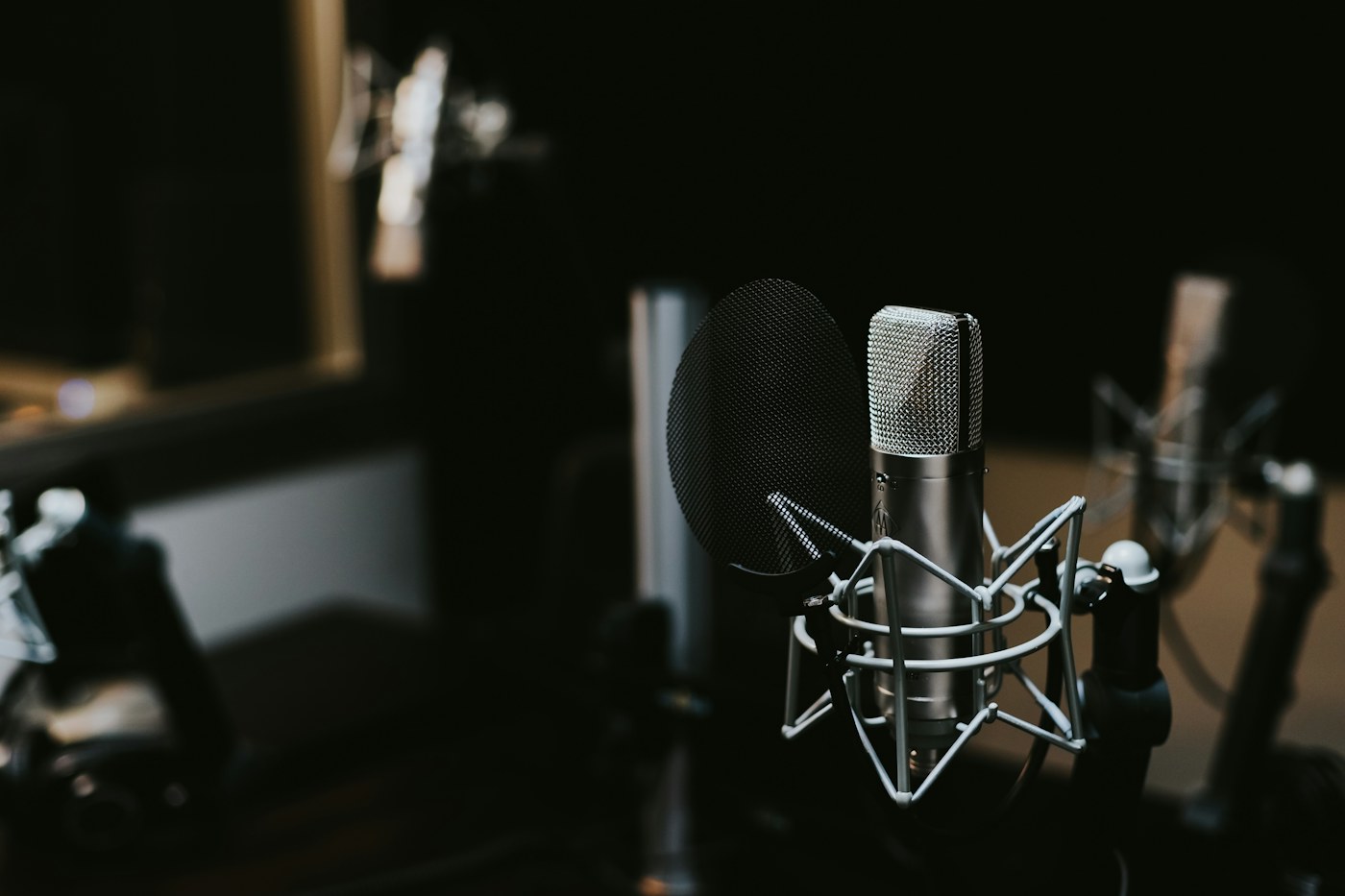
Session 1 · Voice & stance
Language objective · CECRL B1+ · problematise identity labels; academic stance phrases; controlled oral 90s.
Cours / Document
The labels that arrive before we do
Before anyone learns your name properly, a set of labels often arrives first: the quiet one, the sporty one, the bilingual one, the student who “should speak more”. Labels are efficient. They help a crowded classroom sort faces in September. They are also blunt instruments. They flatten contradiction · and contradiction is where a real voice begins.
Consider two scenes. In the first, a teacher asks for volunteers; three hands rise at once. In the second, the same teacher asks a sharper question · Who benefits when we call someone shy rather than careful? · and the room hesitates. The second question forces interpretation. It treats identity not as a costume but as a negotiation between how we see ourselves and how institutions name us.
European-section work expects that negotiation in English. You are not asked to invent a dramatic life story. You are asked to select evidence: a gesture, a silence, a family language at the dinner table, a school rule that once felt natural and later felt strange. Then you argue · gently, precisely · what that evidence suggests.
A useful stance is neither confession nor performance. Try this architecture: claim → specific scene → implication → open question. Example: “People call me reserved; last spring I translated for my uncle at the town hall for forty minutes; perhaps reserve is a strategy, not a deficit · so when does a school reward silence and when does it punish it?”
Tonight, draft that architecture once. Tomorrow, say it aloud without reading every word. Voice, at B1+, is not volume. It is the courage to interpret yourself with evidence.
Exploitation
- Gist · Why are labels described as both efficient and dangerous?
- Inference · What changes between the teacher’s first and second question?
- Argument · To what extent is identity a ‘negotiation’ rather than a fixed trait? Use one phrase from the text.
- Language · Quote one academic stance chunk you could reuse in an oral.
- Transfer · Write your own claim→scene→implication→question in 4 lines.
- Critique · Where might the text overstate the power of school labels?
Lexique en situation
| Mot / expression | Sens | Exemple |
|---|---|---|
| blunt instrument | outil grossier / peu nuancé | Labels can be blunt instruments. |
| flatten contradiction | effacer la contradiction | Labels flatten contradiction. |
| negotiation | négociation | Identity is a negotiation. |
| implication | implication / ce qui s’ensuit | State the implication clearly. |
| reserved | réservé·e | People call me reserved. |
| deficit | défaut / manque | Reserve is not a deficit. |
| reward / punish | récompenser / sanctionner | When does school reward silence? |
| stance | prise de position | Adopt an analytical stance. |
Point de langue · Stance phrases (claim → hedge → evaluate)
B1+ oral/écrit : Claim (I would argue that…) + hedge (to some extent / arguably) + evaluate (this matters because…). Évitez le catalogue de hobbies.
- Complete: I would argue that labels ______ contradiction.
- Add a hedge: Schools reward outgoing students.
- Rewrite softly: Shyness is bad. →
- Build one sentence: claim + because + implication.
- Find 2 evaluative adjectives in the text.
- Transform confession → analysis: I’m shy → I tend to… which suggests…
- Pair: challenge a partner’s label with one evidence-based question.
Média
British Council LearnEnglish · Skills (B1 listening/speaking) ↗
- Note 4 stance phrases transferable to a self-portrait oral.
- Does the speaker confess or argue? Give one clue.
Production en classe · ~55 min
- 0 à 7 · Debate spark: Is ‘shy’ a description or a verdict?
- 7 à 20 · Silent reading + gist/inference questions.
- 20 à 32 · Lexique + stance-phrase drill (board).
- 32 à 46 · Draft claim→scene→implication→question (individual).
- 46 à 53 · Pair challenge: partner attacks one label kindly.
- 50 à 55 · Exit ticket: one reusable academic chunk.
À la maison · après la séance 1 · Architecture identity (claim→scene→implication→question) · 120 à 150 mots + 60s à voix haute.
Session 2 · Models that argue
Language objective · CECRL B1+ · compare two analytical portraits; contrastive connectors; avoid cliché.
Cours / Document
Two portraits that refuse the hobby list
Portrait A · Léna (1'20) “If you only knew me through my timetable, you would invent a tidy person: maths, English, swimming, sleep. The truth is messier. Last winter I sat in the municipal library translating a housing form for my neighbour who has lived here longer than I have been alive. My French was bureaucratic; her gratitude was not. I am not ‘the helpful girl’. I am someone learning that languages are infrastructures · they open doors or close them. The label I reject is ‘lucky bilingual’. Luck did not queue the hours. What I am negotiating is responsibility: when do you speak for someone, and when do you make space so they speak for themselves?”
Portrait B · Noah (1'15) “Teachers sometimes praise me for ‘participating’. Participation, though, can be a mask. I talk early so that nobody asks the question that frightens me · whether I belong in a European section where half the class has travelled and I have not. Last month a documentary about border towns forced me to rethink belonging: you can inherit a passport and still feel peripheral. My evidence is small: I rehearse seminar answers on the bus, then deliver them as if they were spontaneous. I would argue that performance and authenticity are not opposites; they are tools. The open question is whether school can tell the difference.”
Exploitation
- Compare · How do both speakers replace biography with argument?
- Inference · What anxiety sits under Noah’s ‘participation’?
- Detail · What specific scene anchors Léna’s claim about language as infrastructure?
- Argument · Are performance and authenticity compatible? Take a stance with whereas/unlike.
- Lexique · Explain ‘languages are infrastructures’ in your own words.
- Transfer · Steal one structural move (not a sentence) for your own talk.
Lexique en situation
| Mot / expression | Sens | Exemple |
|---|---|---|
| infrastructure | infrastructure | Languages are infrastructures. |
| bureaucratic | administratif / jargonné | My French was bureaucratic. |
| negotiate responsibility | négocier une responsabilité | I negotiate when to speak for someone. |
| peripheral | périphérique / en marge | I still feel peripheral. |
| spontaneous | spontané | Answers that seem spontaneous. |
| authenticity | authenticité | Authenticity is not the opposite of performance. |
| belonging | appartenance | Rethink belonging. |
| whereas / unlike | alors que / à la différence de | Whereas Léna…, Noah… |
Point de langue · Contrastive cohesion (whereas, unlike, while, by contrast)
Pour comparer deux portraits : Whereas A focuses on…, B emphasises… / Unlike A, B… / Both claim X; yet A… while B…
- Join with whereas: Léna speaks of translation. Noah speaks of participation.
- Rewrite with unlike: Noah has not travelled much. Léna translates forms.
- Write one comparative thesis for the two portraits.
- Find hedging in Portrait B.
- Replace ‘but’ twice with stronger contrastives.
- Oral: 40s compare using at least two contrastives.
- Correct: Léna is helpful girl. → analytical rewrite.
Média
- Is the register personal, analytical, or both? Evidence?
- Sum up the speaker’s tension in one interpretive sentence.
Production en classe · ~55 min
- 0 à 5 · Predict: what will ‘refuse the hobby list’ mean?
- 5 à 18 · Read A/B; comparative table on board.
- 18 à 28 · Contrastive connectors micro-drills.
- 28 à 42 · Write a 90-word comparative paragraph.
- 42 à 52 · Pair oral: 60s each using whereas/unlike.
- 52 à 55 · Collect best thesis sentences.
À la maison · après la séance 2 · Paragraphe comparatif 120 mots (Léna vs Noah) + 5 contrastifs soulignés.
Session 3 · Script architecture
Language objective · CECRL B1+ · write a 140 à 180 word analytical oral script; cohesion; peer critique.
Cours / Document
From anecdote to interpretation · a working method
A European-section portrait is not a diary entry read aloud. It is a short argument about how identity is made, contested, or performed.
Working method (4 moves): 1) Hook with friction · a label, a rule, a mismatch between home and school. 2) Scene with sensory precision · one place, one action, one consequence (40 à 60 words). 3) Interpretation · what the scene reveals about power, belonging, language, or expectation. 4) Open question · leave the listener thinking, not applauding.
Annotated model (158 words): “On my student card I am a barcode and a birthdate; in my grandmother’s kitchen I am the person who still mispronounces the name of her village. That mismatch is my real syllabus this year. Last October I corrected a shop assistant who assumed my accent meant I needed simpler English · and then felt ashamed of my impatience. The scene was tiny; the implication was not: accent is treated as competence theatre. I would argue that schools often reward clarity more than complexity, which quietly trains us to sand down our edges. So here is my question: if fluency is a costume, who decides when we are allowed to take it off?”
Notice what is missing: hobby lists, “I like English”, empty adjectives. Notice what is present: evidence, evaluation, a conceptual noun (competence theatre).
Exploitation
- Method · Summarise the 4 moves in your own words.
- Inference · What does ‘competence theatre’ suggest about accent?
- Critique · Why might applause be a weak goal for this oral?
- Language · List 3 nominalisations (nouns built from verbs/adjectives).
- Upgrade · Turn this soft line into B1+: ‘I was shy but now I speak.’
- Production · Outline your 4 moves in bullet points before drafting.
Lexique en situation
| Mot / expression | Sens | Exemple |
|---|---|---|
| friction | friction / tension | Hook with friction. |
| sensory precision | précision sensorielle | Scene with sensory precision. |
| mismatch | décalage | That mismatch is my syllabus. |
| competence theatre | mise en scène de la compétence | Accent as competence theatre. |
| sand down | poncer / lisser | Sand down our edges. |
| nominalisation | nominalisation | Complexity via nominalisation. |
| fluency | aisance / fluidité | If fluency is a costume… |
| contested | contesté / disputé | Identity is contested. |
Point de langue · Nominalisation for academic tone
B1+ : préférer parfois le nom abstrait au verbe simple pour densifier (decide→decision; belong→belonging; expect→expectation), sans rendre le style opaque.
- Nominalise: They expect silence. → There is an ______ of silence.
- Nominalise: She decided quickly. → Her ______ was quick.
- Rewrite academically: I felt I didn’t belong.
- Find 3 abstract nouns in the model.
- Downgrade one over-nominalised sentence to clearer English.
- Write 2 sentences mixing specific scene + abstract noun.
- Peer check: circle empty adjectives (nice, interesting).
Média
TED-Ed · literature & language lessons ↗
- How does the speaker move from example to idea?
- Note one phrase that sounds analytical rather than anecdotal.
Si pas de micro → lecture à voix haute du script (90 à 120 s) en binôme, grille: friction · scène · interprétation · question ouverte.
Production en classe · ~55 min
- 0 à 6 · Diagnose a weak portrait (projected soft text).
- 6 à 18 · Study method + annotated model.
- 18 à 30 · Language: nominalisation workshop.
- 30 à 45 · Draft 140 à 180 word script (notes OK).
- 45 à 52 · Peer critique with 3 criteria (friction/scene/question).
- 52 à 55 · Revise one sentence only · the claim.
À la maison · après la séance 3 · Script oral 140 à 180 mots (4 moves) prêt pour répétition.
Session 4 · Perform & defend
Language objective · CECRL B1+ · 90 à 120s continuous speaking; defend choices under 2 questions; phonology of emphasis.
Cours / Document
Defence moves after a short talk
After a portrait, interaction separates recital from thought. Typical examiner/teacher moves:
Q1 Clarification · “You said accent is competence theatre. What do you mean by theatre?” Weak answer: repeat the metaphor louder. Strong answer: unpack with a new micro-example.
Q2 Counter · “Isn’t it simpler to say some students are just shy?” Weak answer: “Yes, maybe.” Strong answer: concede a grain of truth, then reframe: “Shyness exists; yet naming it too early can become a self-fulfilling script.”
Q3 Comparison · “How is your case different from Léna’s translation scene?” Aim: one contrastive sentence, not a second speech.
Phonology reminder: emphasise content words that carry evaluation (negotiate, infrastructure, peripheral, implication). Do not rush hedges; to some extent needs calm syllables.
Rubric focus today: message density, lexical precision, interaction agility · not theatrical emotion.
Exploitation
- Strategy · What makes a ‘strong’ answer to a counter-question?
- Apply · Invent a strong reply to: ‘Aren’t you overthinking a label?’
- Phonology · Mark stressed syllables in: identity is a negotiation.
- Self-eval · Which of your script lines is most defensible under pressure? Why?
- Ethics · When might personal evidence be too private for class oral?
- Transfer · Write 2 anticipated questions for your own talk.
Lexique en situation
| Mot / expression | Sens | Exemple |
|---|---|---|
| self-fulfilling | autoréalisateur | A self-fulfilling script. |
| concede | concéder | Concede a grain of truth. |
| reframe | recadrer | Then reframe the issue. |
| agility | agilité | Interaction agility. |
| recital | récital / récit appris | Not a recital. |
| grain of truth | part de vérité | A grain of truth. |
| under pressure | sous pression | Defend under pressure. |
| density | densité | Message density matters. |
Point de langue · Interaction frames (concede → reframe)
That’s partly true; however… / I see your point; I’d still argue… / What I meant was… / A clearer example would be…
- Respond to: You’re exaggerating. → concede + reframe.
- Respond to: Give a simpler example. →
- Transform weak: Yes, maybe. → strong frame.
- Record (or voice) one Q&A pair with a partner.
- Underline hedges in your answers.
- Stress practice: to SOME extent / I would ARgue.
- Write one comparative answer using unlike.
Média
British Council Video Zone · speaking models ↗
- How does the speaker handle a difficult question?
- Note 2 interaction frames to steal.
Si pas de micro → lecture à voix haute + Q&R orale en binôme (sans enregistrement), même durée et même grille.
Production en classe · ~55 min
- 0 à 5 · Warm-up stress drill on evaluative lexis.
- 5 à 15 · Study defence moves; model live.
- 15 à 35 · Rotating orals 90 à 120s + 2 questions (half class).
- 35 à 50 · Second half orals.
- 50 à 55 · Collective debrief: best reframe of the day.
À la maison · après la séance 4 · Self-score grille + réécrire l’interprétation (5 lignes) après feedback.
Mid-sequence homework
Atelier formatif (méthode) · feuille élève, support, barème & corrigé.
End-of-sequence assessment homework
- Nature. Prise de parole en continu (B1+), puis interaction.
- Durée. Prépa 5 min · oral 1 à 2 min · 2 questions.
Full homework + mark scheme + answers →
Pack en ligne : feuille élève, support, barème tabulaire, corrigé pliable.
Photos & vidéos
Banque complète de la séquence → · liens légaux uniquement
Photos
- Portrait au microAdolescent avec microExploitation · What identity does the photo suggest? · Keep or change one detail for a podcast cover?Unsplash License
- Miroir / selfieRefletExploitation · Self-presentation or performance? · Write 2 captions: cliché vs honest.Unsplash License
- Groupe d’élèvesAmis au lycéeExploitation · Who is in / out of the frame? · Introduce yourself without a cliché.Unsplash License
- Écriture carnetMain écrivantExploitation · What private voice do you hear? · Link to identity without clichés.Wikimedia · vérifier licence
Vidéos
- British Council · Video ZoneWarm-ups B1+Exploitation · Main message in 1 sentence? · Note 5 identity phrases.British Council · légal
- Lumni · Anglais lycéeClips officielsExploitation · Formal or informal? · 30-sec oral summary.Lumni
- TED-Ed lessonsDocs courtsExploitation · Pick one on self/identity. · 3 key words + example.TED-Ed