


Cultural concept
Segregation & civil rights
How laws and customs separated Black and white Americans, and how people fought, at work and in science, for equal recognition.
Key question: Can talent alone break down barriers?
Watch → Film language → Context & history → Characters → Speak → Write → Project → Closing: place & exchange
Context & history → Characters → Speak → Write → Watch the trailer → Film language → Final task: Project → Closing: place & exchange
Guiding thread: Finding one’s place in the world · Sub-thread: Giving and receiving, we can only give and receive from a place.
Theme: Civil rights & diversity
Overview
Hook, finding one’s place
Guiding thread: Finding one’s place in the world · Sub-thread: Giving and receiving, we can only give and receive from a place.
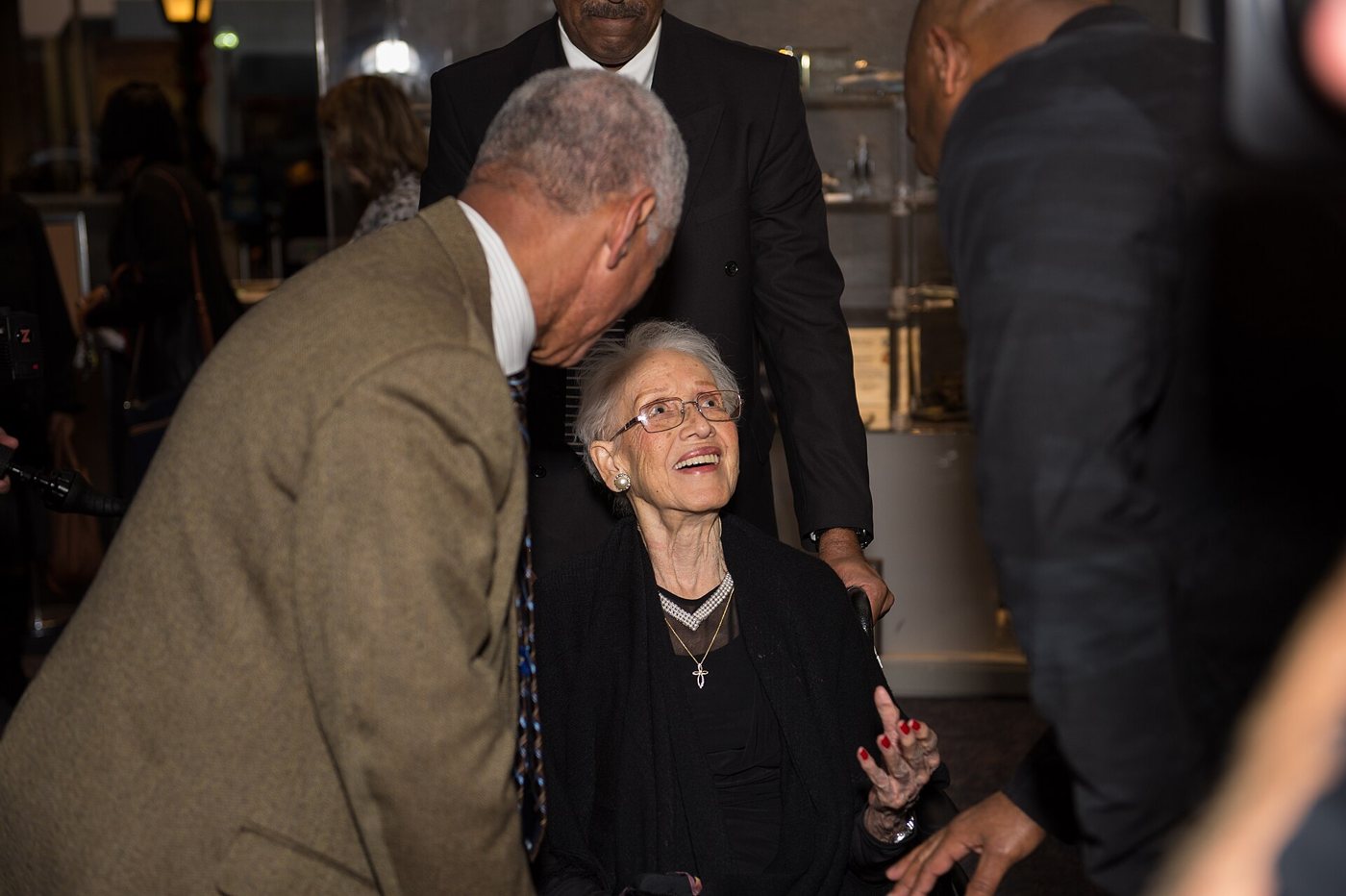
Finding one’s place in the world · Young people today
Katherine, Dorothy and Mary are told where to sit, work and study, but they refuse to stay in that place. Today, how do young people get involved when they feel they are not given a place?
Sentence starters
- Like Mary Jackson, some young people…
- Young people get involved when they feel… because…
- Joining a group or an association can give young people…
- Katherine claims her place by…; today, young people…
Visionary filmmakers. In 2016, director Theodore Melfi put on the big screen three women whose work at NASA had been left out of the history books for decades.
Talk about the characters and about young people in general, not about yourself.
Then, a second question:
Why do some people who do essential work stay invisible? Think of jobs in a hospital, a lab, a space agency or a stadium: who do we see, and who do we not see?
Sentence starters
- The people we see are…, but the people behind them are…
- A job can be invisible because…
- Without them, … would not be possible.
The film in three lines
Virginia, 1961. At NASA’s Langley Research Center, Katherine Johnson, Dorothy Vaughan and Mary Jackson work as “human computers” in a segregated unit. As the USA races the Soviet Union into space, their mathematics, their courage and their friendship help put astronaut John Glenn into orbit.
Your mission: watch the official trailer, analyse its film language, discover the real history with NASA sources, then speak: present, debate, review.
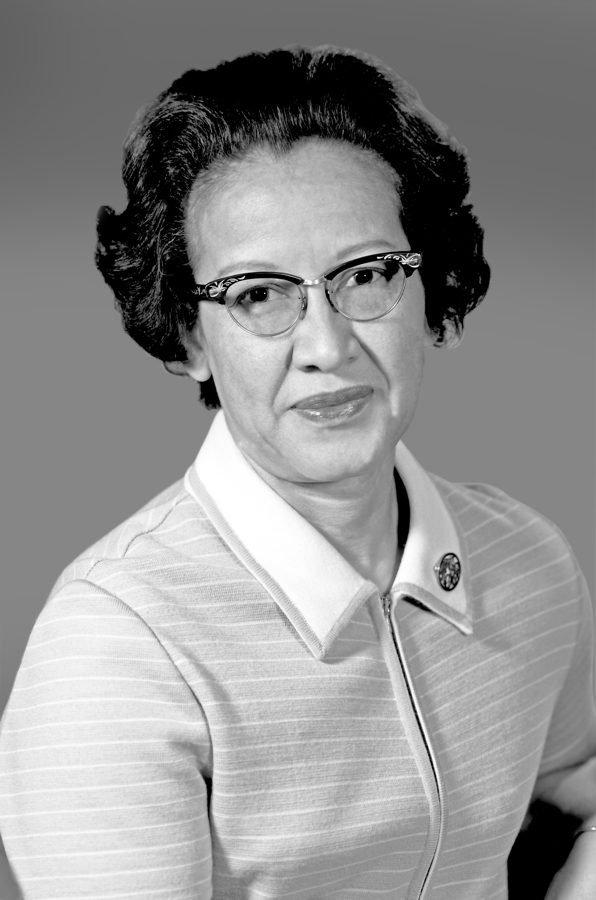
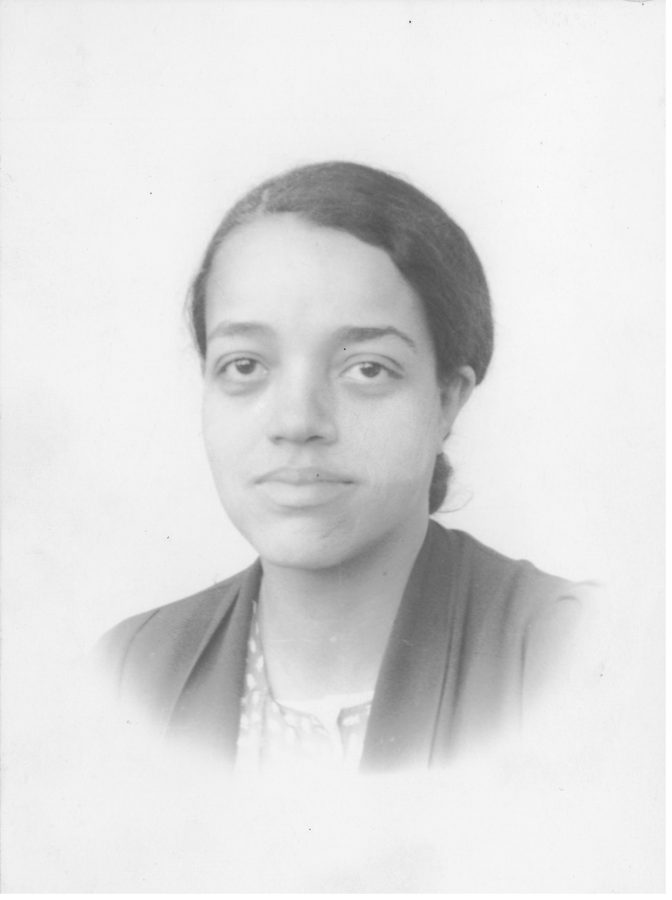
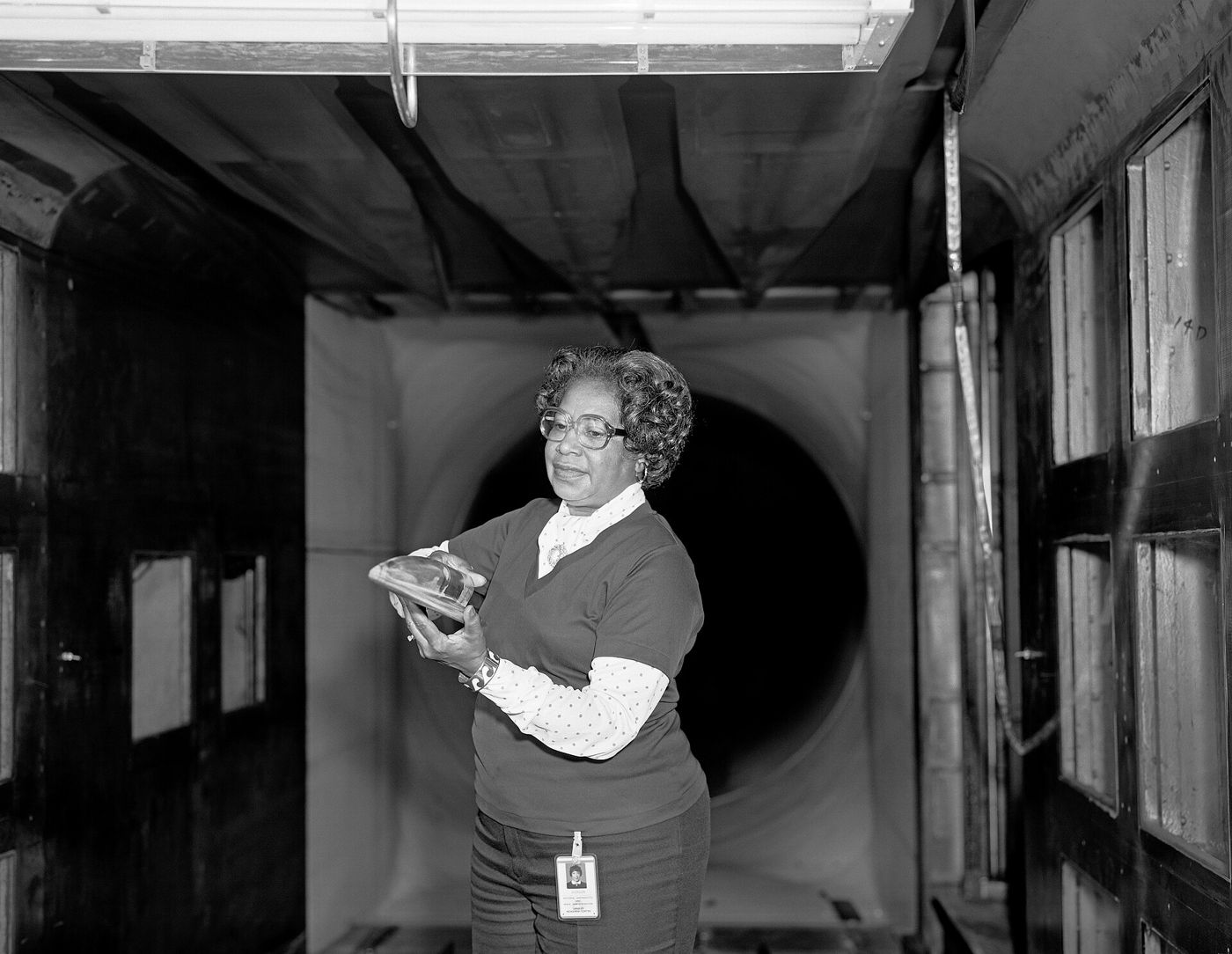
Film sheet

Film study sheet · printable, clickable, with QR code.
Open the printable sheethttps://trame-lycee.netlify.app/films/fiche-hidden-figures.html
Film credits
| Title | Hidden Figures (USA, 2016) |
|---|---|
| Director | Theodore Melfi |
| Screenplay | Allison Schroeder and Theodore Melfi, based on the book by Margot Lee Shetterly |
| Cast | Taraji P. Henson (Katherine G. Johnson), Octavia Spencer (Dorothy Vaughan), Janelle Monáe (Mary Jackson), Kevin Costner (Al Harrison), Kirsten Dunst (Vivian Mitchell), Jim Parsons (Paul Stafford), Mahershala Ali (Jim Johnson), Glen Powell (John Glenn) |
| Cinematography | Mandy Walker |
| Editing | Peter Teschner |
| Music | Hans Zimmer, Pharrell Williams, Benjamin Wallfisch |
| Distributor | 20th Century Fox |
| Running time | 127 minutes |
| Release (USA) | 6 January 2017 (wide) |
| Rating | PG, thematic elements and some language |
| Awards | 3 Oscar nominations (89th Academy Awards, 2017): Best Picture, Supporting Actress (Octavia Spencer), Adapted Screenplay |
Film language, with examples from the official trailer
Timecodes are approximate (± 2 s). Pause the trailer and check each example yourself.
Shots
| Word | Meaning |
|---|---|
| establishing shot / extreme long shot | shows the place; people look tiny |
| long shot | a whole body in its setting |
| medium shot | from the waist up |
| close-up | a face fills the frame: emotion |
| extreme close-up | a detail: eyes, a hand, an object |
| two-shot | two characters in one frame: a relationship |
| over-the-shoulder shot | we watch one character through another’s position |
- 0:26tracking two-shot through the windscreen: the three women in their car, escorted by a police car
- 0:50long shot: Katherine on a ladder in front of a giant blackboard, she looks small, the equations look huge
- 1:26close-up on Katherine’s face and glasses: concentration
- 1:02group shot: the West Area computers cheer together
Angles
| Word | Meaning |
|---|---|
| eye level | neutral, we are equal with the character |
| high angle | camera above: the character looks small or weak |
| low angle | camera below: the character looks powerful |
| canted (Dutch) angle | tilted frame: unease, a world out of balance |
| bird’s-eye view | straight down from above |
- 0:14the police officer is filmed slightly from below: authority
- 1:50eye-level shot of the NASA managers around a table: who has the power in the room?
Camera movement
| Word | Meaning |
|---|---|
| pan | the camera turns horizontally |
| tilt | the camera moves up or down |
| tracking shot | the camera travels with a character or a car |
| zoom | the lens brings us closer |
| handheld camera | shaky, urgent, documentary feel |
| crane / aerial shot | the camera flies above the scene |
- 0:26tracking shot: the camera moves with the car on the road
- 1:58the camera follows the rocket as it rises
Lighting & colour
| Word | Meaning |
|---|---|
| high-key lighting | bright, few shadows: optimism |
| low-key lighting | dark, strong shadows: tension, mystery |
| backlighting | light behind a character: a halo or a silhouette |
| natural light | sun, windows, candles |
| colour palette | the dominant colours of the film |
- 0:06bright natural light and pastel colours (turquoise car, 1960s dresses): high-key optimism
- 0:42dark background for the Sputnik satellite: the threat of the Soviet Union
Sound
| Word | Meaning |
|---|---|
| diegetic sound | the characters can hear it (a radio, a piano on stage) |
| non-diegetic sound | only the audience hears it (the score, a narrator) |
| voice-over | a voice we hear over the images |
| score | music composed for the film |
| silence | no sound: a shock, a pause |
| sound bridge | a sound that continues into the next scene |
- 0:30music with a strong beat starts under the dialogue (non-diegetic score)
- 1:58the roar of the rocket at lift-off (diegetic sound)
Editing
| Word | Meaning |
|---|---|
| cut | a direct change of shot |
| cross-cutting | alternating between two places or stories |
| montage | a fast series of shots that compresses time |
| fade to black | the image disappears: an ending, a pause |
| intertitle | text on screen between images |
| slow motion | time slows down: importance, emotion |
- 1:34intertitle on black: “Based on the untold true story”
- 2:06intertitles: “Three women” / “would change history”
- 1:58fast montage before the title: lift-off, faces, control room
Step into the period
Daily life
- Segregation laws in Virginia: separate schools, buses, bathrooms, coffee pots
- Women in skirts, gloves and hats; men in white shirts and ties at NASA
- Mechanical calculators, chalkboards and the first IBM electronic computers
Music
- Soul and gospel, the sound of Black churches and radios in the early 1960s
- The film’s songs are written by Pharrell Williams in a 1960s soul style
Fashion
- Fitted dresses with belts, cat-eye glasses, short curled hair
- Pencil skirts and cardigans in the office
Places
- NASA Langley Research Center, Hampton, Virginia
- Cape Canaveral, Florida, the launch site
- The West Area Computing office: a segregated unit
Historical landmarks
- 1896 Plessy v. Ferguson: the Supreme Court accepts “separate but equal”.
- 1941 Executive Order 8802 bans racial discrimination in the defense industry.
- 1943 Dorothy Vaughan joins the Langley laboratory (NACA).
- 1949 Dorothy Vaughan becomes head of West Area Computing, NACA’s first Black supervisor.
- 1951 Mary Jackson joins West Area Computing.
- 1953 Katherine Johnson starts at Langley.
- 1954 Brown v. Board of Education: segregation in public schools is unconstitutional.
- 1957 4 October: the Soviet Union launches Sputnik 1.
- 1958 NASA is created; segregated facilities at Langley are abolished; Mary Jackson becomes NASA’s first Black female engineer.
- 1961 12 April: Yuri Gagarin orbits Earth. 5 May: Alan Shepard, first American in space.
- 1962 20 February: John Glenn orbits Earth three times in Friendship 7.
- 1964 Civil Rights Act: discrimination in public places becomes illegal.
- 1969 Apollo 11: humans walk on the Moon.
- 2015 Katherine Johnson receives the Presidential Medal of Freedom.
- 2016 Margot Lee Shetterly publishes Hidden Figures; the film is released.
Sources: NASA, Katherine Johnson · NASA, Dorothy Vaughan · NASA, Mary W. Jackson
Watch
Official trailer (20th Century Studios)
Official channel: 20th Century Studios · https://www.youtube.com/watch?v=5wfrDhgUMGI
Before you watch
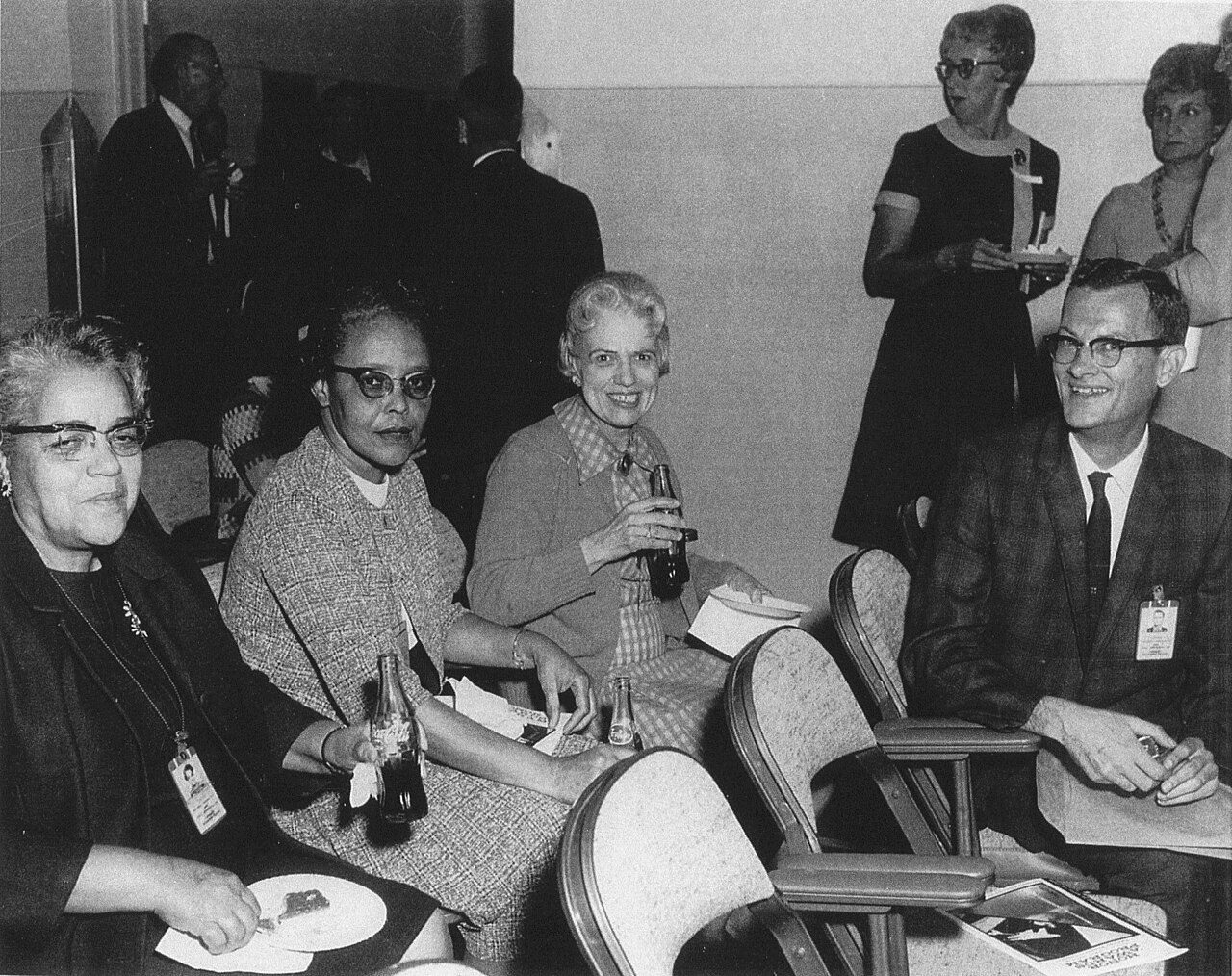
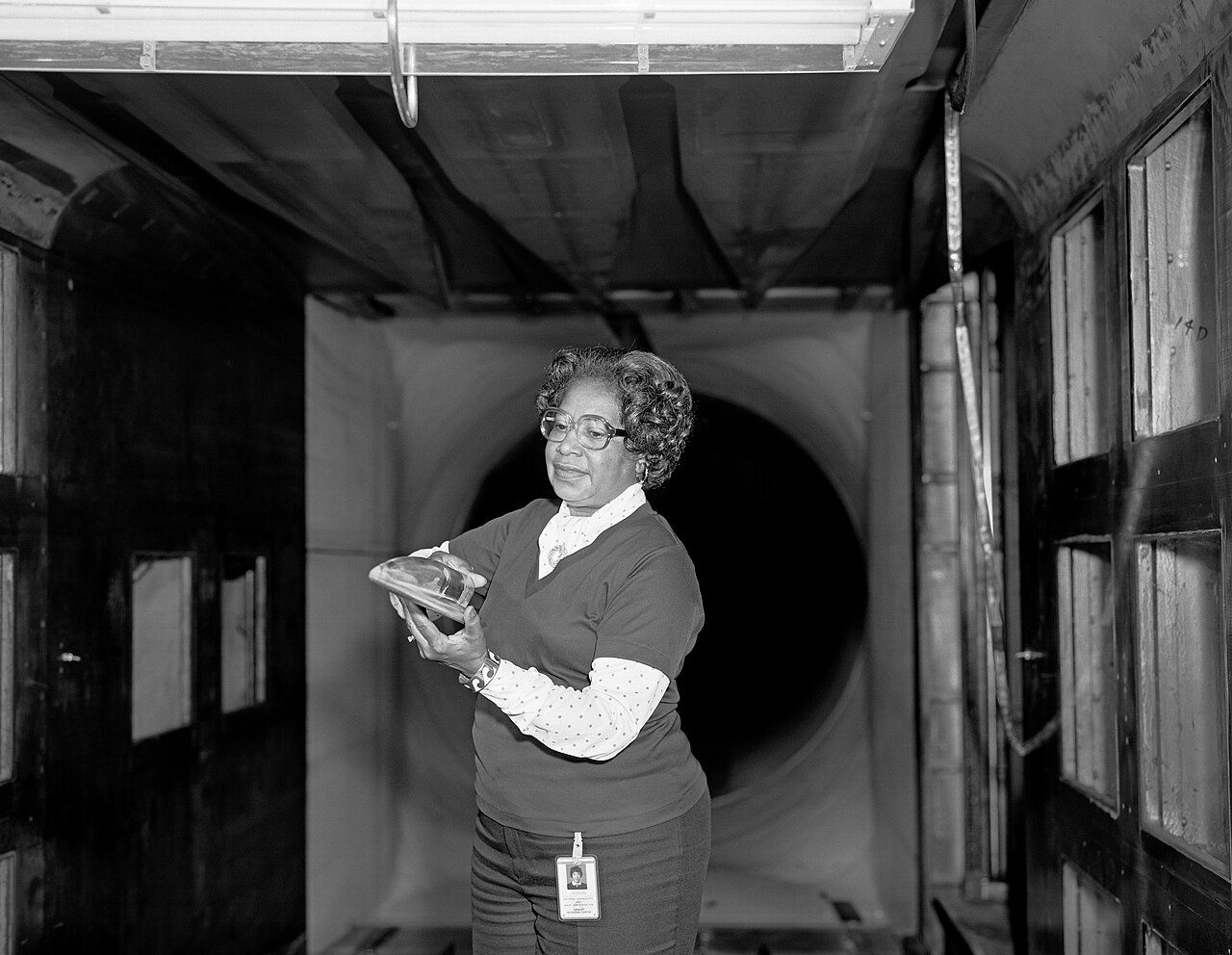
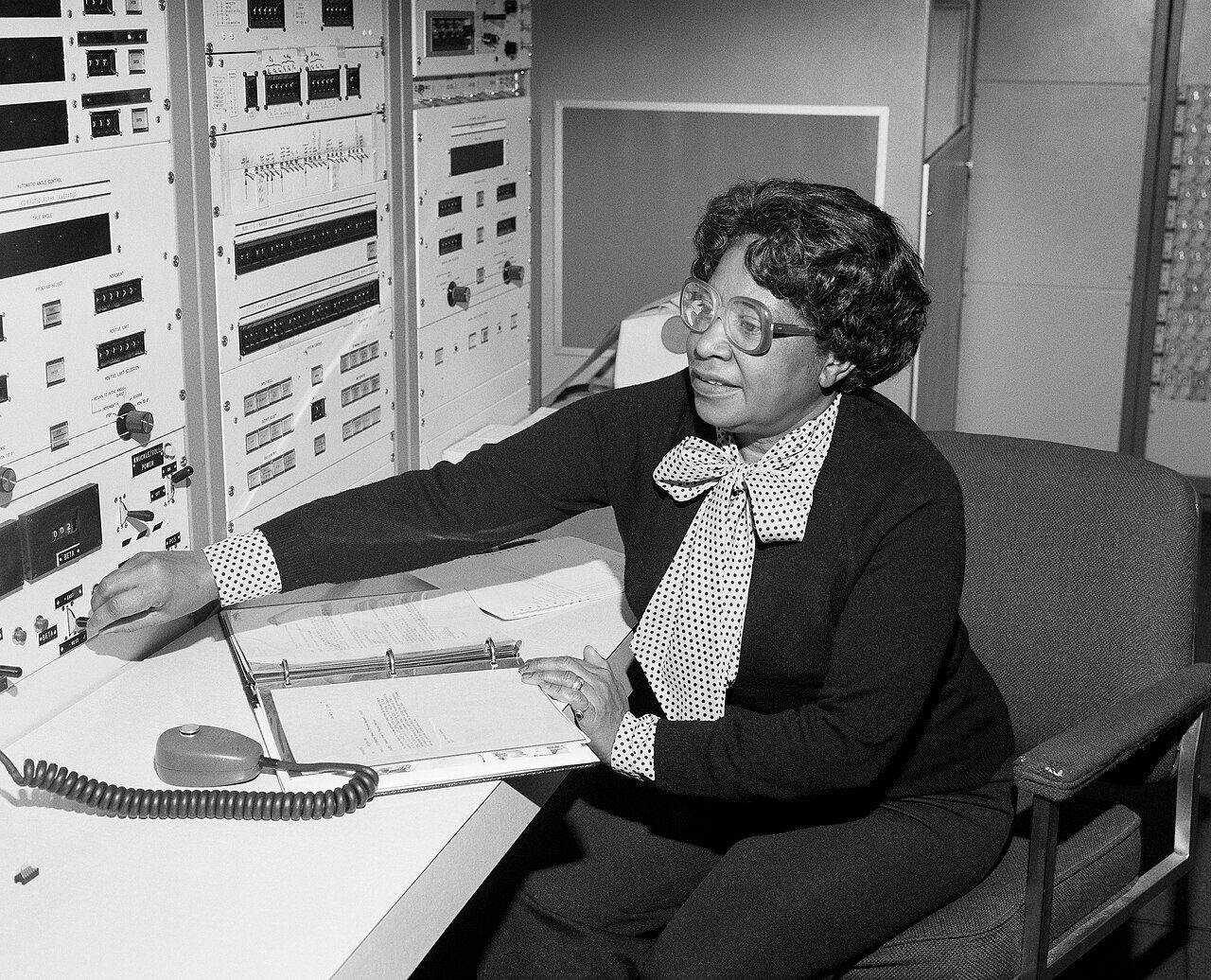
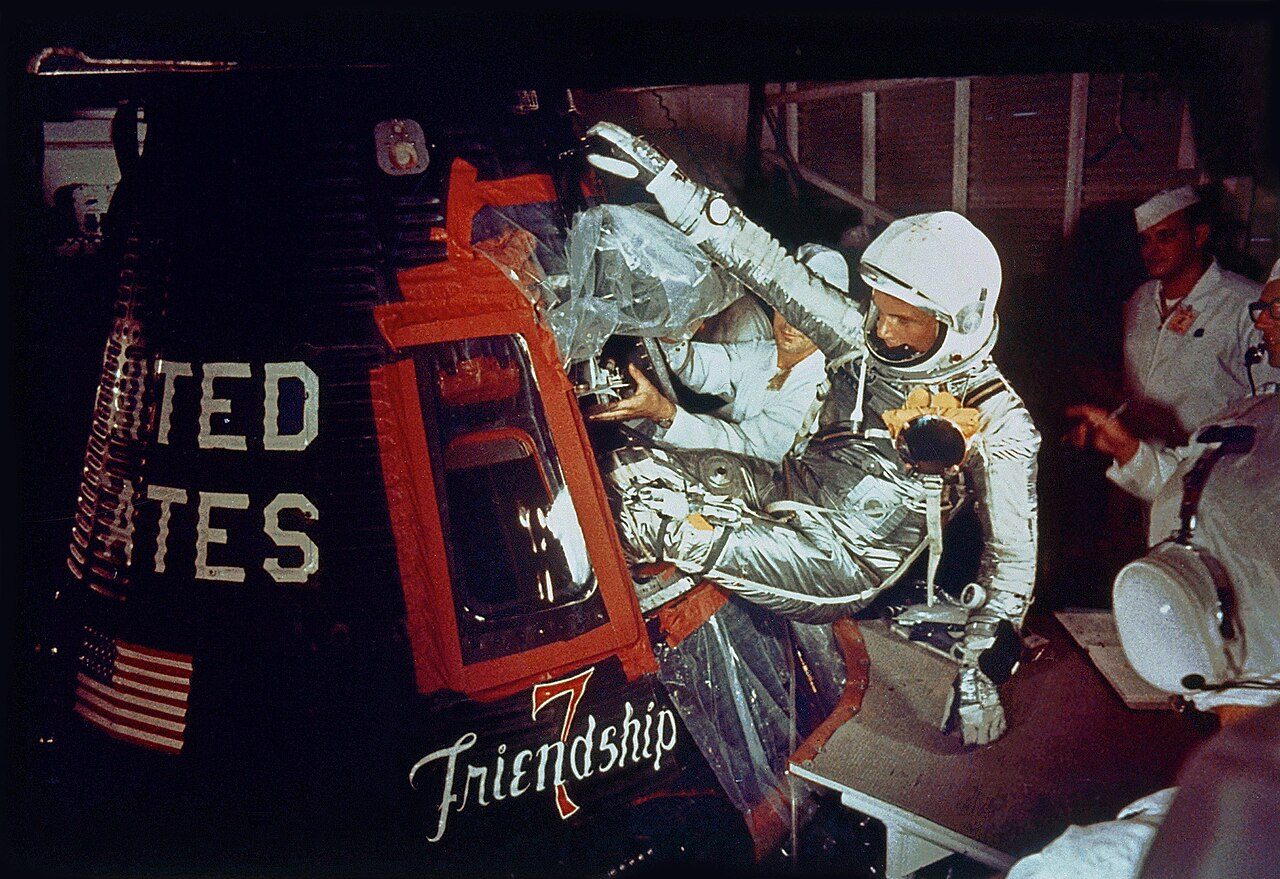
Look at the four photos in the Overview tab. Predict: what is the job of these women? What problem might they face in 1961?
Sentence starters
- I predict that…
- They might work as…
- In 1961, a Black woman in Virginia probably…
First viewing, global understanding
- Where are the three women at the very beginning? What has happened to their car?
- Who arrives, and how does the situation change when they say they work for NASA?
- What does the US president demand after the launch of the Russian satellite?
- Which team needs “a computer”? Who is chosen?
- What is the astronaut’s name?
- What happens at the very end of the trailer?
Answer key
- On a country road; their car has broken down.
- A police officer; when he hears “NASA” he becomes helpful and escorts them.
- “An immediate response.”
- The Space Task Group; Katherine.
- John Glenn.
- A rocket lifts off; the title appears.
Second viewing, listen for the exact words
Complete these lines from the trailer.
- ≈0:52“This is about inventing the ___, because without it we’re not going anywhere.”
- ≈1:09“If you were a white male, would you wish to be an ___?”, “I wouldn’t have to. I’d ___ be one.”
- ≈1:23“Just make that pencil move as fast as your ___ does.”
- ≈1:41“There’s no ___ for a man circling the Earth either, sir.”
- ≈1:44“Every time we have a chance to get ahead, they move the ___ line.”
Answer key
- math
- engineer · already
- mind
- protocol
- finish
Film language
Read the images
Use the Film sheet tab (vocabulary + examples). Then pause the trailer at three moments and analyse them.
| Moment | Shot / angle | What it suggests |
|---|---|---|
| ≈0:50 Katherine at the blackboard | long shot, low position of the character in the frame | the size of the challenge; one woman against a wall of numbers |
| ≈1:50 the meeting room | medium shots of men in suits | the room where decisions are made, and who is missing |
| ≈1:58 lift-off | long shot + tilt up | national pride, a collective achievement |
Sentence starters
- In this shot, the camera is… so the character looks…
- The director uses a … to show that…
- The colours / the lighting create a … atmosphere.
- This contrasts with… because…
Micro-task
Choose one frame. Write 5 sentences: what we see (2), how it is filmed (2), what it means (1).
Context & history
The Space Race
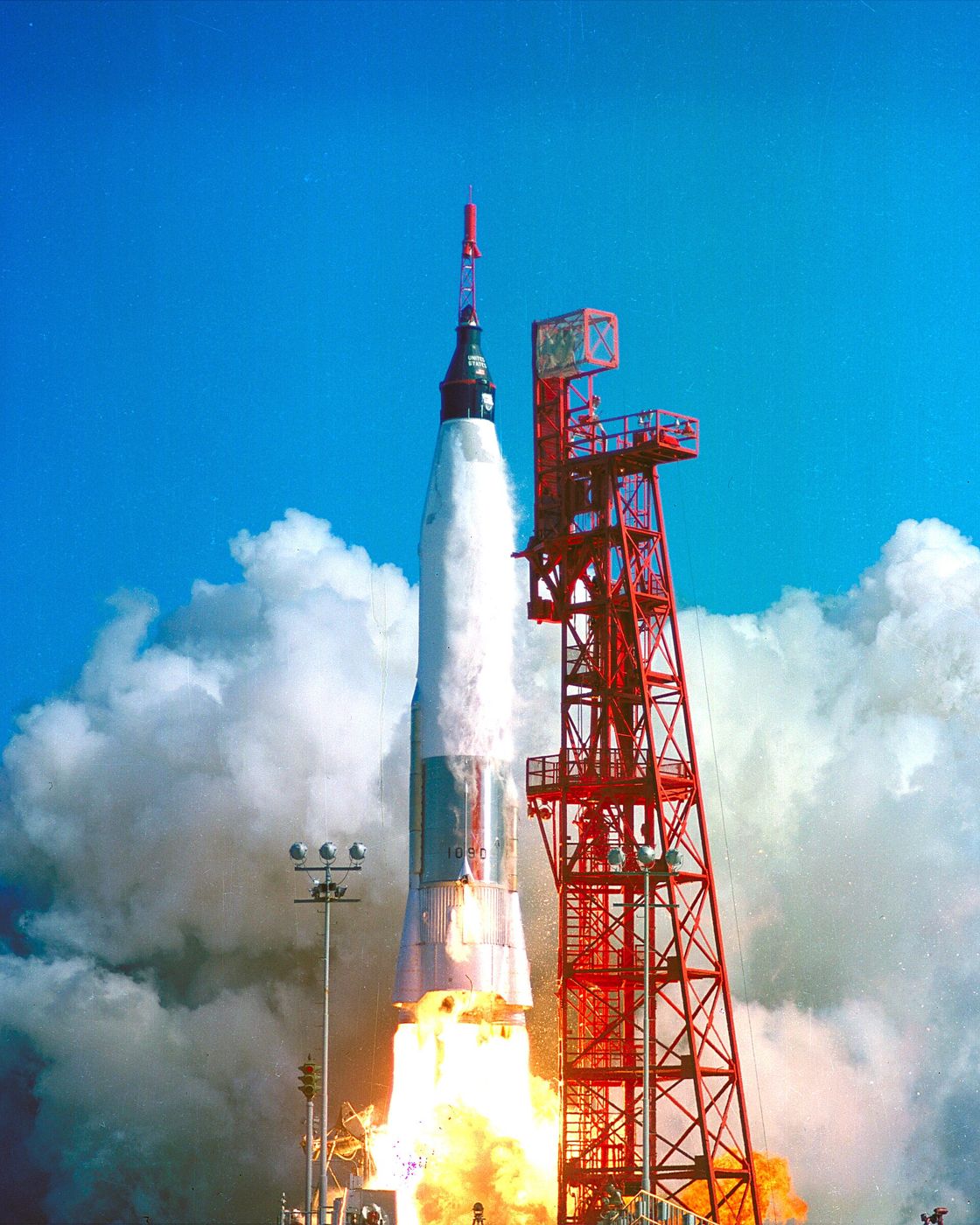
On 4 October 1957 the Soviet Union launched Sputnik, the first artificial satellite. For the USA, it was a shock. NASA was created in 1958. On 12 April 1961 Yuri Gagarin became the first human to orbit Earth; on 20 February 1962 John Glenn became the first American to do it, aboard Friendship 7.
Segregation at Langley
NASA explains that newly hired Black women mathematicians had to work in a separate unit, “West Area Computing”, and “were originally required to use separate dining and bathroom facilities”. Dorothy Vaughan led the unit from 1949; segregated facilities were abolished in 1958 when the NACA became NASA.
“I counted everything. I counted the steps to the road, the steps up to church, the number of dishes and silverware I washed … anything that could be counted, I did.”
Katherine Johnson · NASA, “Katherine Johnson: The Girl Who Loved to Count”“Get the girl to check the numbers.”
John Glenn, before Friendship 7 · NASA, “From Computers to Leaders: Women at NASA Langley”“If she says they’re good, then I’m ready to go.”
John Glenn, as Katherine Johnson remembered it · NASA biography by Margot Lee Shetterly“I loved going to work every single day.”
Katherine Johnson · NASARead and react, Mary Jackson
NASA tells us that Mary Jackson needed special permission from the City of Hampton to attend engineering classes held at a then-segregated high school. She completed the courses and in 1958 became NASA’s first Black female engineer. In 1979 she chose a lower grade to work for equal opportunity at Langley.
- What obstacle did Mary Jackson face, and how did she overcome it?
- Why do you think she left engineering in 1979?
- Which word best describes her: patient, determined, rebellious? Justify.
Answer key
- Classes were in a segregated school; she asked for and obtained permission.
- To help the hiring and promotion of other women (glass ceiling).
- Determined, open answer, justified with the text.
Sentence starters
- According to NASA,…
- What strikes me is that…
- This shows that segregation…
Read more: NASA, Mary W. Jackson · NASA, Dorothy Vaughan
Fact or film?
The film condenses history. NASA explains that Glenn’s request was part of the preflight checklist; in the film, it happens at the last minute, during the launch countdown. The character Al Harrison is invented: a composite of several real managers. Discuss: is it acceptable for a film “based on a true story” to change details?
Sentence starters
- A film can change details as long as…
- The risk is that viewers…
- I think the essential truth is…
Characters
| Character (actor) | Who she / he is | Key word |
|---|---|---|
| Katherine G. Johnson (Taraji P. Henson) | mathematician who checks orbital trajectories | brilliance |
| Dorothy Vaughan (Octavia Spencer) | leader of the West Area computers, learns programming (FORTRAN) | foresight |
| Mary Jackson (Janelle Monáe) | wants to become an engineer | determination |
| Al Harrison (Kevin Costner) | director of the Space Task Group (fictional composite) | pragmatism |
| Paul Stafford (Jim Parsons) | head engineer, resists Katherine at first | prejudice |
| Vivian Mitchell (Kirsten Dunst) | white supervisor | indifference → change? |
| John Glenn (Glen Powell) | astronaut who trusts “the girl” to check the numbers | trust |
Task, portrait in 60 seconds
Choose one character. Describe her or him to the class without saying the name; the class guesses.
Sentence starters
- This character works as… and wants…
- She / he faces… but…
- In the trailer, she / he says…
- I admire / I question this character because…
Speak
1 · Continuous speech, 2 minutes
Present the trailer to a class that has never seen it: context, characters, film language, your opinion.
Sentence starters
- This trailer introduces… set in…
- It focuses on three women who…
- One striking shot is…
- The trailer makes us want to see the film because…
- To conclude,…
Success criteria: 4 parts, 3 film words, 1 quotation, linking words (first, then, however, finally).
2 · Interaction, the meeting room
Pairs. A: Katherine asks to attend the briefing. B: Paul Stafford refuses. Use arguments from the trailer. Switch roles.
Sentence starters
- I need to be in that room because…
- With respect, there is no rule that…
- I understand, but…
- What if…?
3 · Debate, “Should films about real people be 100% accurate?”
Two teams, 90 seconds each, then free exchange.
Sentence starters
- I strongly believe that…
- The other team claims…, but…
- Let me give you an example from Hidden Figures:…
- To sum up our position,…
4 · Film review podcast, 1 min 30 (timed)
Sentence starters
- Today I am reviewing…
- What I liked most is…
- However, some viewers may feel…
- I would give it … stars because…
Write
Write
B1 (2nde) · 150 to 180 words: You are a journalist in February 1962. Write a short article about Friendship 7 and the women who checked the numbers.
B2 (1re) · 220 to 250 words: “Progress in science always depends on progress in justice.” Discuss, using Hidden Figures and the NASA documents.
Sentence starters
- On 20 February 1962,…
- Behind the astronaut, there were…
- It is often said that… Yet…
- Not only… but also…
- This is why I would argue that…
Checklist: title · paragraphs · a quotation with its source · past tenses (B1) / concession + nuance (B2).
For the exam
For the exam. In the baccalauréat général, English (LVA / LVB) is assessed through continuous assessment: your annual average in 1re and in Tle counts (coefficient 3 each year). At the end of Tle, your teachers also certify your CEFR level in each skill, listening, reading, writing, speaking (continuous) and speaking (interaction), on your official language certificate. Every task below is built on those five skills, with authentic documents linked to a programme axis, exactly like your class assessments.
What this film study trains
- Listening: trailer questions (Watch tab).
- Reading: NASA biographies (Context tab).
- Speaking (continuous): 2-minute presentation.
- Speaking (interaction): meeting-room role-play, debate.
- Writing: article / essay.
Project
Project, “Hidden figures” exhibition wall
In groups, create a poster or a slide for a class exhibition about a scientist who did essential work out of the spotlight (choose from NASA’s pages: Katherine Johnson, Dorothy Vaughan, Mary Jackson, or another NASA pioneer). Include: dates, achievements, one real quote with its source, one public-domain image with its credit. Present it in 2 minutes.
Sentence starters
- Our scientist is…
- She / He is remembered for…
- A quotation that sums her / him up is…
Closing: place & exchange
Step 1 · A place found or lost
Everything is exchange, and we can only give and receive from a place. First find each character’s place; then look at four kinds of exchange; then go deeper: what passes between the characters inside · trust, love, respect, meaning? Who do they become, not only what do they own?
Where is Katherine’s place at NASA at the start of the film, and where is it at the end?
Sentence starters
- At the start, …’s place is…
- At the end, … has found / lost his/her place because…
Answer key
- Katherine starts in a segregated office, far from the decisions; she ends in the control room, trusted by Glenn.
Step 2 · Four kinds of exchange
| Kind of exchange | In the film |
|---|---|
| Political | Mary Jackson goes to court to ask a judge for the right to attend classes at an all-white school. |
| Emotional | Katherine and Jim Johnson; Katherine and her three daughters. |
| General interest | Katherine’s calculations serve the whole space programme and John Glenn’s flight. |
| Human rights | The segregated bathrooms and coffee pot: the women fight for equal dignity at work. |
Sentence starters
- The political exchange in the film is between… and…
- …gives… to…, and in return…
- This exchange serves the general interest because…
- …defends the right to…
Step 3 · Beyond what they have: who they are
Now go deeper, from the place each character has found or lost. Talk about the characters only.
- What does John Glenn see in Katherine when he asks for her to check the numbers?
- Dorothy learns FORTRAN and teaches it to her team. What does she share with the other women, beyond a skill?
- At the end, what do Katherine, Dorothy and Mary become in the eyes of others, and in their own eyes?
Sentence starters
- What really passes between… and… is…
- …does not only give…; he/she gives…
- Thanks to…, …understands who he/she is.
- At the end, what matters for… is not what he/she has but…
- This exchange changes… because…
- From his/her new place, … can at last give / receive…
Closing sentence (write it): From the place they find or lose, the deepest exchange in this film is…
Answer key
- Trust: Glenn trusts her as a person, not as a “computer”. He recognises who she is.
- Hope and solidarity: Dorothy refuses to move forward alone; she gives her team a future and keeps them together.
- They are seen for what they are, brilliant women, not for their place in a segregated system. The deepest exchange is recognition.
- Model closing sentence: The deepest exchange in the film is recognition: being seen for who you are.
Teacher
Teacher notes
- Level: 2nde (B1) and 1re (B2). Rated PG: suitable for all classes.
- Programme axes (BO n° 22, 29 May 2025): 2nde « Le passé dans le présent », « Défis et transitions » · 1re « Diversité et inclusion », « Innovations scientifiques et responsabilité » (objet d’étude « À qui appartient l’espace ? »).
- Trailer: official 20th Century Studios channel, checked by oEmbed.
- Images: NASA, public domain.
- Students speak about the characters and the history, never about their own situation.

Share this film study
https://trame-lycee.netlify.app/films/hidden-figures.html
Created by Madame Carole Paoli Pompougnac.