



Cultural concept
Public health & consumer society
How marketing, portion size and cheap calories shape eating habits, and how to judge evidence about health.
Key question: Can one experiment prove something about everyone?
Watch → Film language → Context & history → Characters → Speak → Write → Project → Closing: place & exchange
Context & history → Characters → Speak → Write → Watch the trailer → Film language → Final task: Project → Closing: place & exchange
Guiding thread: Finding one’s place in the world · Sub-thread: Giving and receiving, we can only give and receive from a place.
Theme: Justice & the environment
Overview
Hook, finding one’s place
Guiding thread: Finding one’s place in the world · Sub-thread: Giving and receiving, we can only give and receive from a place.
Finding one’s place in the world · Young people today
The film opens with two teenage girls who took McDonald’s to court, and Morgan Spurlock tests fast food on his own body. Today, how do young people act for better food and health at school?
Sentence starters
- The two teenage girls go to court because…
- Young people can act for better school meals by…
- To change eating habits, a school needs…
- Caring for others’ health means…
Visionary filmmakers. Back in 2004, Morgan Spurlock was already questioning fast food and school lunches, years before healthy school meals became a public debate.
Talk about the characters and about young people in general, not about yourself.
Then, a second question:
Can one person’s experiment prove something about everyone?
Sentence starters
- One person’s experience can show… but…
- To prove something scientifically, you need…
- A documentary is not a laboratory because…
The film in three lines
Official synopsis (Samuel Goldwyn Films): “While examining the influence of the fast food industry, Morgan Spurlock personally explores the consequences on his health of a diet of solely McDonald’s food for one month.” From 1 February to 2 March 2003, he eats three McDonald’s meals a day, accepts the “Super Size” option whenever it is offered, and limits his walking. Doctors follow his weight, blood and liver.
Your mission: understand the experiment, analyse how a documentary persuades, then judge its scientific value.
Film sheet

Film study sheet · printable, clickable, with QR code.
Open the printable sheethttps://trame-lycee.netlify.app/films/fiche-super-size-me.html
Film credits
| Title | Super Size Me (USA, 2004), documentary |
|---|---|
| Director, writer, producer | Morgan Spurlock (1970 to 2024) |
| With | Morgan Spurlock, Alexandra Jamieson (his partner, a vegan chef), doctors Daryl Isaacs, Lisa Ganjhu and Stephen Siegel |
| Cinematography | Scott Ambrozy |
| Editing | Julie “Bob” Lombardi |
| Music | Steve Horowitz |
| Production | The Con |
| Distributors | Samuel Goldwyn Films, Roadside Attractions |
| Running time | about 100 minutes |
| Release | Sundance Film Festival, January 2004 (directing award, documentary) · USA, 7 May 2004 |
| Rating | PG-13, language, sex and drug references, and a graphic medical procedure |
| Awards | Oscar nomination for Best Documentary Feature (77th Academy Awards, 2005); Writers Guild of America award for documentary screenplay |
Film language, with examples from the documentary’s style
The official trailer is not freely available online: these examples describe techniques used throughout the documentary. Check them when your teacher plays the trailer or an extract.
Shots
| Word | Meaning |
|---|---|
| establishing shot / extreme long shot | shows the place; people look tiny |
| long shot | a whole body in its setting |
| medium shot | from the waist up |
| close-up | a face fills the frame: emotion |
| extreme close-up | a detail: eyes, a hand, an object |
| two-shot | two characters in one frame: a relationship |
| over-the-shoulder shot | we watch one character through another’s position |
- filmclose-ups of food, trays and cups: the size of portions
- filmmedical close-ups: scales, blood tests, the doctor’s face
Angles
| Word | Meaning |
|---|---|
| eye level | neutral, we are equal with the character |
| high angle | camera above: the character looks small or weak |
| low angle | camera below: the character looks powerful |
| canted (Dutch) angle | tilted frame: unease, a world out of balance |
| bird’s-eye view | straight down from above |
- filmthe filmmaker looks into the camera: a direct address to the viewer
Camera movement
| Word | Meaning |
|---|---|
| pan | the camera turns horizontally |
| tilt | the camera moves up or down |
| tracking shot | the camera travels with a character or a car |
| zoom | the lens brings us closer |
| handheld camera | shaky, urgent, documentary feel |
| crane / aerial shot | the camera flies above the scene |
- filmhandheld camera in the streets of New York: a “real life” feeling
Lighting & colour
| Word | Meaning |
|---|---|
| high-key lighting | bright, few shadows: optimism |
| low-key lighting | dark, strong shadows: tension, mystery |
| backlighting | light behind a character: a halo or a silhouette |
| natural light | sun, windows, candles |
| colour palette | the dominant colours of the film |
- filmthe bright red and yellow of fast-food signs
- filmcold clinical light in doctors’ offices
Sound
| Word | Meaning |
|---|---|
| diegetic sound | the characters can hear it (a radio, a piano on stage) |
| non-diegetic sound | only the audience hears it (the score, a narrator) |
| voice-over | a voice we hear over the images |
| score | music composed for the film |
| silence | no sound: a shock, a pause |
| sound bridge | a sound that continues into the next scene |
- filmthe director’s first-person voice-over, full of humour
- filmpop songs that make the subject entertaining
Editing
| Word | Meaning |
|---|---|
| cut | a direct change of shot |
| cross-cutting | alternating between two places or stories |
| montage | a fast series of shots that compresses time |
| fade to black | the image disappears: an ending, a pause |
| intertitle | text on screen between images |
| slow motion | time slows down: importance, emotion |
- filma day counter on screen (“Day 1… Day 30”): a diary structure
- filmcartoons and graphics with numbers: calories, weight, cholesterol
Step into the period
Daily life
- Early 2000s: Super Size portions, drive-throughs, soda refills
- Debate about obesity, called an “epidemic” by the US Surgeon General
- In 2002, a lawsuit against McDonald’s on behalf of two teenagers (Pelman v. McDonald’s) was dismissed
Music
- Pop and rock soundtrack; comic songs
Fashion
- 2000s street style in New York
Places
- Manhattan, New York; trips across the USA to schools and experts
- McDonald’s restaurants
Historical landmarks
- 1940 The McDonald brothers open a restaurant in San Bernardino, California.
- 1955 Ray Kroc opens his first McDonald’s franchise.
- 2001 The US Surgeon General issues a Call to Action against overweight and obesity.
- 2002 Pelman v. McDonald’s: a lawsuit on behalf of two teenagers; dismissed in 2003.
- 2003 1 February, 2 March: Spurlock’s 30-day experiment.
- 2004 January: Sundance premiere. March: McDonald’s announces it will phase out Super Size portions (it says the decision is not linked to the film). 7 May: release.
- 2005 Oscar nomination.
- 2008 Linköping University (Sweden) publishes a controlled study of a fast-food overeating diet on 18 volunteers.
- 2010 The Healthy, Hunger-Free Kids Act changes school meals.
- 2016 A new Nutrition Facts label is announced by the FDA.
- 2017 Spurlock releases Super Size Me 2: Holy Chicken!; in December he publishes a personal statement that raises new doubts about the first film.
- 2024 Morgan Spurlock dies, aged 53.
Sources: Samuel Goldwyn Films, Super Size Me · Kechagias et al., Gut, 2008 · FDA, Food labeling
Watch
Official trailer
Before you watch, the rules of the experiment
Spurlock set himself these rules: eat three McDonald’s meals a day; eat every item on the menu at least once; eat and drink only what McDonald’s sells, water included; say yes to “Super Size” only when it is offered; walk about as much as an average American.
- Which rule seems the most extreme to you?
- Which rule makes the experiment less realistic?
- What would you measure if you were his doctor?
Sentence starters
- The most extreme rule is… because…
- A normal customer would not…
- I would measure…
While watching, viewing grid
| Look for… | Your notes |
|---|---|
| people who speak (who are they?) | |
| numbers on screen | |
| humour (how is it created?) | |
| music and its effect | |
| the message in one sentence |
Film language
A first-person documentary
Spurlock is director, narrator and subject. He talks to the camera, uses cartoons, numbers and pop songs. Compare this style with Food, Inc. (narrators, experts, interviews).
Sentence starters
- Because the director is the subject,…
- Humour makes the message… but it can also…
- Compared with Food, Inc., this film is more…
Context & history
The experiment in numbers
- 30 days: 1 February, 2 March 2003.
- About 5,000 kilocalories a day, according to Spurlock, about twice what is generally recommended for an adult man.
- He gained about 11 kg (24.5 pounds).
Critical thinking, is it science?
The film was a huge success and helped start a national debate. But its scientific value was criticised:
- it is an experiment on one person, with no control group;
- he ate far more calories than usual and walked less: critics said any diet with that many calories would make a person gain weight;
- he did not publish his complete food log;
- a Swedish study with 18 volunteers and a control group (Kechagias et al., Gut, 2008) found that doubling calories with fast food and little exercise for four weeks could strongly raise liver enzymes: overeating itself, not one brand, was the issue it measured;
- years later, the director’s own statements raised doubts about whether everything he consumed had been reported.
- List three conditions for a reliable scientific experiment.
- Does the criticism make the film useless? Why or why not?
Answer key
- Several subjects; a control group; measured, published data; repeatable method; independent checks.
- Open answer: it is weak as science but strong as a debate starter; McDonald’s phased out Super Size portions in 2004 (while denying a link).
Sentence starters
- As a scientific experiment, the film is weak because…
- However, as a piece of communication,…
- A documentary should be judged on…
Characters
| Person | Role |
|---|---|
| Morgan Spurlock | director and subject of the experiment |
| Alexandra Jamieson | his partner, a vegan chef, worried about his health |
| Dr Daryl Isaacs, Dr Lisa Ganjhu, Dr Stephen Siegel | general practitioner, gastroenterologist, cardiologist who follow him |
Sentence starters
- The doctors’ role is to…
- The partner gives the film…
Speak
1 · Design a better experiment, 2 minutes (groups)
Plan a fair version of the experiment: subjects, rules, measures, duration, ethics. Present it.
Sentence starters
- Our experiment would involve…
- To make it fair, we would…
- We would measure…
- Ethically, we must…
2 · Interaction, the TV debate
Four roles: a fast-food spokesperson, a nutritionist, a film critic, a TV host. 5 minutes.
Sentence starters
- Our company offers…
- From a nutritional point of view,…
- As a documentary, the film…
- Let me ask you…
3 · Debate, “Should junk food advertising be banned for children?”
Sentence starters
- Children cannot…
- Parents should…
- A ban would…
Write
Write
B1 · 150 words: Day 15 of the experiment: write Spurlock’s diary entry (as the character).
B2 · 250 words: “A good documentary must be scientifically accurate.” Do you agree?
Sentence starters
- Day 15. Today I…
- A documentary is… rather than…
- Even if…, it still…
For the exam
For the exam. In the baccalauréat général, English (LVA / LVB) is assessed through continuous assessment: your annual average in 1re and in Tle counts (coefficient 3 each year). At the end of Tle, your teachers also certify your CEFR level in each skill, listening, reading, writing, speaking (continuous) and speaking (interaction), on your official language certificate. Every task below is built on those five skills, with authentic documents linked to a programme axis, exactly like your class assessments.
- Listening: trailer · Reading: criticism, label · Speaking: experiment design, TV debate · Writing: diary / essay.
Project
Project, “Read the label” campaign
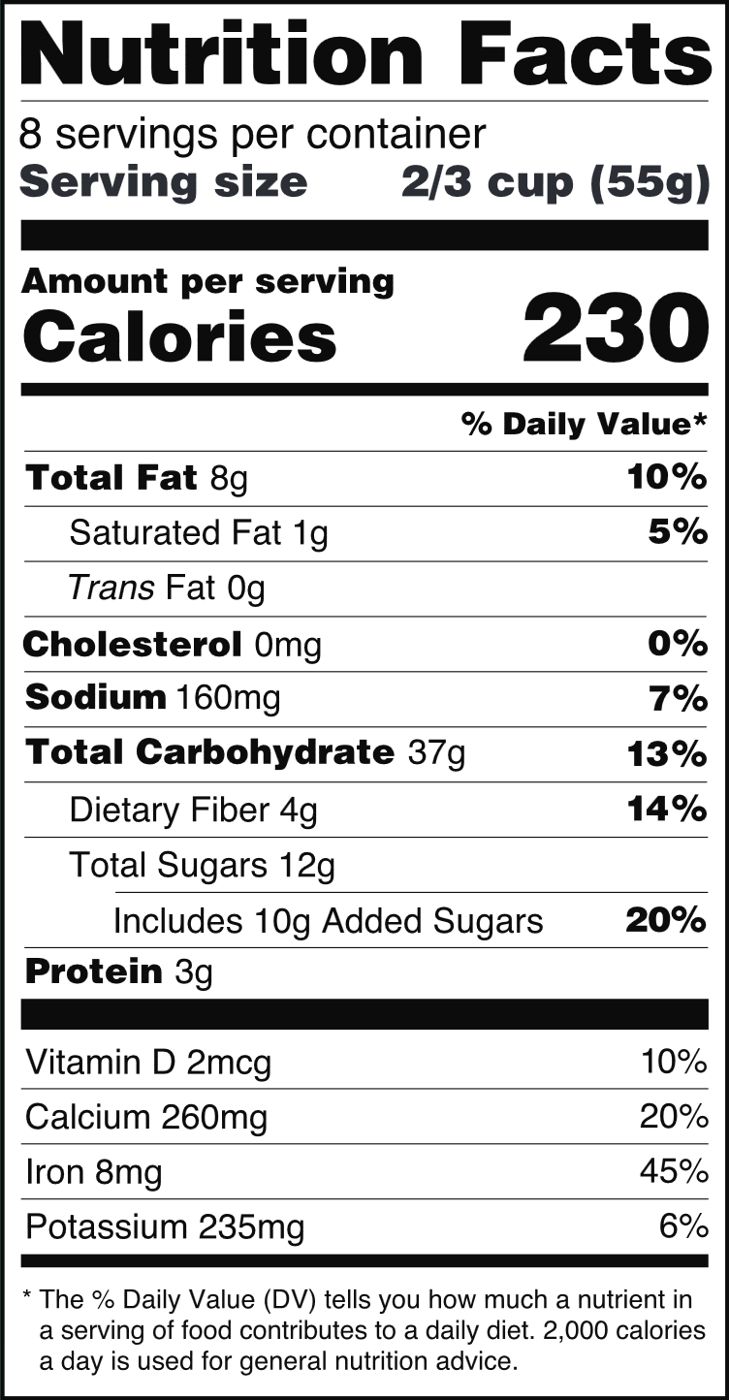
In groups, design a short awareness campaign (poster + 30-second spot) teaching teenagers to read a Nutrition Facts label, with no brand names and no judgement of people.
Sentence starters
- Before you buy, check…
- Did you know that…?
Closing: place & exchange
Step 1 · A place found or lost
Everything is exchange, and we can only give and receive from a place. First find each character’s place; then look at four kinds of exchange; then go deeper: what passes between the characters inside · trust, love, respect, meaning? Who do they become, not only what do they own?
What place does fast food take in the daily life shown in the film?
Sentence starters
- At the start, …’s place is…
- At the end, … has found / lost his/her place because…
Answer key
- Fast food takes the central place in Morgan’s days; doctors and Alexandra try to bring care back.
Step 2 · Four kinds of exchange
| Kind of exchange | In the film |
|---|---|
| Political | The film opens with two teenage girls suing McDonald’s. |
| Emotional | Alexandra, Morgan’s girlfriend, worries about him. |
| General interest | School lunches and public health. |
| Human rights | The right to clear information about what we eat. |
Sentence starters
- The political exchange in the film is between… and…
- …gives… to…, and in return…
- This exchange serves the general interest because…
- …defends the right to…
Step 3 · Beyond what they have: who they are
Now go deeper, from the place each character has found or lost. Talk about the characters only.
- The doctors ask Morgan to stop. What does their warning show about the bond between a doctor and a patient?
- What does Alexandra give Morgan during the 30 days?
- The experiment is about the body, but what does the film suggest about care, for oneself and for others?
Sentence starters
- What really passes between… and… is…
- …does not only give…; he/she gives…
- Thanks to…, …understands who he/she is.
- At the end, what matters for… is not what he/she has but…
- This exchange changes… because…
- From his/her new place, … can at last give / receive…
Closing sentence (write it): From the place they find or lose, the deepest exchange in this film is…
Answer key
- Care and honesty: they speak to a person, not to a test subject.
- Support, care and food made with attention, and the plan to help him recover.
- Care is an exchange of attention: the people around him matter as much as the numbers. (Remember the limits of the method, Write tab.)
- Model closing sentence: Beyond calories, the film shows how much we depend on those who care for us.
Teacher
Teacher notes
- Trailer: the distributor’s YouTube upload is private; link to the Samuel Goldwyn Films page (no embed).
- Critical-thinking point (verified): in December 2017, in a public statement, Spurlock wrote that he had been drinking alcohol since the age of 13 and had not been sober “for more than a week in 30 years”. In the film he tells the doctor he does not drink. Critics (e.g. Phelim McAleer, Wall Street Journal, May 2018) argued that undisclosed alcohol use could explain his liver results. Nuance: in 2024 his ex-wife Alexandra Jamieson said he had stopped drinking a month before the experiment and did not drink during it (The Sporkful, 2024). The scientific method was criticised anyway (one subject, 5,000 kcal/day, food log not published; Kechagias et al., 2008).
- Keep the discussion on the method and on media literacy, not on the director’s private life.
- Axes: 2nde « Défis et transitions » · 1re « Innovations scientifiques et responsabilité » · Tle « Fictions et réalités ».

Share this film study
https://trame-lycee.netlify.app/films/super-size-me.html
Created by Madame Carole Paoli Pompougnac.