
Film studies · Trame
Film study 9 of 11

The Brutalist

Brady Corbet · 2024 · a Hungarian-Jewish architect survives the war, arrives in America, and builds a monument for a powerful patron.

Lycée général · 1re → TleCEFR B2Axis: Art and powerAxis: Anglophone AmericasAxis: Territory & memoryR · trailer and stills only

Background photo: Daderot · CC0

Why this film for you?

What does the American Dream cost those who arrive with nothing?

László Tóth is a fictional Hungarian-Jewish architect who survives the Holocaust and reaches America in 1947. The role won Adrien Brody his second Oscar for Best Actor.

We always talk about the characters, never about our own private life.

Partie 1 · Pour l'enseignant

Guide de l'enseignant

Un film ne sort pas de nulle part : il questionne. Ce guide suit trois temps, avant, pendant, après le film, puis donne les adaptations par niveau et le corrigé de la fiche élève.

Pourquoi ce film ?

László Tóth, architecte juif hongrois (personnage inventé), survit à la Shoah et arrive en Amérique en 1947 ; un riche mécène lui commande un monument. Le film demande : que coûte le rêve américain à ceux qui arrivent sans rien ? Adrien Brody y a gagné son deuxième Oscar du meilleur acteur.

Culture

L’immigration d’après-guerre (Displaced Persons Act, 1948), le Bauhaus et le brutalisme, le rêve américain.

Langue

L’anglais d’un immigré (accent hongrois) face à celui du mécène ; lexique de l’architecture.

Esprit critique

Le mécénat et le pouvoir ; l’art et l’argent ; un personnage inventé dans une histoire réelle.

Classé R : bande-annonce et photos uniquement, réservé à la 1re et à la Tle ; le film n’est pas projeté en classe.

Les élèves parlent toujours des personnages, jamais d'eux-mêmes : aucune question ne porte sur leur vécu personnel.

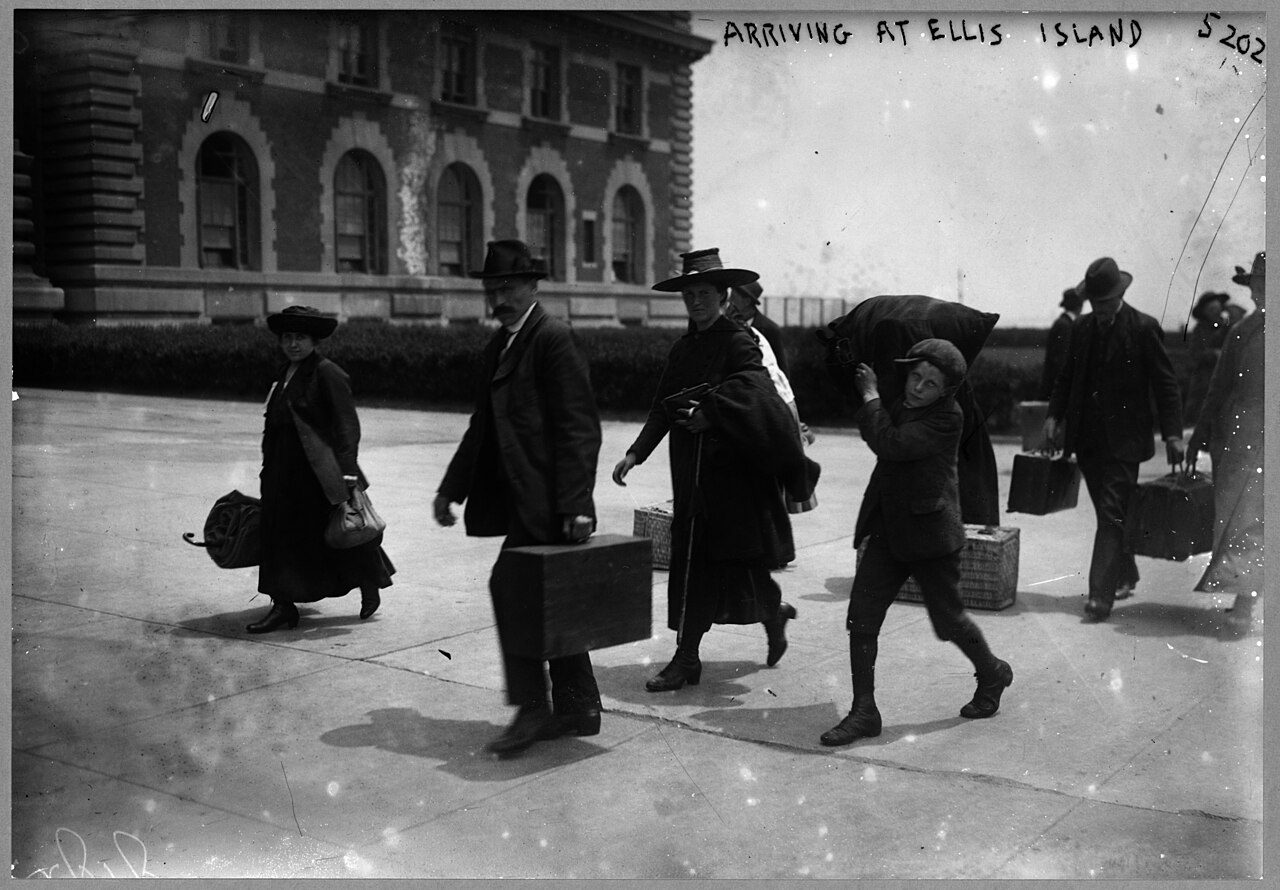
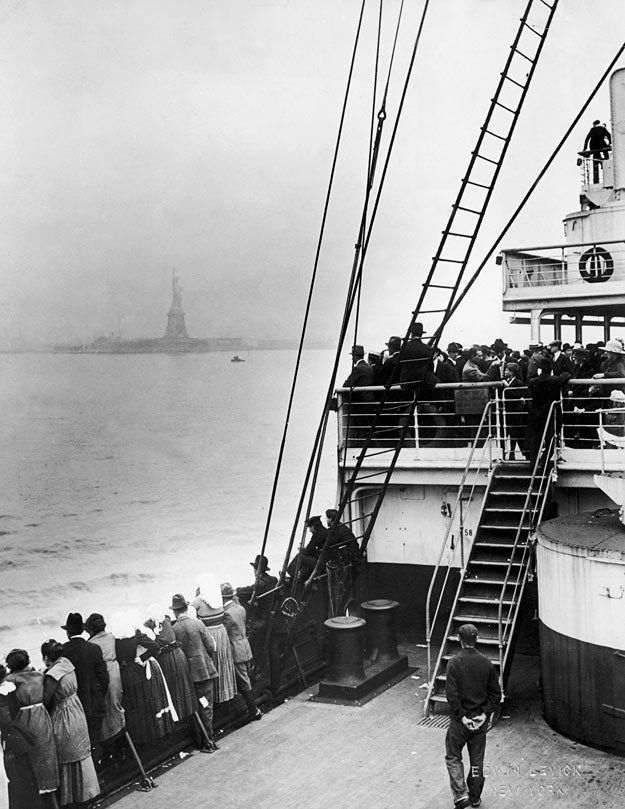
Arriving at Ellis Island, 1907

Temps 1

Avant le film

Arriving at Ellis Island, 1907 Photo: George Grantham Bain Collection · Public domain · Wikimedia Commons

a · Contexte historique et culturel

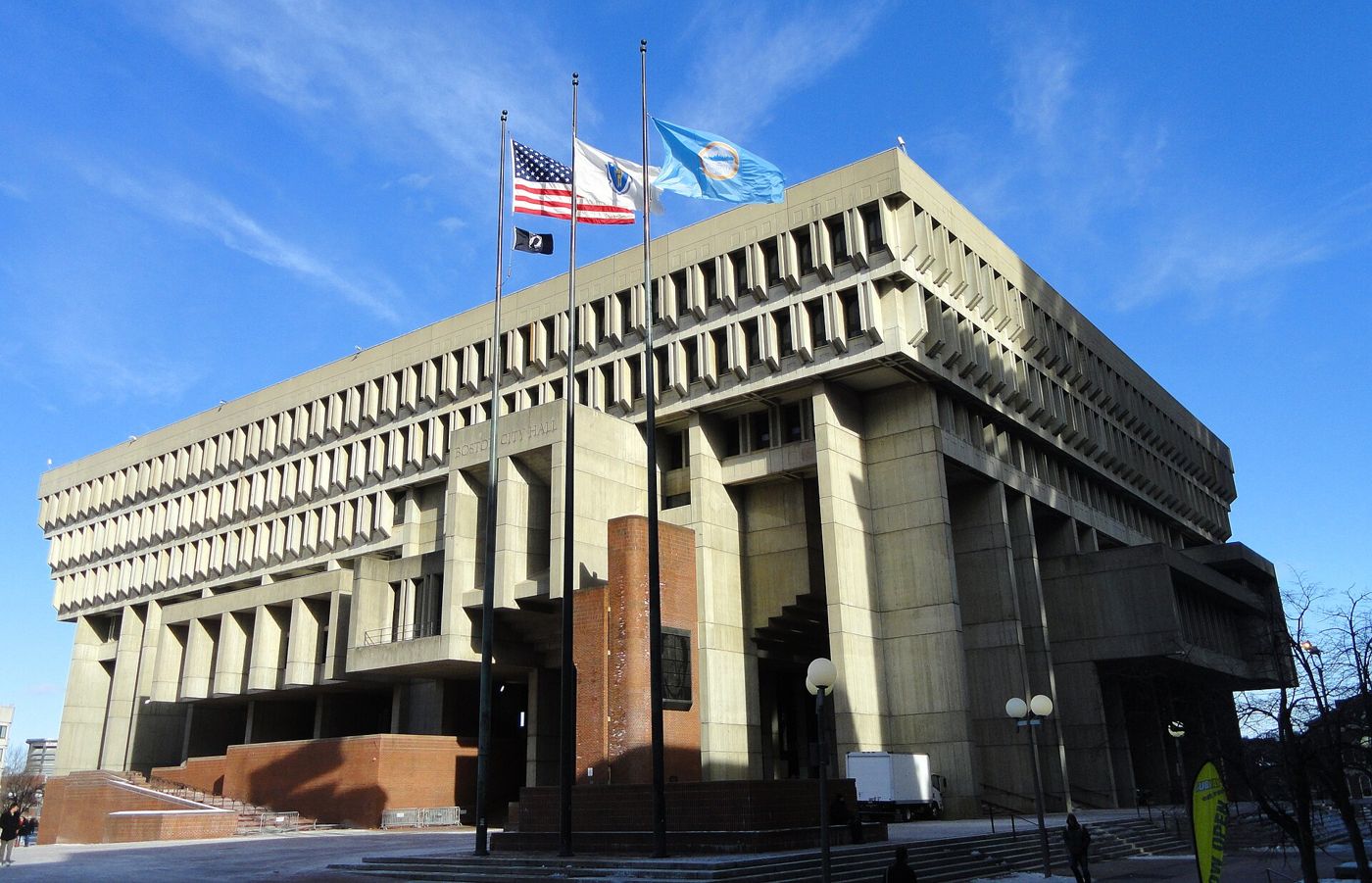
Projetez les repères ; montrez Boston City Hall (1968) comme exemple de brutalisme.

Project in class · Key dates

  1. 1919

    The Bauhaus school opens in Weimar, Germany.

  2. 1933

    The Nazis force the Bauhaus to close; many architects emigrate to the USA.

  3. 1944

    Deportation of Hungarian Jews to Auschwitz.

  4. 1945

    End of the Second World War; liberation of the camps.

  5. 1947

    The film begins: László arrives in America.

  6. 1948

    25 June: Displaced Persons Act first allows about 200,000 refugees into the USA.

  7. 1950s

    The word “Brutalism” spreads: it refers to raw, unfinished building surfaces.

  8. 1968

    Boston City Hall is completed.

  9. 1980

    First Venice Architecture Biennale, the setting of the film’s epilogue.

  10. 2024

    The Brutalist premieres in Venice.

  11. 2025

    3 Oscars, including Best Actor for Adrien Brody.

Say it with…

  • « In …, … »
  • « One important date is… because… »
  • « This explains why the characters… »
  • « The film is set … years after… »
Boston City Hall (1968), a landmark of Brutalist architecture
Boston City Hall (1968), a landmark of Brutalist architecture · Photo: Daderot · CC0
The Statue of Liberty, early 20th century (Edwin Levick)
The Statue of Liberty, early 20th century (Edwin Levick) · Photo: Edwin Levick · Public domain
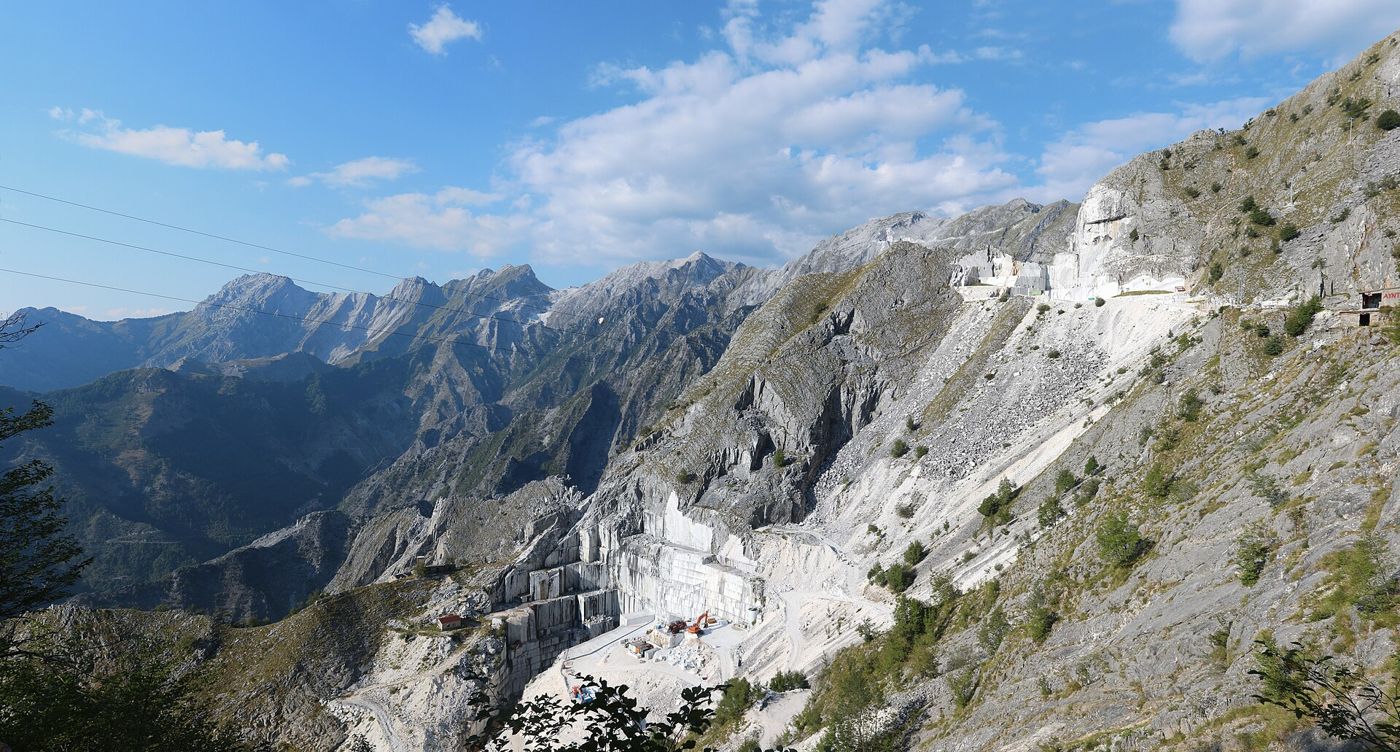
Marble quarries in Carrara, Italy
Marble quarries in Carrara, Italy · Photo: Ingo Mehling · CC BY-SA 4.0
Adrien Brody, Oscar for Best Actor
Adrien Brody, Oscar for Best Actor · Photo: Harald Krichel · CC BY-SA 3.0

b · Échauffement lexical

Projetez la banque de mots ; faites répéter les répliques de la bande-annonce en imitant les voix. Les minutages renvoient à la bande-annonce officielle et sont approximatifs (± 2 s).

Project in class · Word bank

Heard in the trailer
  • « Why is an accomplished foreign architect shoveling coal here in Philadelphia? » (≈0:25)
  • « I brought you all out here to join me in looking forward toward the future. » (trailer)
  • « Your English is impressive. » (trailer)
  • « They do not want us here. » (trailer)
Idioms and expressions
  • to start from scratch · to start again with nothing
  • a self-made man · someone who became rich alone
  • to pay the price · to suffer because of a choice
  • a patron of the arts · a rich person who pays artists
  • to leave your mark · to create something that lasts
The accents
  • László speaks English with a Hungarian accent, slowly, carefully.
  • Van Buren: confident, upper-class American English.
Architecture and exile
  • Brutalism · architecture of raw, massive, unpainted forms
  • a refugee · a person who escapes war or danger
  • the Bauhaus · a German school of design (1919 to 1933)
  • a monument · a building to remember
  • a commission · an order for a work of art

Use the words with…

  • « László starts from scratch because… »
  • « Van Buren is a patron who… »
  • « Brutalism uses… »
  • « László wants to leave his mark by… »

c · Guide d'anticipation

  1. Les élèves se positionnent (agree / disagree) sur quatre affirmations, avant de voir quoi que ce soit.
  2. Montrez l'affiche officielle (en ligne, sur le site du distributeur, elle n'est pas reproduite ici), puis le titre seul.
  3. Premier visionnage de la bande-annonce sans le son : hypothèses sur le thème. Second visionnage avec le son : on vérifie.

Project in class · Agree or disagree?

StatementBeforeAfter
America gives everyone the same chance.☐ A ☐ D☐ A ☐ D
A rich patron always helps an artist.☐ A ☐ D☐ A ☐ D
A building can tell a story.☐ A ☐ D☐ A ☐ D
You can start your life again from nothing.☐ A ☐ D☐ A ☐ D

Make hypotheses with…

  • « On the poster, I can see… »
  • « The title makes me think of… »
  • « Without the sound, I think the film is about… »
  • « I agree / disagree because… »
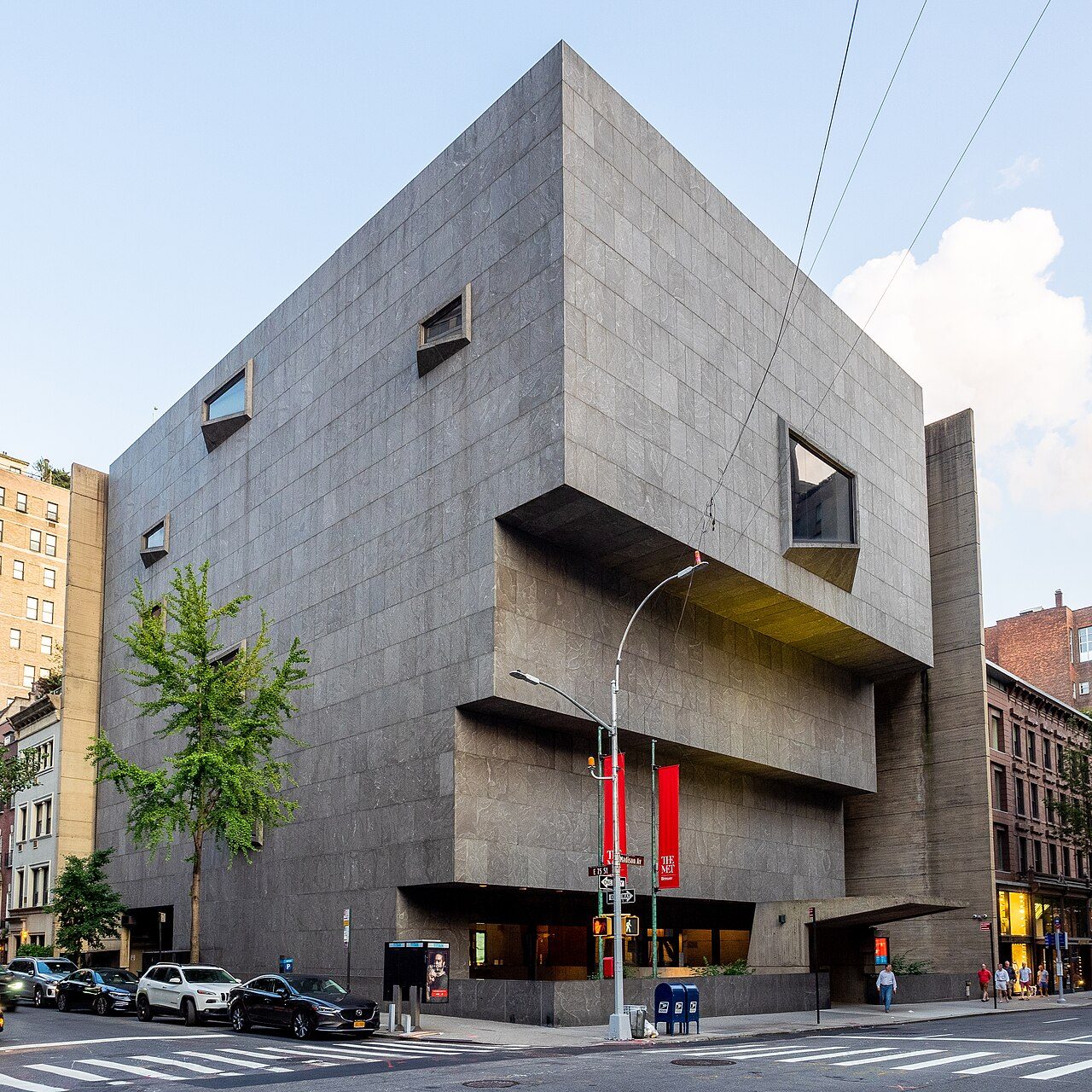
Marcel Breuer’s building on Madison Avenue, New York

Temps 2

Pendant le film

Marcel Breuer’s building on Madison Avenue, New York Photo: Ajay Suresh · CC BY 2.0 · Wikimedia Commons

Classé R : bande-annonce, photos et synopsis uniquement. On visionne la bande-annonce officielle en entier, en trois passages : on fait une pause après chacun. Les questions détaillées et leurs corrigés sont dans l’onglet Watch de la boîte à outils, en bas de page.

ÉtapeMinutageCe qu'on travaille
1 · Global understandingbande-annonce entière · 30 s sans le son, puis avecQui, où, quand, quel problème ? Questions « First viewing » (onglet Watch).
2 · Exact wordsbande-annonce entièreRépliques à compléter (« Second viewing »), puis répétition à voix haute.
3 · Film languagebande-annonce entièreLes moments de la partie 4 de la fiche élève : plans, angles, lumière, musique.

Consignes ciblées : trois groupes, une fiche par groupe (à projeter ou imprimer), puis mise en commun.

Project in class · Focus groups

Group A · Music

Listen to Daniel Blumberg’s score (an Oscar): heavy piano and brass. What does it sound like?

Note it with…

  • « The music sounds like… »
  • « It makes the buildings feel… »
Group B · Relationships

Watch László with Van Buren and with his wife Erzsébet. Who has power?

Note it with…

  • « Van Buren treats László… »
  • « Erzsébet… »
Group C · Historical accuracy

Link the trailer to the dates: 1945, 1947, 1948, the Bauhaus.

Note it with…

  • « László arrives in… »
  • « The Displaced Persons Act… »
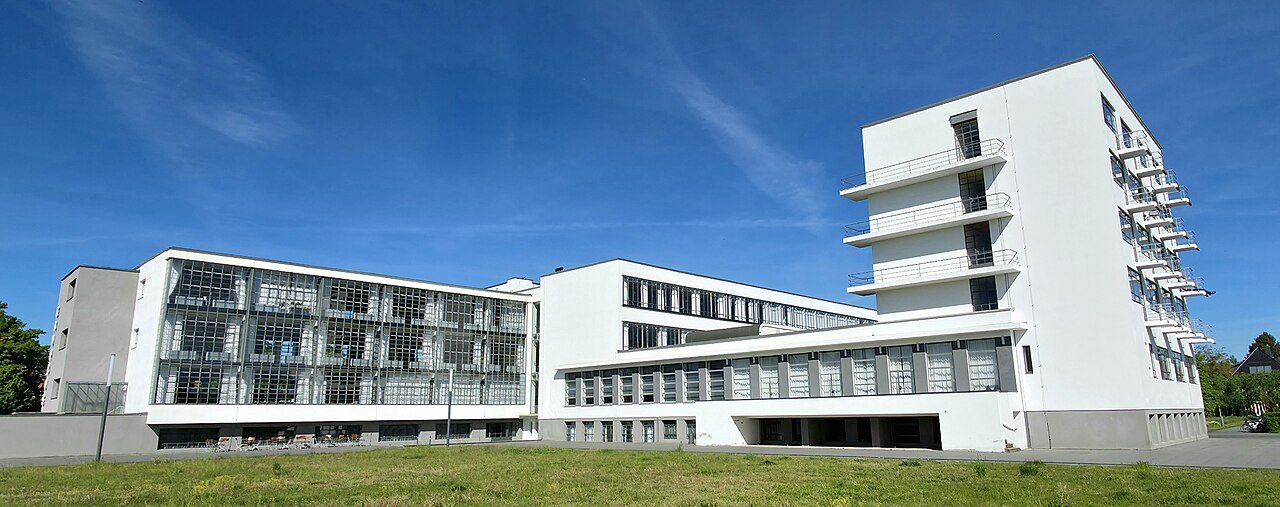
The Bauhaus building in Dessau, Germany

Temps 3

Après le film

The Bauhaus building in Dessau, Germany Photo: JensKunstfreund · CC BY-SA 4.0 · Wikimedia Commons

Débat : chaque binôme reçoit un dilemme, prépare deux arguments, puis débat avec un autre binôme. Fin du film : un épilogue à la première Biennale d’architecture de Venise (1980) rend hommage à l’œuvre de László, achevée malgré tout.

Project in class · Moral dilemmas

  • Van Buren gives László work but controls him. Should László accept?
  • Is it acceptable to change your art to please the person who pays?
  • Should a refugee have to prove his talent to be welcome?
  • László is invented, but his story looks real. Is that a problem?

Debate with…

  • « In my opinion, … should have… because… »
  • « I see your point, but… »
  • « On the one hand…, on the other hand… »
  • « That’s why I think… »

Prolongement créatif : au choix, selon le niveau (voir le tableau des adaptations).

Project in class · Creative extension (choose one)

An alternative ending

Imagine László refuses the commission. Write the scene.

Start with…

  • « László puts down his pencil… »
  • « He tells Van Buren… »
László’s letter

Write László’s letter to Erzsébet, still in Europe, about his first weeks in America.

Start with…

  • « My dear Erzsébet, America is… »
  • « I work…, but… »
A film review

Write a review for an architecture blog.

Start with…

  • « The Brutalist is an epic film about… »
  • « Its images of buildings… »

Adaptations par niveau

La fiche élève (partie 2) change selon le niveau choisi : mêmes questions, débuts de phrases et longueur d'écrit adaptés. Choisissez le niveau avec les boutons de la partie 2.

NiveauLangueAvant / pendantAprès · production
1reB1 → B2Repères complets ; lexique de l’architecture ; groupes A, B, C.Critique de 120 à 150 mots ; lettre de László ; débat avec contre-arguments.
TleB2Analyse du plan de la statue de la Liberté renversée ; art et pouvoir.Essai de 180 à 200 mots : « Does America give more than it takes? ».

Corrigé de la fiche élève

Réponses modèles en anglais (niveau intermédiaire ; simplifiez ou développez selon le niveau).

Answer key · open

1 2024 · Other: USA / UK / Hungary · Drama + Historical. 2.1 Philadelphia and Pennsylvania, from 1947; epilogue in Venice, 1980. 2.2 Introduction: László, a Holocaust survivor, arrives in America and shovels coal. Climax: the rich Van Buren commissions a huge building; the project and their relationship become humiliating and destructive. Resolution: the building is finished; in 1980 László’s work is celebrated in Venice.

3.1 László: talented, proud, wounded by war; flaw: he lets his art take over his life. 3.2 Van Buren, a patron who controls him; also prejudice against immigrants. 3.3 The American Dream and its price; the self-made myth; art and money.

4 ≈1:58 low angle on a circular skylight: a cathedral-like space; ≈2:06 the Statue of Liberty tilted, even upside down: a broken dream. Heavy piano and brass, cold greys and browns. 5.1 America can offer a new life, but it can also take a lot from those who arrive with nothing. 5.2 Open answer.

Questions de compréhension, langage du cinéma, oral, écrit et examen avec leurs corrigés : onglets de la boîte à outils ci-dessous. · Fiche film imprimable : fiche-the-brutalist.

Part 2 · For students

Student’s worksheet

Choose your level: the questions and the sentence starters change for you.

1 · Your level

Name:

Date:

Film title:

Director:

Talk and write about the characters and the film, never about your own private life.

1 General identification

1.1 Year of release:

Start with…

  • « The film was released in…, and it is set in… »

Start with…

  • « Released in…, the film looks back at… »

1.2 Country of origin:

☐ USA   ☐ United Kingdom   ☐ Other: ________

Start with…

  • « It is a … film, made by a … director. »

Start with…

  • « This … production, directed by…, … »

1.3 Genre (tick one or two):

☐ Drama   ☐ Comedy   ☐ Sci-Fi   ☐ Historical   ☐ Thriller   ☐ Social Realism   ☐ Other: ________

Start with…

  • « It belongs to … : it shows… »

Start with…

  • « It mixes … and …, which allows the director to… »
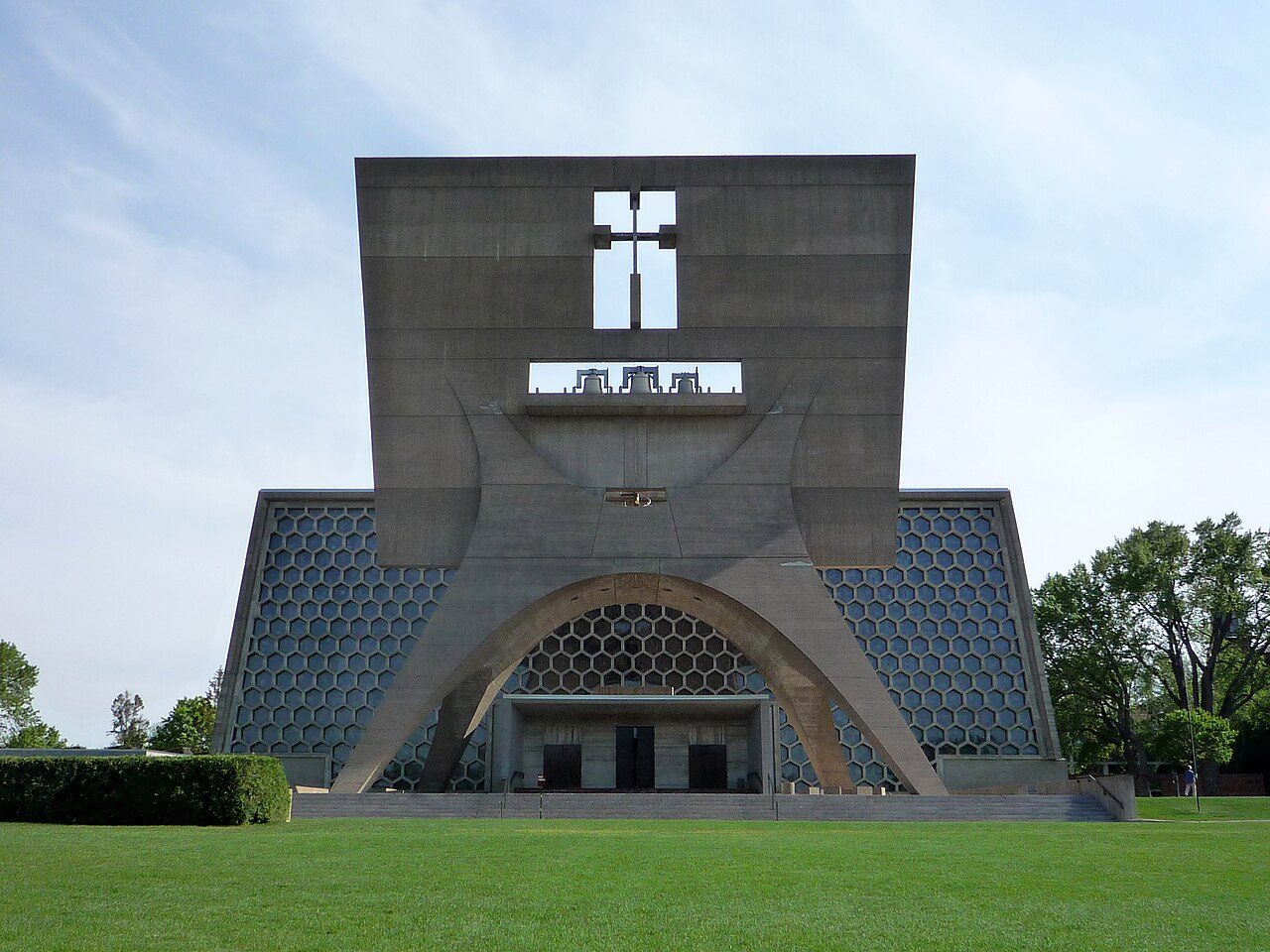
Saint John’s Abbey Church by Marcel Breuer, Collegeville, Minnesota
Saint John’s Abbey Church by Marcel Breuer, Collegeville, Minnesota Photo: Bobak Ha'Eri · CC BY 3.0 · Wikimedia Commons
Boston City Hall (1968), a landmark of Brutalist architecture
Boston City Hall (1968), a landmark of Brutalist architecture · Photo: Daderot · CC0

2 Plot & setting

2.1 Where and when does the story take place? Describe the place and the time.

Start with…

  • « The story is set in…, at a time when… »
  • « The setting looks… because… »

Start with…

  • « Set in…, the film shows a place where… »
  • « The setting reflects… »

2.2 Sum up the main conflict in 3 sentences.

• Introduction

Start with…

  • « The film opens on László, who… »

Start with…

  • « The opening introduces László, a character who… »

• Climax (turning point)

Start with…

  • « The turning point is when…, so… »

Start with…

  • « The turning point comes when…, which forces László to… »

• Resolution

Start with…

  • « Finally, László realises that…, so… »

Start with…

  • « The ending suggests that… »
The Statue of Liberty, early 20th century (Edwin Levick)
The Statue of Liberty, early 20th century (Edwin Levick) · Photo: Edwin Levick · Public domain
Marble quarries in Carrara, Italy
Marble quarries in Carrara, Italy · Photo: Ingo Mehling · CC BY-SA 4.0

3 Character analysis

3.1 The protagonist (main hero): name, motivations and main flaws.

Start with…

  • « László is motivated by… »
  • « However, the main weakness is…, which is why… »

Start with…

  • « The driving force behind László is… »
  • « This flaw makes the character…, yet… »

3.2 The antagonist (the opposing force): who or what stops the protagonist?

Start with…

  • « Harrison Lee Van Buren stands in the way because… »
  • « But the real obstacle may also be… »

Start with…

  • « Beyond Harrison Lee Van Buren, the film points to… »
  • « The real antagonist could be…, since… »

3.3 Cultural identity: how does the film question the American Dream (the immigrant, the rich patron, the Statue of Liberty)?

Start with…

  • « László arrives in America with… »
  • « Van Buren offers him…, but… »

Start with…

  • « The upside-down Statue of Liberty suggests that… »
  • « The film shows the price of the American Dream: … »
Adrien Brody, Oscar for Best Actor
Adrien Brody, Oscar for Best Actor · Photo: Harald Krichel · CC BY-SA 3.0
Arriving at Ellis Island, 1907
Arriving at Ellis Island, 1907 Photo: George Grantham Bain Collection · Public domain · Wikimedia Commons

4 Cinematic techniques

Use the official trailer: choose one moment from the list below.

  • ≈0:18 · cranes reflected in water
  • ≈0:26 · a hand drawing
  • ≈1:10 · a marble quarry
  • ≈1:58 · a circular skylight seen from below
  • ≈2:06 · the Statue of Liberty, tilted

4.1 Camera angles & shots: describe one memorable moment. Is it a close-up (focus on emotion) or a wide shot (focus on the place)?

Start with…

  • « The director uses a … shot to… »
  • « This angle makes … look… »

Start with…

  • « The … at … invites the audience to… »
  • « By framing … this way, the director suggests that… »

4.2 Soundtrack & lighting: how do the music or the colours make you feel in that moment?

Start with…

  • « The music creates a … atmosphere. »
  • « The lighting makes … look… »

Start with…

  • « The contrast between … and … suggests… »
  • « The colour palette reflects… »
Marcel Breuer’s building on Madison Avenue, New York
Marcel Breuer’s building on Madison Avenue, New York Photo: Ajay Suresh · CC BY 2.0 · Wikimedia Commons
The Bauhaus building in Dessau, Germany
The Bauhaus building in Dessau, Germany Photo: JensKunstfreund · CC BY-SA 4.0 · Wikimedia Commons

5 Critical thinking & personal opinion

5.1 Thematic core: what message is the director trying to send to the audience?

Start with…

  • « Brady Corbet shows that… »
  • « The film warns us that… »

Start with…

  • « The film suggests that…, because… »
  • « Ultimately, it questions… »

5.2 The question of the film: « What does the American Dream cost those who arrive with nothing? » Answer it now, after the study.

Start with…

  • « In my opinion,… For example, in the trailer… »
  • « The film made me think again about… »

Start with…

  • « I would argue that…, as shown by… »
  • « However, one could object that… »

5.3 Your review · Star rating: ☆ ☆ ☆ ☆ ☆

Write a review (120 to 150 words) with two arguments and an example.

Write a review (180 to 200 words): two arguments, a concession and a conclusion.

Start with…

  • « I would (not) recommend this film because… »
  • « The best moment of the trailer is… because… »
  • « On the other hand,… »

Start with…

  • « The Brutalist is a … film which… »
  • « What makes it relevant today is… »
  • « Even though…, I would recommend it to… »

Sources

  • Video: official trailer, A24 (YouTube).
  • A24, The Brutalist · Academy of Motion Picture Arts and Sciences (2025).
  • Photos: Wikimedia Commons and public-domain archives, credited under each image. No still from the film is reproduced.
  • Activities, sentence starters and model answers: Madame Carole Paoli Pompougnac.

Toolbox · all the activities

Comprehension, film language, context, characters, speaking, writing, exam and project, with answer keys. Use them with the guide and the worksheet above.

Cultural concept

The American Dream

The promise that anyone, even a refugee, can build a new life through talent and work, and the price that dream can demand.

Key question: Does America give more than it takes?

Route A · The film as a starting point

Watch → Film language → Context & history → Characters → Speak → Write → Project → Closing: place & exchange

Route B · The film as the final task

Context & history → Characters → Speak → Write → Watch the trailer → Film language → Final task: Project → Closing: place & exchange

Guiding thread: Finding one’s place in the world · Sub-thread: Giving and receiving, we can only give and receive from a place.
Theme: Creating & dreaming

Overview

Hook, finding one’s place

Guiding thread: Finding one’s place in the world · Sub-thread: Giving and receiving, we can only give and receive from a place.

Boston City Hall, a famous brutalist building (1968)
Boston City Hall, a famous brutalist building (1968) · Photo: Daderot · CC0 · Wikimedia Commons

Finding one’s place in the world · Young people today

László Tóth arrives in America as a refugee and has to fight to be treated as an equal. Today, how do young people help newcomers find their place?

Sentence starters

  • László arrives with… but he wants…
  • To find a place, a newcomer needs…
  • Young people can welcome newcomers by…
  • Being treated as an equal means…

Visionary filmmakers. In 2024, Brady Corbet made an epic of more than three and a half hours about a refugee’s struggle for his place, and Adrien Brody won the Oscar for Best Actor for the role.

Talk about the characters and about young people in general, not about yourself.

Then, a second question:

Can a building tell the story of a life? Look at Boston City Hall in the gallery: heavy, raw, monumental. Would you call it beautiful?

Sentence starters

  • At first sight, this building looks…
  • A building can express… because…
  • I find it beautiful / ugly because…

The film in three lines

A24’s logline: “An architect escapes post-war Europe to rebuild his life. Alone in America, a powerful man recognizes his talent. But legacy comes at a heavy cost...” László Tóth is a fictional character, a Holocaust survivor trained in the Bauhaus tradition, who arrives in Pennsylvania and receives a huge commission from a rich industrialist.
Start with the trailerFilm study sheet

Boston City Hall (1968), a landmark of Brutalist architecture
Boston City Hall (1968), a landmark of Brutalist architecturePhoto: Daderot · CC0
The Statue of Liberty, early 20th century (Edwin Levick)
The Statue of Liberty, early 20th century (Edwin Levick)Photo: Edwin Levick · Public domain
Marble quarries in Carrara, Italy
Marble quarries in Carrara, ItalyPhoto: Ingo Mehling · CC BY-SA 4.0
Adrien Brody, Oscar for Best Actor
Adrien Brody, Oscar for Best ActorPhoto: Harald Krichel · CC BY-SA 3.0

Film sheet

QR code to the printable film study sheet

Film study sheet · printable, clickable, with QR code.

Open the printable sheet

https://trame-lycee.netlify.app/films/fiche-the-brutalist.html

Film credits

TitleThe Brutalist (USA / UK / Hungary, 2024)
DirectorBrady Corbet
ScreenplayBrady Corbet and Mona Fastvold
CastAdrien Brody (László Tóth), Felicity Jones (Erzsébet Tóth), Guy Pearce (Harrison Lee Van Buren), Joe Alwyn (Harry Lee Van Buren), Raffey Cassidy (Zsófia), Alessandro Nivola (Attila)
CinematographyLol Crawley, shot in VistaVision (Oscar)
EditingDávid Jancsó
MusicDaniel Blumberg (Oscar)
DistributorA24
Running time215 minutes, with an intermission
ReleaseVenice Film Festival, 1 September 2024 (Silver Lion for direction) · USA, 20 December 2024
RatingR, strong sexual content, graphic nudity, rape, drug use and some language
Awards97th Academy Awards (2025): 10 nominations, 3 Oscars, Best Actor (Brody), Cinematography, Original Score

Film language, with examples from the official trailer

Timecodes are approximate (± 2 s). Pause the trailer and check each example yourself.

Shots

WordMeaning
establishing shot / extreme long shotshows the place; people look tiny
long shota whole body in its setting
medium shotfrom the waist up
close-upa face fills the frame: emotion
extreme close-upa detail: eyes, a hand, an object
two-shottwo characters in one frame: a relationship
over-the-shoulder shotwe watch one character through another’s position
  • ≈0:18cranes reflected in water: a new world under construction
  • ≈0:26close-up of a hand drawing: the architect’s mind
  • ≈1:10extreme long shot of a marble quarry: the scale of the project

Angles

WordMeaning
eye levelneutral, we are equal with the character
high anglecamera above: the character looks small or weak
low anglecamera below: the character looks powerful
canted (Dutch) angletilted frame: unease, a world out of balance
bird’s-eye viewstraight down from above
  • ≈0:30low angle on a crane: power and ambition
  • ≈1:58low angle on a circular skylight: a cathedral-like space
  • ≈2:06the Statue of Liberty filmed tilted, even upside down (canted angle): a broken American Dream

Camera movement

WordMeaning
panthe camera turns horizontally
tiltthe camera moves up or down
tracking shotthe camera travels with a character or a car
zoomthe lens brings us closer
handheld camerashaky, urgent, documentary feel
crane / aerial shotthe camera flies above the scene
  • ≈2:06a moving camera on an arriving ship reveals the Statue of Liberty

Lighting & colour

WordMeaning
high-key lightingbright, few shadows: optimism
low-key lightingdark, strong shadows: tension, mystery
backlightinglight behind a character: a halo or a silhouette
natural lightsun, windows, candles
colour palettethe dominant colours of the film
  • ≈0:46a library lit by a circular light from above
  • whole trailercold greys and browns, deep shadows: the colours of raw stone

Sound

WordMeaning
diegetic soundthe characters can hear it (a radio, a piano on stage)
non-diegetic soundonly the audience hears it (the score, a narrator)
voice-overa voice we hear over the images
scoremusic composed for the film
silenceno sound: a shock, a pause
sound bridgea sound that continues into the next scene
  • whole trailerDaniel Blumberg’s score: heavy piano and brass that sound like construction
  • ≈0:25a question about the architect “shoveling coal here in Philadelphia”

Editing

WordMeaning
cuta direct change of shot
cross-cuttingalternating between two places or stories
montagea fast series of shots that compresses time
fade to blackthe image disappears: an ending, a pause
intertitletext on screen between images
slow motiontime slows down: importance, emotion
  • ≈2:22title card “THE BRUTALIST in VistaVision”: the format itself becomes an argument
  • whole trailerslow rhythm, long shots between short lines of dialogue

Step into the period

Daily life

  • Post-war Europe: millions of displaced persons in camps
  • Arrival through New York; work in industrial Pennsylvania
  • Anti-immigrant and antisemitic prejudice

Music

  • Jazz clubs and big bands of the late 1940s and 1950s

Fashion

  • Workers’ overalls and coats; tailored suits for the rich industrialist

Places

  • Ellis Island and New York harbour
  • Philadelphia and the Pennsylvania countryside
  • Carrara marble quarries in Italy

Historical landmarks

  • 1919 The Bauhaus school opens in Weimar, Germany.
  • 1933 The Nazis force the Bauhaus to close; many architects emigrate to the USA.
  • 1944 Deportation of Hungarian Jews to Auschwitz.
  • 1945 End of the Second World War; liberation of the camps.
  • 1947 The film begins: László arrives in America.
  • 1948 25 June: Displaced Persons Act first allows about 200,000 refugees into the USA.
  • 1950s The word “Brutalism” spreads: it refers to raw, unfinished building surfaces.
  • 1968 Boston City Hall is completed.
  • 1980 First Venice Architecture Biennale, the setting of the film’s epilogue.
  • 2024 The Brutalist premieres in Venice.
  • 2025 3 Oscars, including Best Actor for Adrien Brody.

Sources: A24, The Brutalist

Watch

Official trailer (A24)

Official channel: A24 · https://www.youtube.com/watch?v=GdRXPAHIEW4

First viewing

  1. What job did László have in Europe, and what job does he do in Philadelphia?
  2. Who recognises his talent?
  3. Find three materials or places linked to building.
  4. What is strange about the image of the Statue of Liberty?
Answer key
  1. An accomplished architect; he shovels coal.
  2. A powerful rich man, Harrison Lee Van Buren.
  3. Cranes, building sites, marble quarry, library, skylight…
  4. It is tilted / upside down.

Second viewing, exact words

  1. “Why is an accomplished foreign architect shoveling ___ here in Philadelphia?”
  2. “I brought you all out here to join me in looking forward toward the ___.”
  3. “Your English is ___.”
  4. “They do not ___ us here.”
Answer key
  1. coal
  2. future
  3. impressive
  4. want

Film language

Filming architecture

Low angles, symmetry, circles of light: the trailer films buildings like characters. Compare the skylight at ≈1:58 with Boston City Hall in the gallery.

Sentence starters

  • The low angle gives the building…
  • Symmetry suggests…
  • The upside-down Statue of Liberty means…

Context & history

Brutalism and the Bauhaus

The Bauhaus school (1919 to 1933) taught that form should follow function. After 1933 many of its teachers emigrated to the United States. Brutalism, popular from the 1950s to the 1970s, used raw, unpainted surfaces, massive forms and repetition, for city halls, universities, libraries.

Refugees and the American Dream

After 1945, millions of “displaced persons” could not go home. The Displaced Persons Act of 25 June 1948 first opened the USA to about 200,000 of them. The film asks: what does America give a refugee, and what does it take?

Sentence starters

  • The American Dream promises…
  • For László, America is both… and…
  • Art and power meet when a patron…

Fact or fiction?

László Tóth never existed. Is it a problem for a film to invent an artist so close to real history?

Characters

Character (actor)WhoKey word
László Tóth (Adrien Brody)fictional Hungarian-Jewish architect, Holocaust survivorvision
Erzsébet Tóth (Felicity Jones)his wife, separated from him by the warresilience
Harrison Lee Van Buren (Guy Pearce)rich industrialist, his patronpower
Harry Lee Van Buren (Joe Alwyn)Harrison’s sonprivilege
Attila (Alessandro Nivola)László’s cousin in Philadelphiaassimilation

Sentence starters

  • The relationship between artist and patron is…
  • László depends on… but…

Speak

1 · Pitch a building, 2 minutes

You are László. Present your project to Van Buren’s guests: purpose, materials, symbol.

Your pitch2:00

Sentence starters

  • This building will be…
  • I chose these raw materials because…
  • It will remind people of…

2 · Interaction, artist vs patron

Van Buren wants to cut costs; László refuses to change his design. Negotiate.

3 minutes3:00

Sentence starters

  • With respect, the design…
  • If we change this,…
  • I am paying, so…

3 · Debate, “Does money always control art?”

Sentence starters

  • Throughout history, patrons…
  • An artist can stay free if…

Write

Write

B2 · 220 to 250 words: László’s letter to Erzsébet describing America and his first job.

B2+ · 280 words: “The American Dream has a price.” Discuss with the trailer and context.

Sentence starters

  • My dear Erzsébet,…
  • America is not what I…
  • Admittedly,… yet…

For the exam

For the exam. In the baccalauréat général, English (LVA / LVB) is assessed through continuous assessment: your annual average in 1re and in Tle counts (coefficient 3 each year). At the end of Tle, your teachers also certify your CEFR level in each skill, listening, reading, writing, speaking (continuous) and speaking (interaction), on your official language certificate. Every task below is built on those five skills, with authentic documents linked to a programme axis, exactly like your class assessments.

  • Listening: trailer · Reading: Bauhaus / refugees · Speaking: pitch, negotiation, debate · Writing: letter / essay.

Project

Project, “Brutalist or beautiful?” guided tour

Choose a Brutalist building in the English-speaking world (Boston City Hall, the Barbican in London, the National Theatre…). Make a 2-minute guided tour with three photos under free licences, credited.

Sentence starters

  • Welcome to…
  • Built in…, it was designed to…

Closing: place & exchange

Step 1 · A place found or lost

Everything is exchange, and we can only give and receive from a place. First find each character’s place; then look at four kinds of exchange; then go deeper: what passes between the characters inside · trust, love, respect, meaning? Who do they become, not only what do they own?

László arrives as a refugee. What place does America offer him, and what place does he want?

Sentence starters

  • At the start, …’s place is…
  • At the end, … has found / lost his/her place because…
Answer key
  1. László is offered a place as a worker and a protégé; he wants a place as an artist and an equal.

Step 2 · Four kinds of exchange

Kind of exchangeIn the film
PoliticalLászló Tóth arrives in the USA as a refugee after the war.
EmotionalLászló and his wife Erzsébet, separated by the war.
General interestA community building commissioned by Harrison Lee Van Buren.
Human rightsA Holocaust survivor looking for dignity and freedom.

Sentence starters

  • The political exchange in the film is between… and…
  • …gives… to…, and in return…
  • This exchange serves the general interest because…
  • …defends the right to…

Step 3 · Beyond what they have: who they are

Now go deeper, from the place each character has found or lost. Talk about the characters only.

  1. Van Buren gives László money and a commission. What does he not give him?
  2. What does Erzsébet bring to László when she arrives in America?
  3. László’s buildings will outlive him. What does he want to pass on through them?

Sentence starters

  • What really passes between… and… is…
  • …does not only give…; he/she gives…
  • Thanks to…, …understands who he/she is.
  • At the end, what matters for… is not what he/she has but…
  • This exchange changes… because…
  • From his/her new place, … can at last give / receive…

Closing sentence (write it): From the place they find or lose, the deepest exchange in this film is…

Answer key
  1. Respect and equality: Van Buren treats László as something he owns, not as an equal.
  2. Love, memory and a voice that defends him: she reminds him who he is.
  3. His vision and his memory: his work expresses who he is, beyond what he owns or is paid.
  4. Model closing sentence: Van Buren can pay for László’s work, but he cannot own who László is.

Teacher

Teacher notes

Rated R (strong sexual content, rape, drug use). Never screen the film. Trailer and stills only; avoid the line about dogs (≈1:30).
  • Axes: 1re « Art et pouvoir », « Les aires anglophones américaines » · Tle « Territoire et mémoire ».
  • László Tóth is fictional.

Full teacher page (FR) →

QR code to this film study

Share this film study

https://trame-lycee.netlify.app/films/the-brutalist.html

Created by Madame Carole Paoli Pompougnac.