
Film study sheet · 9 of 11
The Brutalist
Cultural concept: The American Dream
Brady Corbet · 2024 · a Hungarian-Jewish architect survives the war, arrives in America, and builds a monument for a powerful patron.
Open the full film study Official trailer
Created by Madame Carole Paoli Pompougnac · https://trame-lycee.netlify.app/films/the-brutalist.html
Film credits
| Title | The Brutalist (USA / UK / Hungary, 2024) |
|---|---|
| Director | Brady Corbet |
| Screenplay | Brady Corbet and Mona Fastvold |
| Cast | Adrien Brody (László Tóth), Felicity Jones (Erzsébet Tóth), Guy Pearce (Harrison Lee Van Buren), Joe Alwyn (Harry Lee Van Buren), Raffey Cassidy (Zsófia), Alessandro Nivola (Attila) |
| Cinematography | Lol Crawley, shot in VistaVision (Oscar) |
| Editing | Dávid Jancsó |
| Music | Daniel Blumberg (Oscar) |
| Distributor | A24 |
| Running time | 215 minutes, with an intermission |
| Release | Venice Film Festival, 1 September 2024 (Silver Lion for direction) · USA, 20 December 2024 |
| Rating | R, strong sexual content, graphic nudity, rape, drug use and some language |
| Awards | 97th Academy Awards (2025): 10 nominations, 3 Oscars, Best Actor (Brody), Cinematography, Original Score |
Film language, with examples from the official trailer
Timecodes are approximate (± 2 s). Pause the trailer and check each example yourself.
Shots
| Word | Meaning |
|---|---|
| establishing shot / extreme long shot | shows the place; people look tiny |
| long shot | a whole body in its setting |
| medium shot | from the waist up |
| close-up | a face fills the frame: emotion |
| extreme close-up | a detail: eyes, a hand, an object |
| two-shot | two characters in one frame: a relationship |
| over-the-shoulder shot | we watch one character through another’s position |
- ≈0:18cranes reflected in water: a new world under construction
- ≈0:26close-up of a hand drawing: the architect’s mind
- ≈1:10extreme long shot of a marble quarry: the scale of the project
Angles
| Word | Meaning |
|---|---|
| eye level | neutral, we are equal with the character |
| high angle | camera above: the character looks small or weak |
| low angle | camera below: the character looks powerful |
| canted (Dutch) angle | tilted frame: unease, a world out of balance |
| bird’s-eye view | straight down from above |
- ≈0:30low angle on a crane: power and ambition
- ≈1:58low angle on a circular skylight: a cathedral-like space
- ≈2:06the Statue of Liberty filmed tilted, even upside down (canted angle): a broken American Dream
Camera movement
| Word | Meaning |
|---|---|
| pan | the camera turns horizontally |
| tilt | the camera moves up or down |
| tracking shot | the camera travels with a character or a car |
| zoom | the lens brings us closer |
| handheld camera | shaky, urgent, documentary feel |
| crane / aerial shot | the camera flies above the scene |
- ≈2:06a moving camera on an arriving ship reveals the Statue of Liberty
Lighting & colour
| Word | Meaning |
|---|---|
| high-key lighting | bright, few shadows: optimism |
| low-key lighting | dark, strong shadows: tension, mystery |
| backlighting | light behind a character: a halo or a silhouette |
| natural light | sun, windows, candles |
| colour palette | the dominant colours of the film |
- ≈0:46a library lit by a circular light from above
- whole trailercold greys and browns, deep shadows: the colours of raw stone
Sound
| Word | Meaning |
|---|---|
| diegetic sound | the characters can hear it (a radio, a piano on stage) |
| non-diegetic sound | only the audience hears it (the score, a narrator) |
| voice-over | a voice we hear over the images |
| score | music composed for the film |
| silence | no sound: a shock, a pause |
| sound bridge | a sound that continues into the next scene |
- whole trailerDaniel Blumberg’s score: heavy piano and brass that sound like construction
- ≈0:25a question about the architect “shoveling coal here in Philadelphia”
Editing
| Word | Meaning |
|---|---|
| cut | a direct change of shot |
| cross-cutting | alternating between two places or stories |
| montage | a fast series of shots that compresses time |
| fade to black | the image disappears: an ending, a pause |
| intertitle | text on screen between images |
| slow motion | time slows down: importance, emotion |
- ≈2:22title card “THE BRUTALIST in VistaVision”: the format itself becomes an argument
- whole trailerslow rhythm, long shots between short lines of dialogue
Step into the period
Daily life
- Post-war Europe: millions of displaced persons in camps
- Arrival through New York; work in industrial Pennsylvania
- Anti-immigrant and antisemitic prejudice
Music
- Jazz clubs and big bands of the late 1940s and 1950s
Fashion
- Workers’ overalls and coats; tailored suits for the rich industrialist
Places
- Ellis Island and New York harbour
- Philadelphia and the Pennsylvania countryside
- Carrara marble quarries in Italy
Historical landmarks
- 1919 The Bauhaus school opens in Weimar, Germany.
- 1933 The Nazis force the Bauhaus to close; many architects emigrate to the USA.
- 1944 Deportation of Hungarian Jews to Auschwitz.
- 1945 End of the Second World War; liberation of the camps.
- 1947 The film begins: László arrives in America.
- 1948 25 June: Displaced Persons Act first allows about 200,000 refugees into the USA.
- 1950s The word “Brutalism” spreads: it refers to raw, unfinished building surfaces.
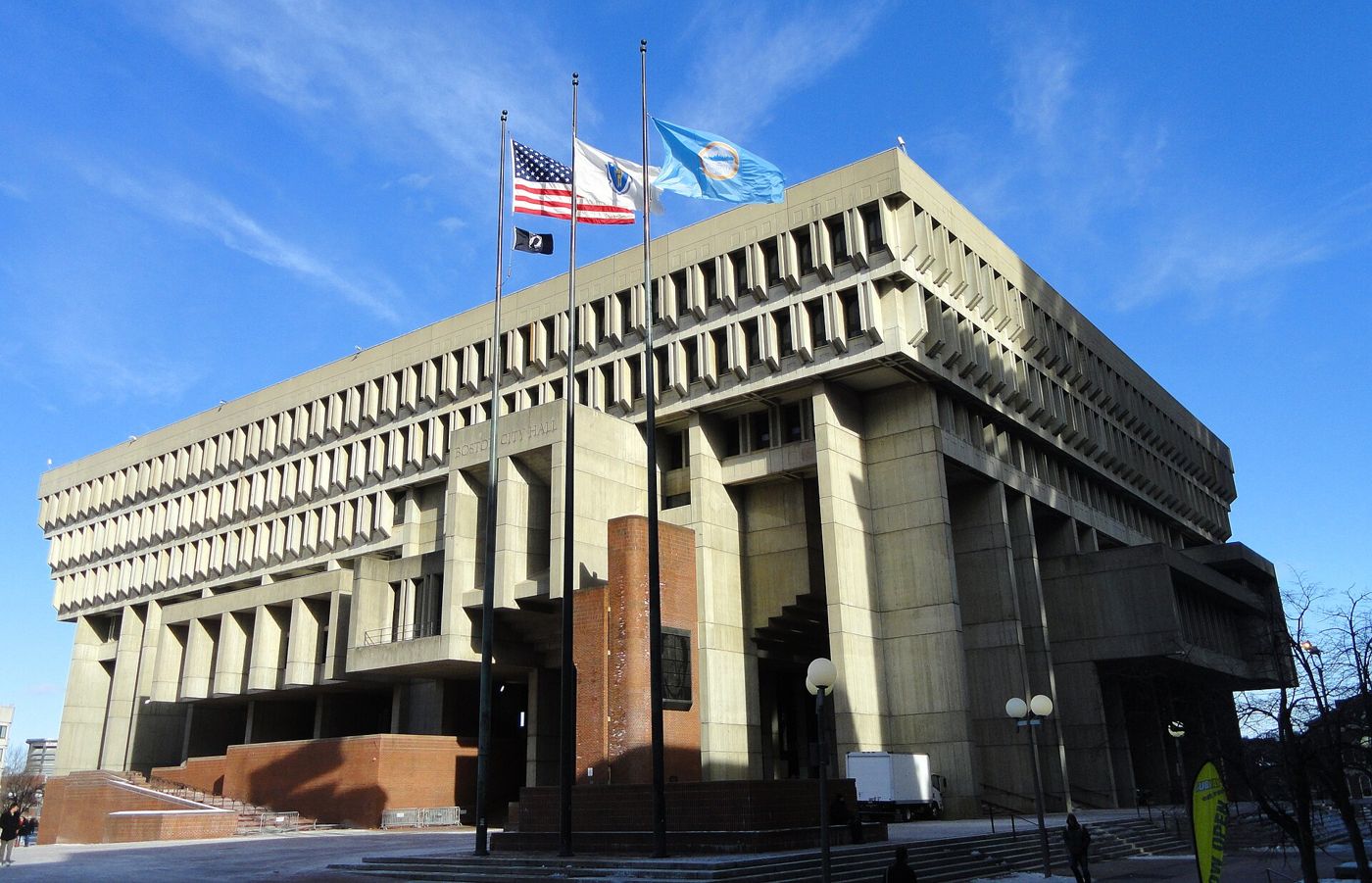
- 1968 Boston City Hall is completed.
- 1980 First Venice Architecture Biennale, the setting of the film’s epilogue.
- 2024 The Brutalist premieres in Venice.
- 2025 3 Oscars, including Best Actor for Adrien Brody.
Sources: A24, The Brutalist
Sentence starters for your sheet
- The canted angle on the Statue of Liberty suggests…
- The low angle makes the building look…
- In 1947, a refugee arriving in America…
To close: a place, then exchange
Where is each character’s place at the start and at the end? Then: political · emotional · general interest · human rights, then go deeper: what passes between the characters, and who do they become?
From the place they find or lose, the deepest exchange in this film is…