← Tous les niveaux
Voie générale · Anglais · 2nde

Trame annuelle Anglais 2nde

Cultural themes and cours type manuel sous chaque séance (texte dense + exploitation inférence/argumentation + lexique + langue + média) · CECRL B1+ · voie générale · section européenne / excellence. 55 min · travail à la maison au fil des séances · Si pas de micro → lecture à voix haute.

Niveau · 2ndeCECRL · B1+Focus · méthodo, oral & argumentationVoie générale · section européenne / excellence

Vue d’année

Ordre des séquences
#SéquenceTâche finaleDurée
1New start, new voicePortrait podcast 1 min4 sem.
2Cities & living togetherPhoto essay + talk4 sem.
3Screens, news & truthFact-check report5 sem.
4Stories that travelRewrite / perform4 sem.
5Our planet, our choicesProposal poster5 sem.
6Looking aheadFuture self interview5 sem.

Détail séquence par séquence

Cours manuel · 55 min · Maison · Évaluation
01

New start, new voice

Tâche finale · Personal portrait podcast 1 min
4 sem.
ObjectivesProblematiser l’identité ; stance analytique ; oral B1+.
Documents & supports
  • Ice-breaker pack
  • Phonologie sentence stress
  • Fiche identity without clichés
  • Grille orale
Tiroir « Je sèche »

Ces pistes sont faites pour la classe ou l’élève qui n’a pas d’outils numériques sous la main.

  • Si pas de micro → lecture à voix haute à deux (sans enregistrement).
  • Élèves timides → portrait écrit illustré.
  • Activité « Find someone who… ».
  • Amorces de phrases (sentence frames).

Heure clé en main · 55 min

  1. 0 à 5 · Name + gesture circle
  2. 5 à 18 · Portrait models
  3. 18 à 32 · Script 80 à 100 mots
  4. 32 à 48 · Enregistrement
  5. 48 à 55 · Peer compliment

Cours · séances 1 (texte + exploitation + lexique + langue + média)

Chaque séance ci-dessous est un cours type manuel de 2nde générale · voie générale · section européenne / excellence (CECRL B1+) : document original dense, exploitation (inférence + argumentation), lexique en situation, point de langue, média, production ~55 min, travail à la maison. Si pas de micro → lecture à voix haute (sans enregistrement) pour toute consigne d’enregistrement / podcast / captation.
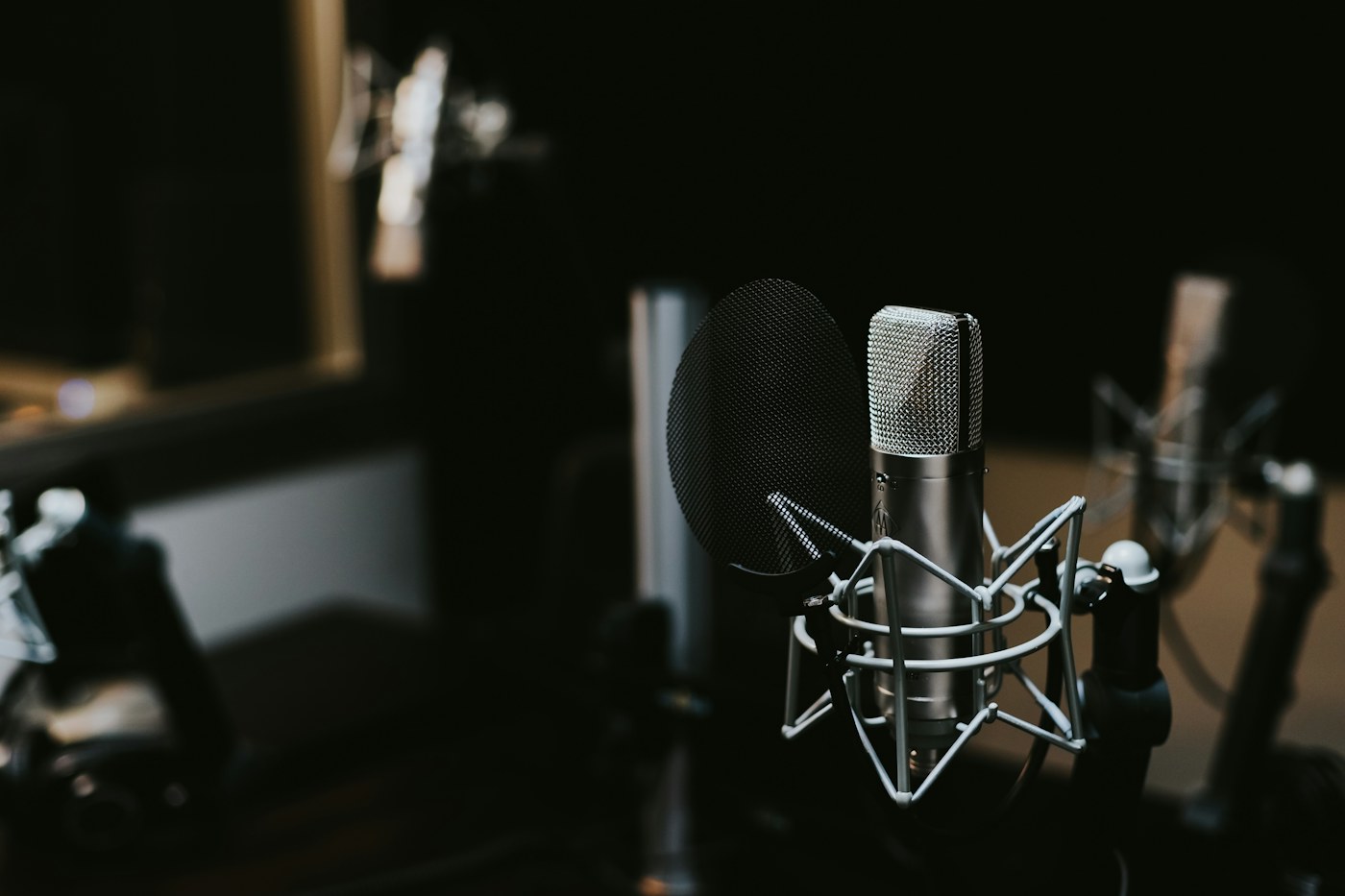
Microphone de podcast sur pied — prendre la parole.
Photo · Jonathan Velasquez · Unsplash

Session 1 · Voice & stance

Language objective · CECRL B1+ · problematise identity labels; academic stance phrases; controlled oral 90s.

Cours / Document

The labels that arrive before we do

Editorial pédagogique original · essayette · ~320 mots · section européenne

Before anyone learns your name properly, a set of labels often arrives first: the quiet one, the sporty one, the bilingual one, the student who “should speak more”. Labels are efficient. They help a crowded classroom sort faces in September. They are also blunt instruments. They flatten contradiction · and contradiction is where a real voice begins.

Consider two scenes. In the first, a teacher asks for volunteers; three hands rise at once. In the second, the same teacher asks a sharper question · Who benefits when we call someone shy rather than careful? · and the room hesitates. The second question forces interpretation. It treats identity not as a costume but as a negotiation between how we see ourselves and how institutions name us.

European-section work expects that negotiation in English. You are not asked to invent a dramatic life story. You are asked to select evidence: a gesture, a silence, a family language at the dinner table, a school rule that once felt natural and later felt strange. Then you argue · gently, precisely · what that evidence suggests.

A useful stance is neither confession nor performance. Try this architecture: claim → specific scene → implication → open question. Example: “People call me reserved; last spring I translated for my uncle at the town hall for forty minutes; perhaps reserve is a strategy, not a deficit · so when does a school reward silence and when does it punish it?”

Tonight, draft that architecture once. Tomorrow, say it aloud without reading every word. Voice, at B1+, is not volume. It is the courage to interpret yourself with evidence.

Exploitation
  1. Gist · Why are labels described as both efficient and dangerous?
  2. Inference · What changes between the teacher’s first and second question?
  3. Argument · To what extent is identity a ‘negotiation’ rather than a fixed trait? Use one phrase from the text.
  4. Language · Quote one academic stance chunk you could reuse in an oral.
  5. Transfer · Write your own claim→scene→implication→question in 4 lines.
  6. Critique · Where might the text overstate the power of school labels?
Lexique en situation
Mot / expressionSensExemple
blunt instrumentoutil grossier / peu nuancéLabels can be blunt instruments.
flatten contradictioneffacer la contradictionLabels flatten contradiction.
negotiationnégociationIdentity is a negotiation.
implicationimplication / ce qui s’ensuitState the implication clearly.
reservedréservé·ePeople call me reserved.
deficitdéfaut / manqueReserve is not a deficit.
reward / punishrécompenser / sanctionnerWhen does school reward silence?
stanceprise de positionAdopt an analytical stance.
Point de langue · Stance phrases (claim → hedge → evaluate)

B1+ oral/écrit : Claim (I would argue that…) + hedge (to some extent / arguably) + evaluate (this matters because…). Évitez le catalogue de hobbies.

  1. Complete: I would argue that labels ______ contradiction.
  2. Add a hedge: Schools reward outgoing students.
  3. Rewrite softly: Shyness is bad. →
  4. Build one sentence: claim + because + implication.
  5. Find 2 evaluative adjectives in the text.
  6. Transform confession → analysis: I’m shy → I tend to… which suggests…
  7. Pair: challenge a partner’s label with one evidence-based question.
Média

British Council LearnEnglish · Skills (B1 listening/speaking) ↗

  • Note 4 stance phrases transferable to a self-portrait oral.
  • Does the speaker confess or argue? Give one clue.
Production en classe · ~55 min
  1. 0 à 7 · Debate spark: Is ‘shy’ a description or a verdict?
  2. 7 à 20 · Silent reading + gist/inference questions.
  3. 20 à 32 · Lexique + stance-phrase drill (board).
  4. 32 à 46 · Draft claim→scene→implication→question (individual).
  5. 46 à 53 · Pair challenge: partner attacks one label kindly.
  6. 50 à 55 · Exit ticket: one reusable academic chunk.

À la maison · après la séance 1 · Architecture identity (claim→scene→implication→question) · 120 à 150 mots + 60s à voix haute.

Session 2 · Models that argue

Language objective · CECRL B1+ · compare two analytical portraits; contrastive connectors; avoid cliché.

Cours / Document

Two portraits that refuse the hobby list

Deux modèles oraux annotés · ~340 mots · original Trame

Portrait A · Léna (1'20) “If you only knew me through my timetable, you would invent a tidy person: maths, English, swimming, sleep. The truth is messier. Last winter I sat in the municipal library translating a housing form for my neighbour who has lived here longer than I have been alive. My French was bureaucratic; her gratitude was not. I am not ‘the helpful girl’. I am someone learning that languages are infrastructures · they open doors or close them. The label I reject is ‘lucky bilingual’. Luck did not queue the hours. What I am negotiating is responsibility: when do you speak for someone, and when do you make space so they speak for themselves?”

Portrait B · Noah (1'15) “Teachers sometimes praise me for ‘participating’. Participation, though, can be a mask. I talk early so that nobody asks the question that frightens me · whether I belong in a European section where half the class has travelled and I have not. Last month a documentary about border towns forced me to rethink belonging: you can inherit a passport and still feel peripheral. My evidence is small: I rehearse seminar answers on the bus, then deliver them as if they were spontaneous. I would argue that performance and authenticity are not opposites; they are tools. The open question is whether school can tell the difference.”

Exploitation
  1. Compare · How do both speakers replace biography with argument?
  2. Inference · What anxiety sits under Noah’s ‘participation’?
  3. Detail · What specific scene anchors Léna’s claim about language as infrastructure?
  4. Argument · Are performance and authenticity compatible? Take a stance with whereas/unlike.
  5. Lexique · Explain ‘languages are infrastructures’ in your own words.
  6. Transfer · Steal one structural move (not a sentence) for your own talk.
Lexique en situation
Mot / expressionSensExemple
infrastructureinfrastructureLanguages are infrastructures.
bureaucraticadministratif / jargonnéMy French was bureaucratic.
negotiate responsibilitynégocier une responsabilitéI negotiate when to speak for someone.
peripheralpériphérique / en margeI still feel peripheral.
spontaneousspontanéAnswers that seem spontaneous.
authenticityauthenticitéAuthenticity is not the opposite of performance.
belongingappartenanceRethink belonging.
whereas / unlikealors que / à la différence deWhereas Léna…, Noah…
Point de langue · Contrastive cohesion (whereas, unlike, while, by contrast)

Pour comparer deux portraits : Whereas A focuses on…, B emphasises… / Unlike A, B… / Both claim X; yet A… while B…

  1. Join with whereas: Léna speaks of translation. Noah speaks of participation.
  2. Rewrite with unlike: Noah has not travelled much. Léna translates forms.
  3. Write one comparative thesis for the two portraits.
  4. Find hedging in Portrait B.
  5. Replace ‘but’ twice with stronger contrastives.
  6. Oral: 40s compare using at least two contrastives.
  7. Correct: Léna is helpful girl. → analytical rewrite.
Média

Lumni · Anglais lycée ↗

  • Is the register personal, analytical, or both? Evidence?
  • Sum up the speaker’s tension in one interpretive sentence.
Production en classe · ~55 min
  1. 0 à 5 · Predict: what will ‘refuse the hobby list’ mean?
  2. 5 à 18 · Read A/B; comparative table on board.
  3. 18 à 28 · Contrastive connectors micro-drills.
  4. 28 à 42 · Write a 90-word comparative paragraph.
  5. 42 à 52 · Pair oral: 60s each using whereas/unlike.
  6. 52 à 55 · Collect best thesis sentences.

À la maison · après la séance 2 · Paragraphe comparatif 120 mots (Léna vs Noah) + 5 contrastifs soulignés.

Session 3 · Script architecture

Language objective · CECRL B1+ · write a 140 à 180 word analytical oral script; cohesion; peer critique.

Cours / Document

From anecdote to interpretation · a working method

Fiche méthode · modèle annoté · original Trame

A European-section portrait is not a diary entry read aloud. It is a short argument about how identity is made, contested, or performed.

Working method (4 moves): 1) Hook with friction · a label, a rule, a mismatch between home and school. 2) Scene with sensory precision · one place, one action, one consequence (40 à 60 words). 3) Interpretation · what the scene reveals about power, belonging, language, or expectation. 4) Open question · leave the listener thinking, not applauding.

Annotated model (158 words): “On my student card I am a barcode and a birthdate; in my grandmother’s kitchen I am the person who still mispronounces the name of her village. That mismatch is my real syllabus this year. Last October I corrected a shop assistant who assumed my accent meant I needed simpler English · and then felt ashamed of my impatience. The scene was tiny; the implication was not: accent is treated as competence theatre. I would argue that schools often reward clarity more than complexity, which quietly trains us to sand down our edges. So here is my question: if fluency is a costume, who decides when we are allowed to take it off?”

Notice what is missing: hobby lists, “I like English”, empty adjectives. Notice what is present: evidence, evaluation, a conceptual noun (competence theatre).

Exploitation
  1. Method · Summarise the 4 moves in your own words.
  2. Inference · What does ‘competence theatre’ suggest about accent?
  3. Critique · Why might applause be a weak goal for this oral?
  4. Language · List 3 nominalisations (nouns built from verbs/adjectives).
  5. Upgrade · Turn this soft line into B1+: ‘I was shy but now I speak.’
  6. Production · Outline your 4 moves in bullet points before drafting.
Lexique en situation
Mot / expressionSensExemple
frictionfriction / tensionHook with friction.
sensory precisionprécision sensorielleScene with sensory precision.
mismatchdécalageThat mismatch is my syllabus.
competence theatremise en scène de la compétenceAccent as competence theatre.
sand downponcer / lisserSand down our edges.
nominalisationnominalisationComplexity via nominalisation.
fluencyaisance / fluiditéIf fluency is a costume…
contestedcontesté / disputéIdentity is contested.
Point de langue · Nominalisation for academic tone

B1+ : préférer parfois le nom abstrait au verbe simple pour densifier (decide→decision; belong→belonging; expect→expectation), sans rendre le style opaque.

  1. Nominalise: They expect silence. → There is an ______ of silence.
  2. Nominalise: She decided quickly. → Her ______ was quick.
  3. Rewrite academically: I felt I didn’t belong.
  4. Find 3 abstract nouns in the model.
  5. Downgrade one over-nominalised sentence to clearer English.
  6. Write 2 sentences mixing specific scene + abstract noun.
  7. Peer check: circle empty adjectives (nice, interesting).
Média

TED-Ed · literature & language lessons ↗

  • How does the speaker move from example to idea?
  • Note one phrase that sounds analytical rather than anecdotal.
Si pas de micro → lecture à voix haute (sans enregistrement) · binôme, grille de feedback orale.

Si pas de micro → lecture à voix haute du script (90 à 120 s) en binôme, grille: friction · scène · interprétation · question ouverte.

Production en classe · ~55 min
  1. 0 à 6 · Diagnose a weak portrait (projected soft text).
  2. 6 à 18 · Study method + annotated model.
  3. 18 à 30 · Language: nominalisation workshop.
  4. 30 à 45 · Draft 140 à 180 word script (notes OK).
  5. 45 à 52 · Peer critique with 3 criteria (friction/scene/question).
  6. 52 à 55 · Revise one sentence only · the claim.

À la maison · après la séance 3 · Script oral 140 à 180 mots (4 moves) prêt pour répétition.

Session 4 · Perform & defend

Language objective · CECRL B1+ · 90 à 120s continuous speaking; defend choices under 2 questions; phonology of emphasis.

Cours / Document

Defence moves after a short talk

Fiche interaction · questions piège / relances · original Trame

After a portrait, interaction separates recital from thought. Typical examiner/teacher moves:

Q1 Clarification · “You said accent is competence theatre. What do you mean by theatre?” Weak answer: repeat the metaphor louder. Strong answer: unpack with a new micro-example.

Q2 Counter · “Isn’t it simpler to say some students are just shy?” Weak answer: “Yes, maybe.” Strong answer: concede a grain of truth, then reframe: “Shyness exists; yet naming it too early can become a self-fulfilling script.”

Q3 Comparison · “How is your case different from Léna’s translation scene?” Aim: one contrastive sentence, not a second speech.

Phonology reminder: emphasise content words that carry evaluation (negotiate, infrastructure, peripheral, implication). Do not rush hedges; to some extent needs calm syllables.

Rubric focus today: message density, lexical precision, interaction agility · not theatrical emotion.

Exploitation
  1. Strategy · What makes a ‘strong’ answer to a counter-question?
  2. Apply · Invent a strong reply to: ‘Aren’t you overthinking a label?’
  3. Phonology · Mark stressed syllables in: identity is a negotiation.
  4. Self-eval · Which of your script lines is most defensible under pressure? Why?
  5. Ethics · When might personal evidence be too private for class oral?
  6. Transfer · Write 2 anticipated questions for your own talk.
Lexique en situation
Mot / expressionSensExemple
self-fulfillingautoréalisateurA self-fulfilling script.
concedeconcéderConcede a grain of truth.
reframerecadrerThen reframe the issue.
agilityagilitéInteraction agility.
recitalrécital / récit apprisNot a recital.
grain of truthpart de véritéA grain of truth.
under pressuresous pressionDefend under pressure.
densitydensitéMessage density matters.
Point de langue · Interaction frames (concede → reframe)

That’s partly true; however… / I see your point; I’d still argue… / What I meant was… / A clearer example would be…

  1. Respond to: You’re exaggerating. → concede + reframe.
  2. Respond to: Give a simpler example. →
  3. Transform weak: Yes, maybe. → strong frame.
  4. Record (or voice) one Q&A pair with a partner.
  5. Underline hedges in your answers.
  6. Stress practice: to SOME extent / I would ARgue.
  7. Write one comparative answer using unlike.
Média

British Council Video Zone · speaking models ↗

  • How does the speaker handle a difficult question?
  • Note 2 interaction frames to steal.
Si pas de micro → lecture à voix haute (sans enregistrement) · binôme, grille de feedback orale.

Si pas de micro → lecture à voix haute + Q&R orale en binôme (sans enregistrement), même durée et même grille.

Production en classe · ~55 min
  1. 0 à 5 · Warm-up stress drill on evaluative lexis.
  2. 5 à 15 · Study defence moves; model live.
  3. 15 à 35 · Rotating orals 90 à 120s + 2 questions (half class).
  4. 35 à 50 · Second half orals.
  5. 50 à 55 · Collective debrief: best reframe of the day.

À la maison · après la séance 4 · Self-score grille + réécrire l’interprétation (5 lignes) après feedback.

Mid-sequence homework

Atelier formatif (méthode) · feuille élève, support, barème & corrigé.

End-of-sequence assessment homework

Expression oralePrépa 5 min · oral 1 à 2 min + 2 Q
  • Nature. Prise de parole en continu (B1+), puis interaction.
  • Durée. Prépa 5 min · oral 1 à 2 min · 2 questions.

Pack en ligne : feuille élève, support, barème tabulaire, corrigé pliable.

Photos & vidéos

Banque complète de la séquence → · liens légaux uniquement

Photos
  • Portrait au microAdolescent avec microExploitation · What identity does the photo suggest? · Keep or change one detail for a podcast cover?Unsplash License
  • Miroir / selfieRefletExploitation · Self-presentation or performance? · Write 2 captions: cliché vs honest.Unsplash License
  • Groupe d’élèvesAmis au lycéeExploitation · Who is in / out of the frame? · Introduce yourself without a cliché.Unsplash License
  • Écriture carnetMain écrivantExploitation · What private voice do you hear? · Link to identity without clichés.Wikimedia · vérifier licence
Vidéos
  • British Council · Video ZoneWarm-ups B1+Exploitation · Main message in 1 sentence? · Note 5 identity phrases.British Council · légal
  • Lumni · Anglais lycéeClips officielsExploitation · Formal or informal? · 30-sec oral summary.Lumni
  • TED-Ed lessonsDocs courtsExploitation · Pick one on self/identity. · 3 key words + example.TED-Ed

02

Cities & living together

Tâche finale · Photo essay + caption talk
4 sem.
ObjectivesEspace urbain ; lexique civic ; oral guidé B1.
Documents & supports
  • Photos libres de droits
  • Lexique urban issues
  • Modèle captions
  • Carte mentale
Tiroir « Je sèche »

Ces pistes sont faites pour la classe ou l’élève qui n’a pas d’outils numériques sous la main.

  • Pas d’images → croquis rapide.
  • Légendes toutes faites à associer.
  • Deux textes de difficulté différente.
  • Comparer deux villes (grille).

Heure clé en main · 55 min

  1. 0 à 5 · Guess the city
  2. 5 à 18 · Article public space
  3. 18 à 32 · 4 photos + captions
  4. 32 à 48 · Galerie
  5. 48 à 55 · Civic verb exit

Cours · séances 2 (texte + exploitation + lexique + langue + média)

Chaque séance ci-dessous est un cours type manuel de 2nde générale · voie générale · section européenne / excellence (CECRL B1+) : document original dense, exploitation (inférence + argumentation), lexique en situation, point de langue, média, production ~55 min, travail à la maison. Si pas de micro → lecture à voix haute (sans enregistrement) pour toute consigne d’enregistrement / podcast / captation.

Ville dense, façades et circulation — vivre ensemble.
Photo · Unsplash · Unsplash

Session 1 · Urban tensions

Language objective · CECRL B1+ · map civic tensions; cause→effect; conceptual urban lexis.

Cours / Document

The courtyard is not neutral

Essai pédagogique · espace urbain scolaire · ~310 mots

Every school courtyard looks informal until you watch it as a map of power. Who occupies the centre? Who walks the edges? Who waits by the gate for a sibling? Urban sociologists remind us that public space is never empty of rules; it is saturated with invisible permissions.

Take a municipal square redesigned with sleek benches that discourage lying down. The brochure says “shared comfort”. A teenager who used to skate there hears another message: certain bodies are welcome as consumers of calm, not as producers of noise. The same logic can appear in a lycée when “quiet zones” protect revision yet quietly exile the students whose social life is the courtyard itself.

Living together, then, is not a soft slogan. It is a set of design choices and unwritten treaties. Density creates friction: music from one window, revision notes on a low wall, a delivery scooter cutting the pavement. The European-section task is to describe these frictions without moral panic · to ask who benefits, who adapts, and which compromises remain realistic at school scale.

Your first tool is precise observation. Note three micro-scenes this week. For each, write a cause→effect chain and one unanswered civic question. Avoid tourist adjectives (beautiful, modern). Prefer analytical ones (segregated, porous, surveilled, negotiated).

Exploitation
  1. Gist · Why is the courtyard ‘not neutral’?
  2. Inference · What does the anti-lying-down bench imply about welcome bodies?
  3. Argument · Can ‘quiet zones’ be both fair and exclusive? Nuance your answer.
  4. Lexique · Replace ‘nice square’ with two analytical adjectives from the text world.
  5. Method · Draft one cause→effect chain from a school micro-scene.
  6. Critique · Where might the text romanticise conflict?
Lexique en situation
Mot / expressionSensExemple
saturatedsaturéSpace saturated with permissions.
unwritten treatytraité non écritUnwritten treaties of the yard.
densitydensitéDensity creates friction.
segregatedségréguéA segregated corner.
porousporeuxA porous boundary.
surveilledsurveilléA surveilled entrance.
exileexilerQuiet zones may exile some students.
civicciviqueA civic question.
Point de langue · Cause → effect (civic analysis)

Because / since / as a result / which means that / this leads to… Reliez observation et conséquence sans dramatiser.

  1. Join: The bench slopes. People cannot sleep there.
  2. Upgrade: The yard is noisy so it’s bad. → analytical.
  3. Write 2 cause→effect sentences about your school gate.
  4. Find connectors of result in a peer text.
  5. Hedge: This always excludes weaker students. →
  6. Nominalise: They decide who may stay. →
  7. Oral 40s: one friction + one compromise.
Média

TED-Ed · social studies lessons ↗

  • What claim about public space does the lesson make?
  • How could you transfer it to a school courtyard?
Production en classe · ~55 min
  1. 0 à 8 · Photo prompt: who owns this space?
  2. 8 à 22 · Reading + inference questions.
  3. 22 à 34 · Lexique analytique + cause→effect drills.
  4. 34 à 48 · Triple observation notes (individual).
  5. 48 à 55 · Share one civic question; board typology.

À la maison · après la séance 1 · 3 micro-scènes scolaires + chaînes cause→effet + 1 question civique.

Session 2 · Reading the city

Language objective · CECRL B1+ · CE gist→inference; summarise 80 à 100 words; identify viewpoint.

Cours / Document

Night buses and the myth of the 24-hour city

Article pédagogique original · urbanisme · ~330 mots

Tourism posters love the phrase “the city that never sleeps”. For many teenagers, the more honest phrase is “the city that sleeps on a timetable”. When the last reliable bus leaves at 10:40, nightlife becomes a class question as much as a cultural one. Those with cars, taxis, or parents who can collect them inherit a longer evening; others inherit a curfew disguised as logistics.

Urban researcher Amira Chen (fictional composite for class use) notes that transport maps are moral documents: they reveal whose time is considered valuable. A delayed tram after a theatre workshop is not a small inconvenience if it determines whether you can join the workshop at all. Living together includes the right to arrive home safely · and the right to linger without being treated as a problem.

Critics of late transport argue costs and security. Those arguments deserve scrutiny, not dismissal. Yet security rhetoric sometimes codes certain neighbourhoods as risky while leaving under-lit car parks unexamined. A careful reader asks: what evidence is offered, and whose fear is centred?

For tomorrow’s seminar, prepare a 90-word summary that does not copy sentences, then one interpretive claim about fairness.

Exploitation
  1. Gist · What does the text claim about the ‘24-hour city’ myth?
  2. Inference · How can a bus timetable become a class question?
  3. Viewpoint · Is the narrator neutral, committed, or both? Evidence?
  4. Argument · Evaluate the security counter-argument in 3 sentences.
  5. CE skill · Propose a title that is analytical, not sensational.
  6. Summary · In 40 words, state the text’s core tension.
Lexique en situation
Mot / expressionSensExemple
curfewcouvre-feuA curfew disguised as logistics.
inherithériterInherit a longer evening.
logisticslogistiqueDisguised as logistics.
scrutinyexamen critiqueDeserve scrutiny.
rhetoricrhétoriqueSecurity rhetoric.
under-litmal éclairéUnder-lit car parks.
lingers’attarderThe right to linger.
compositecomposite / reconstituéFictional composite.
Point de langue · Reporting viewpoint (claims vs facts)

The writer argues / suggests / implies… According to… This remains debated… Distinguez fait observable et évaluation.

  1. Label F/E: The last bus leaves at 10:40.
  2. Label F/E: Tourism posters love myths.
  3. Rewrite with reporting verb: Cities never sleep.
  4. Write 2 hedges for a strong claim.
  5. Summarise paragraph 2 without copying.
  6. Find one concession in the text.
  7. Oral: 45s · whose fear is centred?
Média

British Council LearnEnglish · reading skills ↗

  • What is the writer’s purpose: inform, persuade, or both?
  • Note 3 reporting verbs you can reuse.
Production en classe · ~55 min
  1. 0 à 5 · Predict from title.
  2. 5 à 20 · Guided CE (gist→detail→inference).
  3. 20 à 32 · Viewpoint + reporting verbs.
  4. 32 à 46 · Write 90-word summary.
  5. 46 à 55 · Peer check against plagiarism checklist.

À la maison · après la séance 2 · Summary 90 mots + claim interprétative 60 mots sur l’équité des transports.

Session 3 · Captions that claim

Language objective · CECRL B1+ · write interpretive captions; merge into a thesis; civic verbs.

Cours / Document

Four images, one quarrel

Atelier légendes · méthode · original Trame

A caption is not a label stuck under a pretty photo. At B1+ it is a micro-argument.

Weak caption: “A busy street in our town.” Stronger caption: “Delivery scooters colonise the pavement, turning a shared sidewalk into a temporary lane · convenience for some, obstacle for others.”

Method: 1) Name the visible conflict (two uses of the same space). 2) Add one precise detail (object, body, sign, time of day). 3) End with an evaluative hinge (which suggests / raising the question / at the cost of).

You will write four captions for legal images (Unsplash/Wikimedia or your own photos with permission). Then merge them into ONE thesis on living together · not a list. Thesis test: can someone disagree with you? If not, your sentence is still decorative.

Exploitation
  1. Method · What three moves build a strong caption?
  2. Upgrade · Improve: ‘Students sit on the stairs.’
  3. Thesis test · Why must a thesis be disagreeable?
  4. Lexique · Propose 4 civic verbs beyond ‘show’.
  5. Ethics · What must you credit when using Unsplash?
  6. Transfer · Draft a thesis that links density and fairness.
Lexique en situation
Mot / expressionSensExemple
colonisecoloniser / envahirScooters colonise the pavement.
hingecharnièreAn evaluative hinge.
decorativedécoratifA decorative sentence.
disagreeablecontestableA disagreeable thesis.
sidewalk / pavementtrottoirShared sidewalk.
temporary lanevoie temporaireA temporary lane.
creditcréditerCredit the photographer.
mergefusionnerMerge captions into a thesis.
Point de langue · Relative clauses for denser captions

…, which turns X into Y / …, whose presence suggests… / a space that was meant for…

  1. Add a non-defining relative to a weak caption.
  2. Write 2 captions with which + evaluation.
  3. Avoid dangling which: correct a bad model.
  4. Reduce wordiness in a 35-word caption to 22.
  5. Replace show/see with stronger verbs ×4.
  6. Peer: mark decorative adjectives.
  7. Build thesis: Although…, …
Média

TED-Ed · design / urban-related lessons ↗

  • What argument does an image make without words?
  • How does a caption change that argument?
Si pas de micro → lecture à voix haute (sans enregistrement) · binôme, grille de feedback orale.

Si pas de micro → lecture à voix haute de la thèse + 2 légendes (45 à 60 s), feedback sur la charge argumentative.

Production en classe · ~55 min
  1. 0 à 6 · Weak vs strong caption clinic.
  2. 6 à 18 · Method + relative clause drills.
  3. 18 à 40 · Write 4 captions (images on screen/packets).
  4. 40 à 50 · Merge into thesis; gallery walk.
  5. 50 à 55 · Vote: most disagreeable (= best) thesis.

À la maison · après la séance 3 · 4 légendes + 1 thèse (disagreeable) · crédits images notés.

Session 4 · Photo-essay gallery

Language objective · CECRL B1+ · present a problematised photo essay; Q&A; realistic proposal.

Cours / Document

From diagnosis to one SMART proposal

Brief exposé · 5 à 6 min · original Trame

Your gallery talk should not be a slideshow of nice neighbourhood pictures. Structure:

1) Problematisation (30 à 40s) · living together as tension, not harmony poster. 2) Two documented frictions (2×60s) · image + caption + implication. 3) One SMART proposal (90s) · Specific, Measurable, Achievable, Relevant, Time-bound · school or street scale, budget-aware. 4) Anticipated objection (30s) · then a calm reply.

Example proposal (not obligatory): a monthly “shared courtyard charter” co-written by delegates, tested for six weeks, evaluated with a two-question survey. Weak proposal: “be nicer / clean the planet”. Strong proposal names actors, time, and success criteria.

Interaction: when asked “Isn’t this naive?”, concede constraints, then show the smallest viable experiment.

Exploitation
  1. Structure · Recreate the 4-part talk plan from memory.
  2. Evaluate · Why is ‘be nicer’ a weak proposal?
  3. Apply · Make the courtyard-charter example more measurable.
  4. Interaction · Write a concede→reframe reply to ‘This is naive’.
  5. Ethics · What privacy issues arise when photographing peers?
  6. Self-check · Is your thesis still visible in the proposal?
Lexique en situation
Mot / expressionSensExemple
SMARTSMART (spécifique…)One SMART proposal.
budget-awareconscient du budgetA budget-aware plan.
viable experimentexpérience viableSmallest viable experiment.
chartercharteA courtyard charter.
objectionobjectionAnticipate an objection.
problematisationproblématisationStart with problematisation.
success criteriacritères de réussiteName success criteria.
delegatesdéléguésCo-written by delegates.
Point de langue · Persuasive modals (should / ought to / might / need to)

We might trial… / The school ought to… / This need not be expensive… Nuancez la force de la proposition.

  1. Soften: The school must ban scooters. →
  2. Strengthen carefully: We could maybe think about… →
  3. Write 3 proposal sentences with different modal force.
  4. Add a condition: We should… provided that…
  5. Oral objection reply with might/need not.
  6. Correct: We must to clean…
  7. Find hedges in a peer proposal.
Média

Lumni · Anglais (clips civiques / société) ↗

  • What proposal, if any, does the media suggest?
  • Is it SMART? Justify.
Si pas de micro → lecture à voix haute (sans enregistrement) · binôme, grille de feedback orale.

Si pas de micro → exposé à voix haute chronométré en îlots (sans captation), même grille Q&R.

Production en classe · ~55 min
  1. 0 à 8 · SMART clinic on sample proposals.
  2. 8 à 20 · Finalise outline + objection.
  3. 20 à 50 · Gallery talks (timed) + Q&A.
  4. 50 à 55 · Debrief: most realistic proposal.

À la maison · après la séance 4 · Self-score + récrire la proposition SMART (80 à 100 mots).

Mid-sequence homework

Atelier formatif (méthode) · feuille élève, support, barème & corrigé.

End-of-sequence assessment homework

Exposé + visuelExposé 6 à 8 min + Q&A 2 min
  • Nature. Exposé scolaire avec support visuel.
  • Durée. 6 à 8 min + Q&A 2 min.

Pack en ligne : feuille élève, support, barème tabulaire, corrigé pliable.

Photos & vidéos

Banque complète de la séquence → · liens légaux uniquement

Photos
  • SkylineHorizon urbainExploitation · What atmosphere? · Living together: opportunity or tension?Unsplash License
  • Parc publicParcExploitation · Who uses this space? · Caption with one civic verb.Unsplash License
  • Rue piétonneRueExploitation · Conflict of uses? · One local improvement.Unsplash License
  • Street artMur peintExploitation · Art or vandalism · argue. · Compare with a clean façade.Unsplash License
Vidéos
03

Screens, news & truth

Tâche finale · Fact-check mini-report
5 sem.
ObjectivesEsprit critique ; reporting verbs ; claim vs evidence.
Documents & supports
  • Fake vs reliable (créés/DP)
  • Checklist sources
  • Reporting verbs
  • Audio news légal
Tiroir « Je sèche »

Ces pistes sont faites pour la classe ou l’élève qui n’a pas d’outils numériques sous la main.

  • Affirmations neutres pour fact-check.
  • Trier titres vrai/faux/à vérifier.
  • Transcription audio si besoin.
  • Binômes hétérogènes.

Heure clé en main · 55 min

  1. 0 à 5 · Trust or trash?
  2. 5 à 18 · Fact-check method
  3. 18 à 32 · Choisir claim
  4. 32 à 48 · Report 120 mots
  5. 48 à 55 · Share finding

Cours · séances 3 (texte + exploitation + lexique + langue + média)

Chaque séance ci-dessous est un cours type manuel de 2nde générale · voie générale · section européenne / excellence (CECRL B1+) : document original dense, exploitation (inférence + argumentation), lexique en situation, point de langue, média, production ~55 min, travail à la maison. Si pas de micro → lecture à voix haute (sans enregistrement) pour toute consigne d’enregistrement / podcast / captation.

Écrans et fil d’actualité — information et doute.
Photo · Unsplash · Unsplash

Session 1 · Headlines under suspicion

Language objective · CECRL B1+ · sort headlines; detect framing; critical reading stance.

Cours / Document

Five headlines, five agendas

Corpus pédagogique original · framing · ~300 mots

Headlines are not windows; they are frames. Compare these class specimens (invented for training):

1) “Miracle Teen App Stops Flu in 90 Minutes” 2) “Experts Urge Caution After Viral Health Claim Spreads in Schools” 3) “Are We Raising a Generation of Digital Hypochondriacs?” 4) “Local Students Launch Peer Fact-Check Club” 5) “Big Tech Silent as Misinformation Hits Exam Season”

Each selects a villain, a hero, or a mood. (1) sells miracle; (2) centres institutional caution; (3) pathologises youth; (4) empowers peers; (5) blames platforms. None is “just information”.

Your job is not cynicism for its own sake. Cynicism is lazy. Critical reading asks: What is amplified? What is missing (sample size, date, conflicting studies)? Who profits from urgency?

Build a sorting grid: claim type · emotion triggered · absent evidence · possible verification move.

Exploitation
  1. Framing · Match each headline to an agenda in one adjective.
  2. Inference · What does headline (3) assume about teenagers?
  3. Method · Why is cynicism called ‘lazy’ here?
  4. Apply · Rewrite (1) as a cautious informative title.
  5. Argument · Can headline (4) still oversimplify? How?
  6. Transfer · Bring tomorrow one real headline + your grid (link/legal source).
Lexique en situation
Mot / expressionSensExemple
frame / framingcadrageHeadlines are frames.
agendaagenda / viséeFive agendas.
pathologisepathologiserPathologises youth.
amplifyamplifierWhat is amplified?
urgencyurgenceWho profits from urgency?
specimenspécimenClass specimens.
verificationvérificationA verification move.
cynicismcynismeCynicism is lazy.
Point de langue · Modals of speculation (might / could / may have)

This might exaggerate… / The source may have omitted… / It could be clickbait because…

  1. Speculate softly on headline (1).
  2. Distinguish must vs might on thin evidence.
  3. Write 3 speculative sentences about missing data.
  4. Correct overconfident: This is fake. →
  5. Find emotion adjectives for each headline.
  6. Oral: 40s · what is missing from (5)?
  7. Hedge a strong accusation.
Média

British Council · Five ways to spot fake news ↗

  • List the verification moves shown.
  • Which move fits school chat rumours best?
Production en classe · ~55 min
  1. 0 à 8 · Headline sorting race.
  2. 8 à 22 · Text + framing discussion.
  3. 22 à 35 · Speculation modals.
  4. 35 à 48 · Build grids in pairs on 2 headlines.
  5. 48 à 55 · Exit: one rewritten cautious title.

À la maison · après la séance 1 · 1 une réelle + grille (claim/émotion/absence/vérification).

Session 2 · Claims vs evidence

Language objective · CECRL B1+ · reporting verbs; separate claim/evidence/inference.

Cours / Document

The QuickHeal specimen · annotated

Texte presse pédagogique · annotations · original Trame

SPECIMEN (not a real outlet) “Teen App Claims ‘Instant Flu Cure’ · A viral clip claims QuickHeal stops the flu in ninety minutes. No clinical trials appear in public databases. A researcher at a regional hospital urges caution, noting that testimonials are not trials. Meanwhile school chats forward the video with fire emojis. The company has not replied to email questions about ingredients.”

Annotation keys: - CLAIM: stops the flu in ninety minutes - ABSENCE: no public clinical trials - EXPERT MOVE: urges caution; distinguishes testimonials vs trials - SOCIAL SPREAD: school chats + emojis (emotion, not proof) - ACCOUNTABILITY GAP: company silence (suggestive, not a final verdict)

Reporting verbs matter: claims ≠ proves; urges ≠ panics; notes ≠ screams. Precision is an ethical habit.

Exploitation
  1. Sort · List claim / evidence / absence / inference separately.
  2. Language · Replace ‘says’ with 4 more precise reporting verbs.
  3. Inference · What does company silence suggest · and what does it not prove?
  4. Argument · Why are testimonials weak as medical evidence?
  5. Ethics · How should a student share doubt without humiliating peers?
  6. Production · Write an 80-word caution note for a class blog.
Lexique en situation
Mot / expressionSensExemple
testimonialtémoignageTestimonials are not trials.
clinical trialessai cliniqueNo clinical trials published.
accountabilityresponsabilitéAccountability gap.
urge cautionappeler à la prudenceUrges caution.
forwardtransférerChats forward the video.
ingredientingrédientQuestions about ingredients.
verdictverdictNot a final verdict.
ethical habithabitude éthiquePrecision is an ethical habit.
Point de langue · Reporting verbs ladder

Neutral: says, states, notes · Distance: claims, alleges · Caution: suggests, implies · Strong: demonstrates, proves (rare without data).

  1. Re-report the specimen with 5 different verbs.
  2. Rank verbs from weak to strong commitment.
  3. Correct: The video proves QuickHeal works.
  4. Write 2 sentences using alleges / notes.
  5. Transform emoji reaction → analytical clause.
  6. Peer edit: circle overconfident verbs.
  7. Oral 45s caution without panic lexicon.
Média

TED-Ed · How to spot a misleading graph ↗

  • What visual trick is explained?
  • How does it parallel verbal overclaim?
Production en classe · ~55 min
  1. 0 à 6 · Verb ladder warm-up.
  2. 6 à 20 · Annotate specimen in pairs.
  3. 20 à 32 · Reporting verb workshop.
  4. 32 à 46 · Draft caution note 80 words.
  5. 46 à 55 · Read 2 notes aloud; ethics debrief.

À la maison · après la séance 2 · Caution note 100 à 120 mots + 6 reporting verbs soulignés.

Session 3 · Listening for uncertainty

Language objective · CECRL B1+ · CO: facts vs uncertainties; attitude markers; notes.

Cours / Document

Radio panel · script for intensive listening

Script CO original · 2 écoutes · ~280 mots

HOST: “Tonight: a viral school-health clip. Mara, you tracked it?” MARA: “I did. The clip claims a ninety-minute cure. What we can verify is the company’s marketing page. What we cannot verify · yet · is any peer-reviewed trial.” HOST: “So is it dangerous?” MARA: “I’d be careful with that word. Overconfidence is dangerous; the product itself is still opaque. Parents are anxious; students feel mocked if they ask for sources.” GUEST (student): “In our group chat, doubt looked like killing the vibe. But asking ‘where is the study?’ isn’t an insult.” HOST: “Final thirty seconds · one practical tip?” MARA: “Pause before forwarding. Check date, author, and whether other reputable outlets echo the claim. If nobody serious echoes it, wait.”

Attitude markers: yet, opaque, careful, anxious, mocked, reputable, wait.

Exploitation
  1. CO global · What is the panel’s main recommendation?
  2. Detail · What can Mara verify, and what not?
  3. Attitude · How does Mara avoid both panic and naivety?
  4. Inference · Why might doubt ‘kill the vibe’ in chats?
  5. Lexique · Explain opaque in this context.
  6. Transfer · Write 3 classroom-friendly phrases to request a source.
Lexique en situation
Mot / expressionSensExemple
peer-reviewedévalué par des pairsNo peer-reviewed trial.
opaqueopaqueThe product is opaque.
reputablefiable / réputéReputable outlets.
forwardtransférerPause before forwarding.
echo a claimreprendre une affirmationWhether outlets echo the claim.
overconfidenceexcès de confianceOverconfidence is dangerous.
mockedmoquéFeel mocked.
practical tipconseil pratiqueOne practical tip.
Point de langue · Markers of uncertainty (yet / still / allegedly / so far)

What we know so far… / It is not clear yet… / Allegedly… / Evidence remains limited…

  1. Insert yet/still into two overconfident sentences.
  2. Rewrite: It’s fake. → uncertain-but-firm.
  3. Listen again: tick attitude adjectives.
  4. Produce 4 uncertainty frames for oral.
  5. Distinguish allegedly vs clearly.
  6. Pair: request a source politely ×3 ways.
  7. Correct: We didn’t verified it yet.
Média

British Council LearnEnglish · Listening ↗

  • Note how speakers signal uncertainty.
  • Sum up in 40s without copying scary adjectives.
Si pas de micro → lecture à voix haute (sans enregistrement) · binôme, grille de feedback orale.

Si pas de micro → réaction orale 60s à voix haute (qualify the claim), sans enregistrement.

Production en classe · ~55 min
  1. 0 à 5 · Predict vocabulary from title.
  2. 5 à 18 · Listening 1 (global) + Listening 2 (detail).
  3. 18 à 30 · Attitude markers board.
  4. 30 à 42 · Uncertainty language practice.
  5. 42 à 55 · Mini oral reactions (agree/qualify).

À la maison · après la séance 3 · 1 audio Lumni/BC + grille faits/incertitudes/attitude (fiche).

Session 4 · Fact-check report

Language objective · CECRL B1+ · EE 140 à 180 words; checklist; cautious conclusion.

Cours / Document

Anatomy of a 150-word fact-check

Modèle EE annoté · original Trame

Model report (152 words): “A viral clip claims QuickHeal cures flu symptoms in ninety minutes. The central claim is medical and therefore demands trial-level evidence. So far, no peer-reviewed study appears in major public indexes, and the company’s page offers testimonials rather than protocols. Two verification moves matter here: reverse-searching the video stills to date the claim, and checking whether public-health sites echo it · they do not. School chats amplify urgency with emojis, which is socially understandable but epistemically weak. I do not conclude the product is harmful; I conclude that sharing it as proven is unjustified. Until transparent data exists, the responsible student action is to pause, ask for sources, and avoid humiliating peers who forwarded it in good faith.”

Required moves in yours: summary · 2 techniques · status of claim · ethical closing.

Exploitation
  1. Moves · Tick which required moves appear in the model.
  2. Lexique · What does epistemically weak mean here?
  3. Critique · Why refuse a final ‘harmful’ verdict?
  4. Language · Find 3 cautious formulations.
  5. Upgrade · Improve a panicky student draft (teacher sample).
  6. Plan · Outline your report in 4 bullets before writing.
Lexique en situation
Mot / expressionSensExemple
protocolprotocoleTestimonials rather than protocols.
index / indexesindexPublic indexes.
amplify urgencyamplifier l’urgenceChats amplify urgency.
epistemicallysur le plan de la connaissanceEpistemically weak.
unjustifiedinjustifiéSharing as proven is unjustified.
transparent datadonnées transparentesUntil transparent data exists.
good faithbonne foiForwarded in good faith.
status of claimstatut de l’affirmationState the status of the claim.
Point de langue · Cautious conclusions (I stop where evidence stops)

I cannot confirm… / Evidence is insufficient to… / A fair conclusion is limited to…

  1. Rewrite a dramatic conclusion cautiously.
  2. Add concession before judgment.
  3. Write status sentences: proven / unproven / disputed.
  4. Reduce moralising adjectives.
  5. Peer checklist on a draft.
  6. Timed: 12 min paragraph.
  7. Correct: We proved it’s a lie.
Média

TED-Ed / BC media literacy pick ↗

  • Steal one methodological phrase.
  • How does the lesson model limited conclusions?
Production en classe · ~55 min
  1. 0 à 8 · Dissect model report.
  2. 8 à 18 · Checklist co-construction.
  3. 18 à 40 · Timed EE 140 à 180 words.
  4. 40 à 50 · Peer edit (techniques + ethics).
  5. 50 à 55 · Two sentences revised publicly.

À la maison · après la séance 4 · Version finale du fact-check 150 à 180 mots.

Session 5 · Share findings orally

Language objective · CECRL B1+ · 60 à 90s oral briefing; ethics of correction; Q&A.

Cours / Document

How to correct a rumour without becoming the police

Fiche oral civique · original Trame

Tone is content. If your fact-check sounds like triumph over stupid classmates, you have failed the civic aim.

Useful oral frame: 1) Claim in neutral language 2) What was checked 3) Current status (unproven / disputed / false) 4) What peers can do next 5) Invite a question

Avoid: “Obviously fake”, “only idiots share this”. Prefer: “The claim goes beyond available evidence”; “A careful next step is…”

No microphone? → Read your briefing aloud with a partner who plays a resistant peer.

Exploitation
  1. Ethics · Why can ‘triumph tone’ undermine truth-telling?
  2. Apply · Soften: ‘Only idiots share this.’
  3. Structure · Deliver the 5-part frame from memory.
  4. Interaction · Reply to: ‘You’re killing the vibe.’
  5. Self-eval · Which line of your report is most oral-ready?
  6. Civic · What is the difference between method and ideology?
Lexique en situation
Mot / expressionSensExemple
briefingbriefing / pointA 60s briefing.
resistant peerpair résistantPlay a resistant peer.
disputedcontestéStatus: disputed.
triumph toneton de triompheAvoid triumph tone.
civic aimvisée civiqueThe civic aim.
ideologyidéologieMethod, not ideology.
neutral languagelangue neutreClaim in neutral language.
undermineminer / affaiblirUndermine truth-telling.
Point de langue · Diplomatic disagreement

I hear you; my concern is… / Can we check one source together? / I’m not attacking you; I’m questioning the claim.

  1. Build 3 diplomatic disagreement lines.
  2. Role-play resistant peer 40s.
  3. Replace insult with status language.
  4. Stress practice on status words.
  5. Write an invitation-to-question closer.
  6. Peer grade tone 1 à 4.
  7. Reflect: when should a teacher intervene?
Média

Lumni / BC clip on media & citizenship ↗

  • How is disagreement handled?
  • Note one diplomatic phrase.
Si pas de micro → lecture à voix haute (sans enregistrement) · binôme, grille de feedback orale.

Si pas de micro → briefing à voix haute 60 à 90s + une question résistante en binôme (sans enregistrement).

Production en classe · ~55 min
  1. 0 à 7 · Tone clinic (bad vs good briefing).
  2. 7 à 18 · Polish oral cards.
  3. 18 à 48 · Briefings + resistant Q.
  4. 48 à 55 · Collective charter: 5 class phrases.

À la maison · après la séance 5 · Carte orale finale + 3 questions anticipées.

Mid-sequence homework

Atelier formatif (méthode) · feuille élève, support, barème & corrigé.

End-of-sequence assessment homework

Expression écrite40 min
  • Nature. Compte rendu critique.
  • Durée. 40 min.

Pack en ligne : feuille élève, support, barème tabulaire, corrigé pliable.

Photos & vidéos

Banque complète de la séquence → · liens légaux uniquement

Photos
  • Smartphone newsScroll actusExploitation · Trust signals? · Rewrite headline honestly.Unsplash License
  • NewsroomRédactionExploitation · Who produces news? · Claim vs evidence.Unsplash License
  • Misleading graphsGraphiquesExploitation · Which visual trick? · How redesign?Wikimedia Commons
  • Fact-checkingVérificationExploitation · Source, date, author? · One reporting verb.Unsplash License
Vidéos
04

Stories that travel

Tâche finale · Rewrite / perform short scene
4 sem.
ObjectivesScène accessible (DP/original) ; émotions ; performance ou rewrite.
Documents & supports
  • Texte DP ou original
  • Characters/emotions
  • Drama warm-ups
  • Rubrique perf/writing
Tiroir « Je sèche »

Ces pistes sont faites pour la classe ou l’élève qui n’a pas d’outils numériques sous la main.

  • Version écrite seulement.
  • Remettre une scène dans l’ordre.
  • Émotions via images.
  • Lecture chorale guidée.

Heure clé en main · 55 min

  1. 0 à 5 · Emotion statue
  2. 5 à 18 · Read scene
  3. 18 à 32 · Rewrite angle
  4. 32 à 48 · Répétition
  5. 48 à 55 · Share a line

Cours · séances 4 (texte + exploitation + lexique + langue + média)

Chaque séance ci-dessous est un cours type manuel de 2nde générale · voie générale · section européenne / excellence (CECRL B1+) : document original dense, exploitation (inférence + argumentation), lexique en situation, point de langue, média, production ~55 min, travail à la maison. Si pas de micro → lecture à voix haute (sans enregistrement) pour toute consigne d’enregistrement / podcast / captation.

Livre ouvert, lumière rasante — récits qui voyagent.
Photo · Unsplash · Unsplash

Session 1 · Entering the tale

Language objective · CECRL B1+ · literary entry; emotion lexis with precision; narrative tension.

Cours / Document

Winter garden, ordinary bargain

Réécriture pédagogique d’un motif folklorique DP (Belle/Bête) · ~300 mots

There was once a merchant who asked his daughters what gift they desired from the city. The elder two named jewels. The youngest asked only for a rose. In a winter garden that did not belong to him, he took one. The master of the place demanded a bargain that sounded medieval and felt modern: someone must pay for a border crossed without permission.

Read as folklore, this is enchantment. Read as European-section literature work, it is also about consent, debt, and who gets to define beauty as worth a life. The rose is not cute. It is a pretext that exposes how casually the powerful convert desire into obligation.

Your first task is to slow the scene. Which sensory details make the garden hostile rather than romantic? Where does the narrator invite sympathy · for the merchant, the daughter, or the wounded master? Literature trains inference: what is unsaid when a “gift” becomes a trap?

Exploitation
  1. Gist · What modern issues can the bargain illuminate?
  2. Inference · Why might the rose be called a pretext?
  3. Viewpoint · With whom does the opening align the reader first?
  4. Language · Find 3 words that harden the fairy-tale tone.
  5. Argument · Is the merchant mainly foolish, selfish, or trapped by gender expectations of gift-giving? Nuance.
  6. Creative stem · Write 4 lines from the garden’s point of view.
Lexique en situation
Mot / expressionSensExemple
bargainmarché / pacteDemanded a bargain.
consentconsentementAbout consent and debt.
pretextprétexteThe rose is a pretext.
obligationobligationDesire into obligation.
hostilehostileGarden hostile rather than romantic.
align the readerorienter le lecteurAlign the reader with…
unsaidnon-ditWhat is unsaid.
convertconvertirConvert desire into obligation.
Point de langue · Narrative tenses (past simple / past perfect / used to)

Event line → past simple; background earlier → past perfect; past habits → used to / would.

  1. Order events with past perfect.
  2. Rewrite 3 sentences mixing simple + perfect.
  3. Find time markers in the extract.
  4. Produce a 6-line sequel paragraph.
  5. Correct: He has took a rose.
  6. Oral: retell in 50s without ‘and then’ spam.
  7. Mark emotion nouns vs adjectives.
Média

TED-Ed · literature lessons ↗

  • What literary device is highlighted?
  • How does it change sympathy?
Production en classe · ~55 min
  1. 0 à 8 · Motif brainstorm (rose/bargain/debt).
  2. 8 à 22 · Close reading + inference.
  3. 22 à 34 · Narrative tense workshop.
  4. 34 à 48 · Slow-motion rewrite of the picking scene.
  5. 48 à 55 · Share one unsaid element.

À la maison · après la séance 1 · Annotation 8 marques + glossaire 12 termes + 1 question d’interprétation.

Session 2 · Character map

Language objective · CECRL B1+ · map stakes; rewrite dialogue; shift point of view.

Cours / Document

Three stakes, one winter

Fiche personnages · enjeux · original Trame

Character map (class tool):

MERCHANT · stake: provide; fear: failure as father; blind spot: treat daughters’ desires as shopping list. YOUNGEST DAUGHTER · stake: be heard without luxury script; fear: become payment; desire: agency. MASTER · stake: enforce boundary; fear: solitude; possible wound: beauty stolen before.

Dialogue upgrade task: replace theatrical melodrama with pressure. Weak: “I love you, Beast!” Stronger: “You keep calling this justice. I call it a debt I never signed.”

POV rewrite (8 à 12 lines): choose one character. Keep the plot hinge (rose → bargain) but change what counts as important. Note one stylistic device you intentionally use (repetition, understatement, sharp questions).

Exploitation
  1. Map · Complete stakes/fears for each figure in your words.
  2. Dialogue · Upgrade a melodramatic line into pressure.
  3. POV · What becomes visible only from the master’s side?
  4. Device · Define understatement with a tiny example.
  5. Argument · Is the bargain about love, law, or property? Defend.
  6. Ethics · How do we handle beauty-and-monster tropes without cliché?
Lexique en situation
Mot / expressionSensExemple
stakeenjeuWhat is at stake?
blind spotangle mortHis blind spot.
agencycapacité d’agirDesire: agency.
hingecharnière narrativePlot hinge.
understatementlitote / euphémisme calculéUse understatement.
melodramamélodrameReplace melodrama.
enforcefaire respecterEnforce a boundary.
paymentmonnaie d’échangeBecome payment.
Point de langue · Reported speech in narrative

He claimed the garden was his. / She asked whether the debt was hers. Attention aux décalages de temps.

  1. Report a bargain line in indirect speech.
  2. Turn 3 dialogue lines into narrative report.
  3. Write 2 questions in reported form.
  4. Keep force while reporting (not flattening).
  5. POV paragraph with one reported thought.
  6. Peer: spot tense shifts errors.
  7. Oral: justify POV choice 40s.
Média

Lumni · littérature / contes adaptés ↗

  • Whose viewpoint dominates?
  • What is left off-frame?
Si pas de micro → lecture à voix haute (sans enregistrement) · binôme, grille de feedback orale.

Si pas de micro → lecture expressive à voix haute de l’échange (binôme), sans enregistrement.

Production en classe · ~55 min
  1. 0 à 6 · Stake mapping on board.
  2. 6 à 18 · Dialogue clinic.
  3. 18 à 40 · POV rewrite 8 à 12 lines.
  4. 40 à 50 · Pair performance of one exchange.
  5. 50 à 55 · Device named aloud.

À la maison · après la séance 2 · Réécriture POV 120 à 150 mots + procédé nommé.

Session 3 · Workshop rewrite

Language objective · CECRL B1+ · craft 12 à 16 lines; stylistic control; peer criteria.

Cours / Document

Criteria for a travelling story

Grille atelier · original Trame

A story “travels” when it can move across cultures without losing its ethical knot. Your rewrite should keep a recognisable hinge yet change angle.

Criteria ( /20 mindset, formative): - Ethical knot visible (debt/consent/boundary) · 5 - Controlled voice (not parody fairy tone unless chosen) · 5 - One named device doing work · 5 - Language accuracy under narrative pressure · 5

Banned as main strategy: joke endings that dissolve stakes; sudden modern gadgets with no link; moral sticker (“and so, be kind”).

Optional performance: 1 minute, script in hand only if needed.

Exploitation
  1. Criteria · Explain ‘ethical knot’ with your plot.
  2. Self-check · Which criterion is currently weakest?
  3. Device · Show your device in one quoted line.
  4. Edit · Cut 15% words without losing tension.
  5. Argument · Why might a joke ending fail the task?
  6. Culture · What travels vs what stays local in your version?
Lexique en situation
Mot / expressionSensExemple
ethical knotnœud éthiqueKeep the ethical knot.
parodyparodieNot accidental parody.
dissolve stakesdissoudre les enjeuxJoke endings dissolve stakes.
formativeformatifFormative criteria.
recognisable hingecharnière reconnaissableKeep a recognisable hinge.
sticker moralmorale autocollanteAvoid moral stickers.
under pressuresous pressionAccuracy under pressure.
travelvoyager / circulerA story that travels.
Point de langue · Sentence rhythm (short punch / long build)

Alterne phrase longue (contexte) et courte (coup). Ex. : He explained the law for a minute. She said no.

  1. Split one overloaded sentence.
  2. Combine two childish shorts into one mature sentence.
  3. Mark rhythm on your draft.
  4. Read aloud: where do you run out of breath?
  5. Replace 3 vague verbs.
  6. Peer: highlight ethical knot sentence.
  7. Timed polish 8 min.
Média

TED-Ed literature device focus ↗

  • Name the device.
  • Could it serve your rewrite?
Si pas de micro → lecture à voix haute (sans enregistrement) · binôme, grille de feedback orale.

Si pas de micro → lecture à voix haute expressive (1 min), grille rythme + nœud éthique.

Production en classe · ~55 min
  1. 0 à 8 · Criteria unpacking.
  2. 8 à 35 · Workshop writing / revising.
  3. 35 à 48 · Peer criteria scoring + one fix.
  4. 48 à 55 · Two volunteer readings.

À la maison · après la séance 3 · Version aboutie 150 à 200 mots OU script performance 1 min.

Session 4 · Share & reflect

Language objective · CECRL B1+ · perform/read; justify choices; comparative feedback.

Cours / Document

After the telling · reflective stems

Fiche métalangage · original Trame

Reflection is part of literary competence. After sharing, use stems:

- I shifted POV to expose… - The device I used was X; it works by… - Compared with the source motif, I intensified / softened… - A risk I took was…; next time I would…

Listeners give evidence-based feedback: “When you repeated ‘debt’, the bargain felt legal, not romantic.” Avoid “I liked it” as a full comment.

Exploitation
  1. Meta · Complete two stems for your piece.
  2. Feedback · Transform ‘I liked it’ into evidence-based comment.
  3. Compare · What did peers intensify that you softened?
  4. Argument · Can a fairy-tale motif critique modern consent culture? Take a stance.
  5. Lexique · Build a 6-word metalanguage mini-glossary.
  6. Portfolio · Choose one line worth keeping all year · why?
Lexique en situation
Mot / expressionSensExemple
metalanguagemétalangageUse metalanguage stems.
intensifyintensifierI intensified the debt.
softenatténuerI softened the threat.
evidence-basedfondé sur des indicesEvidence-based feedback.
motifmotifSource motif.
exposemettre au jourExpose a blind spot.
riskparti pris risquéA risk I took.
portfolioportfolioPortfolio line.
Point de langue · Comparative evaluation language

More/less + adjective; far more; slightly less; whereas my version…

  1. Compare two peer versions with whereas.
  2. Grade intensity on a 1 à 5 scale and justify.
  3. Oral 50s reflective stem chain.
  4. Write 3 evidence-based feedback lines.
  5. Avoid empty praise clinic.
  6. Correct: more better tension.
  7. Collect best metalanguage of the day.
Média

British Council / Lumni storytelling ↗

  • How does the speaker justify a narrative choice?
  • Note one reflective phrase.
Si pas de micro → lecture à voix haute (sans enregistrement) · binôme, grille de feedback orale.

Si pas de micro → partage à voix haute + feedback oral evidence-based (sans captation).

Production en classe · ~55 min
  1. 0 à 5 · Feedback stems practice.
  2. 5 à 40 · Shares (read or perform) + feedback.
  3. 40 à 50 · Written reflection 80 words.
  4. 50 à 55 · Portfolio line selection.

À la maison · après la séance 4 · Réflexion 100 mots + ligne portfolio + feedback révisée.

Mid-sequence homework

Atelier formatif (méthode) · feuille élève, support, barème & corrigé.

End-of-sequence assessment homework

Oral performance ou EE3 à 5 min / 150 à 200 mots
  • Nature. Mise en voix ou réécriture.
  • Durée. Oral 3 à 5 min ou écrit 150 à 200 mots.

Pack en ligne : feuille élève, support, barème tabulaire, corrigé pliable.

Photos & vidéos

Banque complète de la séquence → · liens légaux uniquement

Photos
  • Théâtre scèneScèneExploitation · Emotion of empty stage? · One line to perform.Unsplash License
  • Livre ouvertLivreExploitation · How does a story travel? · Rewrite one sentence POV.Wikimedia
  • Masques théâtreMasquesExploitation · Which emotion statue? · Link characters map.Unsplash License
  • Shakespeare (PD)PortraitExploitation · Author myth? · Link Sonnet 18 pack.Domaine public
Vidéos
  • TED-Ed · literatureStorytellingExploitation · Main narrative tip? · Apply to rewrite.TED-Ed
  • British Council storiesRécits B1+Exploitation · Characters’ emotions? · Perform one line.British Council
  • LumniExtraits pédagogiquesExploitation · Register? · Angle for rewrite.Lumni
05

Our planet, our choices

Tâche finale · Class proposal poster
5 sem.
ObjectivesCause/effect ; action locale ; persuasion.
Documents & supports
  • Data ouvertes
  • Lexique cause/effect
  • Template proposal
  • Exemple campagne
Tiroir « Je sèche »

Ces pistes sont faites pour la classe ou l’élève qui n’a pas d’outils numériques sous la main.

  • Propositions écrites courtes.
  • Cartes cause→effet.
  • Banque de slogans.
  • Lien section euro si existante.

Heure clé en main · 55 min

  1. 0 à 5 · Carbon myth
  2. 5 à 18 · Local action text
  3. 18 à 32 · Brainstorm
  4. 32 à 48 · Poster
  5. 48 à 55 · Vote

Cours · séances 5 (texte + exploitation + lexique + langue + média)

Chaque séance ci-dessous est un cours type manuel de 2nde générale · voie générale · section européenne / excellence (CECRL B1+) : document original dense, exploitation (inférence + argumentation), lexique en situation, point de langue, média, production ~55 min, travail à la maison. Si pas de micro → lecture à voix haute (sans enregistrement) pour toute consigne d’enregistrement / podcast / captation.

Paysage naturel sous un ciel changeant — choix écologiques.
Photo · Unsplash · Unsplash

Session 1 · Data without greenwash

Language objective · CECRL B1+ · read environmental claims critically; numbers in English; anti-greenwash stance.

Cours / Document

Our canteen’s virtuous graph

Spécimen data pédagogique · ~290 mots

The school newsletter prints a bright graph: “Plastic cutlery down 60%!” The ribbon on the poster says Planet Heroes. A careful student asks three questions the poster does not answer. Sixty percent of what baseline? Across how many weeks? Did total waste fall, or did we merely replace forks with another disposable product?

Greenwashing is not always corporate evil; sometimes it is hopeful storytelling that skips method. European-section English demands method words: baseline, sample, timeframe, trade-off. You may still celebrate progress · after you can explain it.

Local observation beats global guilt speeches. Weigh, count, interview, compare. A humble accurate claim (“We cut plastic forks by roughly half over eight weeks; trays are next”) beats a heroic empty slogan.

Exploitation
  1. Method · Which three questions expose the poster’s gap?
  2. Define · Greenwashing in one precise sentence of your own.
  3. Inference · Why might replacing forks fail to reduce total waste?
  4. Argument · Is hope without method still useful? Nuance.
  5. Lexique · Use baseline and trade-off in school-context sentences.
  6. Transfer · Draft a non-heroic claim about one local issue.
Lexique en situation
Mot / expressionSensExemple
baselinebase de référenceSixty percent of what baseline?
timeframefenêtre temporelleAcross what timeframe?
trade-offcompromis / arbitrageName the trade-off.
greenwashingécoblanchimentAvoid greenwashing.
disposablejetableAnother disposable product.
humble claimaffirmation modesteA humble accurate claim.
slogansloganEmpty slogan.
weighpeserWeigh canteen waste.
Point de langue · Approximators & proportions

roughly / about / just over / nearly / a half / three in ten… Les chiffres scolaires demandent la prudence.

  1. Approximate 57% in two ways.
  2. Rewrite heroic number claims cautiously.
  3. Say proportions aloud clearly.
  4. Write 3 data sentences with timeframe.
  5. Correct: We reduced of 60%.
  6. Compare two graphs with whereas.
  7. Oral 40s anti-greenwash tip.
Média

TED-Ed misleading graph lesson ↗

  • Which graph trick maps onto the canteen poster?
  • Steal one sceptical question.
Production en classe · ~55 min
  1. 0 à 8 · Poster autopsy.
  2. 8 à 20 · Reading + method lexis.
  3. 20 à 32 · Numbers language drills.
  4. 32 à 48 · Design a fair local micro-study plan.
  5. 48 à 55 · Pitch plan in 30s.

À la maison · après la séance 1 · Plan micro-étude locale (baseline/timeframe/mesure) · 120 mots.

Session 2 · Local diagnosis

Language objective · CECRL B1+ · diagnose school eco issue; field notes; causal chains.

Cours / Document

Where the waste actually starts

Reportage pédagogique · ~300 mots

Global speeches about melting ice caps can paralyse a Tuesday morning class. Local diagnosis restores agency. Walk the canteen line: Where do trays overflow? Which vegetarian option is cooked then thrown? Who decides portion size · cook, habit, fear of complaint?

A Year 11 survey (class fiction for training) found that 40% of discarded bread was taken “just in case” and never eaten. The causal chain is psychological and logistical, not merely moral failure. Solutions that only shame students often fail; solutions that change default portions and allow polite seconds may work better.

Your field notes today: three observations, one interview question, one possible lever (a small change with outsized effect).

Exploitation
  1. Agency · How does local diagnosis restore agency?
  2. Inference · What does ‘just in case’ bread reveal?
  3. Argument · Why might shame-based campaigns fail?
  4. Method · What is a ‘lever’ in this civic sense?
  5. Apply · Write one interview question that is open, not accusing.
  6. Critique · Limits of a school-only eco focus?
Lexique en situation
Mot / expressionSensExemple
paralyseparalyserSpeeches can paralyse.
agencycapacité d’agirRestores agency.
portion sizetaille des portionsWho decides portion size?
discardedjeté / écartéDiscarded bread.
leverlevierA possible lever.
defaultpar défautChange default portions.
outsized effecteffet disproportionnéSmall change, outsized effect.
field notesnotes de terrainField notes today.
Point de langue · Open questions for interviews

What happens when…? / How do you decide…? / Could you walk me through…? Évitez yes/no accusateurs.

  1. Turn 3 closed blaming Qs into open ones.
  2. Role-play interview 1 min.
  3. Write causal chain with which means.
  4. Nominalise: People waste bread. →
  5. Hedge survey results.
  6. Peer check tone.
  7. Oral diagnosis 50s.
Média

TED-Ed science / environment pick ↗

  • Global claim vs local action · how does the lesson bridge them?
  • One transferable method word.
Production en classe · ~55 min
  1. 0 à 6 · Global vs local warm-up.
  2. 6 à 18 · Text + causal chains.
  3. 18 à 40 · Field-note simulation / real micro-observe.
  4. 40 à 50 · Share levers.
  5. 50 à 55 · Choose issue for learning journey project.

À la maison · après la séance 2 · Notes de terrain réelles (3 obs + 1 levier) · 15 min sur site scolaire.

Session 3 · Persuasion without preaching

Language objective · CECRL B1+ · ethos/pathos/logos; slogan craft; anti-preach tone.

Cours / Document

Three appeals, one school audience

Atelier rhétorique · ~280 mots

Preaching says: “Care about the planet.” Persuasion asks: “What does this audience already value?” For a head teacher, logos may be cost and liability. For peers, pathos may be fairness in the queue. For the cook, ethos may be respect for craft.

Slogan tests: - Vague fail: “Go green!” - Stronger: “Seconds, not bins · ask before you take.” A slogan is a door; your pitch is the house. Prepare an 80 à 100 word pitch: problem → evidence → 3 actions max → success check → invitation.

Exploitation
  1. Appeals · Match ethos/pathos/logos to three audiences.
  2. Slogan · Upgrade ‘Go green’ for canteen waste.
  3. Tone · What makes a pitch preachy?
  4. Structure · Outline the pitch house in bullets.
  5. Ethics · Can fear appeals be legitimate at school? Limits?
  6. Transfer · Write one logos sentence using a number.
Lexique en situation
Mot / expressionSensExemple
preachingsermon / ton moralisateurPersuasion without preaching.
liabilityresponsabilité légaleCost and liability.
appeallevier rhétoriqueThree appeals.
craftmétier / savoir-faireRespect for craft.
success checkindicateur de succèsA success check.
invitationinvitation à agirEnd with invitation.
preachymoralisateurA preachy tone.
door / houseporte / maisonSlogan is a door.
Point de langue · Imperatives vs inclusive we

Stop wasting! (hard) vs Let’s trial smaller defaults (inclusive). Calibrez selon le public.

  1. Rewrite 3 harsh imperatives inclusively.
  2. Keep one sharp imperative for a poster · justify.
  3. Add a number to a vague slogan.
  4. Write pathos without melodrama.
  5. Peer: mark preachy adjectives.
  6. Oral slogan + 20s gloss.
  7. Ethos sentence: show competence.
Média

TED-Ed / BC persuasive models ↗

  • Which appeal dominates?
  • Is the call to action doable?
Si pas de micro → lecture à voix haute (sans enregistrement) · binôme, grille de feedback orale.

Si pas de micro → pitch à voix haute 60s, feedback ton (preachy?).

Production en classe · ~55 min
  1. 0 à 8 · Preachy vs persuasive samples.
  2. 8 à 20 · Appeals workshop.
  3. 20 à 40 · Slogan + pitch draft.
  4. 40 à 50 · Pitch circles.
  5. 50 à 55 · Select slogan for poster.

À la maison · après la séance 3 · Pitch 90 à 110 mots + slogan + public cible nommé.

Session 4 · Poster as argument

Language objective · CECRL B1+ · visual argument; hierarchy of info; English accuracy on poster.

Cours / Document

What a poster owes its readers

Charte visuelle pédagogique · original Trame

A poster that only shouts a slogan is an ad. A pedagogical poster argues: problem in one line, evidence in one number or observation, three actions, one success check, credit if images used.

Hierarchy: eye sees slogan first, then proof, then verbs of action. Avoid clutter. Prefer verbs students can do this month. Budget reminder: €200 imaginary ceiling keeps proposals honest.

Exploitation
  1. Hierarchy · Order slogan/proof/actions for your topic.
  2. Critique · Spot clutter risks on a bad model.
  3. Apply · Fit three actions under €200 logic.
  4. Language · Fix three poster grammar errors (teacher kit).
  5. Ethics · Image credits: why on a school poster?
  6. Self-check · Can a sceptical peer still understand in 20s?
Lexique en situation
Mot / expressionSensExemple
hierarchyhiérarchie visuelleVisual hierarchy.
clutterencombrementAvoid clutter.
ceilingplafond (budget)€200 ceiling.
scepticalsceptiqueA sceptical peer.
proofpreuve courteThen proof.
action verbverbe d’actionVerbs of action.
owesdoit àWhat a poster owes.
honest proposalproposition honnêteKeeps proposals honest.
Point de langue · Compact syntax for posters

Fragments OK if clear: Less bread taken ‘just in case’. Prefer precise nouns over decoration.

  1. Compress a 25-word sentence to 10 poster words.
  2. Check article errors on posters.
  3. Write 3 parallel action lines.
  4. Add one number cleanly.
  5. Peer readability 20s test.
  6. Credit line template.
  7. Oral: defend layout 40s.
Média

Unsplash / design literacy via TED-Ed arts ↗

  • How does layout guide attention?
  • What would you steal for a school poster?
Production en classe · ~55 min
  1. 0 à 8 · Bad poster autopsy.
  2. 8 à 40 · Produce A3 / digital poster draft.
  3. 40 à 50 · Gallery 20s readability tests.
  4. 50 à 55 · Fix list for homework.

À la maison · après la séance 4 · Poster finalisé (photo ou fichier) + crédits + pitch aligné.

Session 5 · Pitch & Q&A

Language objective · CECRL B1+ · 90s pitch; defend feasibility; anti-greenwash Q&A.

Cours / Document

Hostile questions worth practising

Banque Q · original Trame

Practise calm replies to: - “Isn’t this virtue signalling?” - “Who does the extra work?” - “What if the number is wrong?” - “Why not just ban everything?”

Strong pattern: concede partial truth → restate lever → invite trial period. Si pas de micro → voix haute pitches with rotating hostile questions.

Exploitation
  1. Pattern · Script concede→lever→trial for one hostile Q.
  2. Feasibility · Who does the extra work in your plan?
  3. Numbers · What will you do if data disappoints?
  4. Ethics · Virtue signalling vs accountable action · distinguish.
  5. Delivery · Which sentence must you not read from paper?
  6. Civic · How does your pitch serve living together, not purity contests?
Lexique en situation
Mot / expressionSensExemple
virtue signallingétalage de vertuIsn’t this virtue signalling?
accountablecomptable / responsableAccountable action.
trial periodpériode d’essaiInvite a trial period.
feasibilityfaisabilitéDefend feasibility.
hostile questionquestion hostileHostile questions.
restatereformulerRestate the lever.
disappointdécevoirIf data disappoints.
purity contestconcours de puretéNot a purity contest.
Point de langue · Concession → pivot

That’s a fair worry; here’s the safeguard… / If the number is wrong, we republish · and still trial X.

  1. Write 4 pivot replies.
  2. Timed hostile Q carousel.
  3. Reduce defensiveness markers.
  4. Stress key nouns in reply.
  5. Peer score calm 1 à 4.
  6. Final pitch without paper.
  7. Collect class charter phrases.
Média

Lumni / BC civic speaking ↗

  • How does the speaker handle pushback?
  • One pivot phrase to steal.
Si pas de micro → lecture à voix haute (sans enregistrement) · binôme, grille de feedback orale.

Si pas de micro → pitch à voix haute + 2 questions hostiles en îlots (sans enregistrement).

Production en classe · ~55 min
  1. 0 à 8 · Hostile Q rehearsal.
  2. 8 à 45 · Pitches + Q&A rounds.
  3. 45 à 55 · Awards: clearest lever / calmest pivot.

À la maison · après la séance 5 · Compte rendu 100 mots: ce qui a résisté en Q&R + 1 amélioration.

Mid-sequence homework

Atelier formatif (méthode) · feuille élève, support, barème & corrigé.

End-of-sequence assessment homework

Exposé + supportPoster + exposé 5 à 7 min + Q&A
  • Nature. Exposé de proposition d’action.
  • Durée. 5 à 7 min + Q&A.

Pack en ligne : feuille élève, support, barème tabulaire, corrigé pliable.

Photos & vidéos

Banque complète de la séquence → · liens légaux uniquement

Photos
  • ForêtCheminExploitation · Cause→effect caption. · Local action idea?Unsplash License
  • Pollution plastiqueDéchetsExploitation · How is problem framed? · Poster slogan.Unsplash License
  • ÉoliennesÉnergieExploitation · Data you’d add? · Community benefit.Unsplash License
  • Jardin scolairePotagerExploitation · Why local? · Roles for group pitch.Unsplash License
Vidéos
06

Looking ahead

Tâche finale · Future self interview
5 sem.

🌱 Étude croisée Gerwig · Lady Bird × Little Women même réalisatrice, même actrice principale (Saoirse Ronan) · consigne élève en anglais ci-dessous · 2 × 55 min possibles

Tower Bridge, Sacramento
Lady Bird’s Sacramento · Photo: Michael Grindstaff, edited by Fir0002 · Public domain
Orchard House in winter, Concord
Jo March’s Concord: Orchard House · Photo: John Phelan · CC BY-SA 3.0

Cross-study task · Two heroines, one director. Pairs. Student A speaks for Lady Bird (Sacramento, 2002), Student B for Jo March (Concord, 1868). Each heroine explains in one minute her dream, her obstacle and what she has learnt at the end. Then, together, answer: What do the two heroines have in common · and what has changed in more than 130 years? Talk about the characters only.

Sentence starters

  • My dream is to… but…
  • Both heroines want to…
  • Unlike Lady Bird, Jo…
  • In both films, Greta Gerwig shows that…

Follow-up (writing, 120 words): Imagine Jo March and Lady Bird meet. What advice does each one give the other about leaving home? · Comparison table · Lady Bird · Little Women

ObjectivesFuturs ; questions interview ; orientation soft.
Documents & supports
  • Future forms
  • Question bank
  • Orientation vocab
  • Self-assessment
Tiroir « Je sèche »

Ces pistes sont faites pour la classe ou l’élève qui n’a pas d’outils numériques sous la main.

  • Persona fictif OK.
  • Questions/réponses préparées.
  • Hot seat guidé.
  • Portfolio écrit à la place.

Heure clé en main · 55 min

  1. 0 à 5 · In 10 years…
  2. 5 à 18 · Interview Qs
  3. 18 à 32 · Préparer Q&A
  4. 32 à 48 · Interviews
  5. 48 à 55 · Reflect

Cours · séances 6 (texte + exploitation + lexique + langue + média)

Chaque séance ci-dessous est un cours type manuel de 2nde générale · voie générale · section européenne / excellence (CECRL B1+) : document original dense, exploitation (inférence + argumentation), lexique en situation, point de langue, média, production ~55 min, travail à la maison. Si pas de micro → lecture à voix haute (sans enregistrement) pour toute consigne d’enregistrement / podcast / captation.

Route ouverte vers l’horizon — se projeter.
Photo · Duong Tran · Unsplash

Session 1 · Futures without cliché

Language objective · CECRL B1+ · project future self analytically; future forms with nuance; avoid career clichés.

Cours / Document

Five years is not a brand slogan

Essai orientation · ~300 mots

Career posters love clean arrows: passion → diploma → job. Real trajectories zigzag. A European-section exercise is not to invent a perfect LinkedIn fantasy; it is to narrate uncertainty with intellectual honesty.

Useful materials: a skill you almost abandoned; a constraint you cannot magically erase; a person whose path surprised you; a public issue you might serve. Future grammar must match epistemic status: will for commitments, might/could for open branches, going to for evidence-based intentions.

Forbidden as centrepiece: “I will be rich and famous”; empty “help people” without a scene. Required: one specific project you could start this year that tilts the future slightly.

Exploitation
  1. Honesty · Why are clean arrows suspicious?
  2. Grammar · Match will / might / going to to three of your plans.
  3. Evidence · What skill did you almost abandon · and what does that reveal?
  4. Argument · Can ambition and uncertainty coexist in one oral?
  5. Ethics · What should stay private in a class future talk?
  6. Project · Name one tilt-the-future action for this year.
Lexique en situation
Mot / expressionSensExemple
trajectorytrajectoireTrajectories zigzag.
epistemic statusstatut épistémiqueMatch epistemic status.
constraintcontrainteA constraint you cannot erase.
tiltfaire basculer légèrementTilt the future slightly.
centrepieceélément centralForbidden as centrepiece.
intellectual honestyhonnêteté intellectuelleNarrate with honesty.
abandonabandonnerA skill you almost abandoned.
commitmentengagementWill for commitments.
Point de langue · Future forms & modality

will (decision/commitment) · going to (intention with signs) · might/could (possibility) · present continuous (fixed arrangement).

  1. Label 5 future sentences by type.
  2. Rewrite fantasy future into honest modal future.
  3. Oral 45s mixed futures.
  4. Correct: I will to study…
  5. Add timeframe markers.
  6. Peer: spot slogan futures.
  7. Write 1 tilt-project sentence.
Média

British Council skills · future forms in context ↗

  • How does the speaker signal uncertainty?
  • Note 3 reusable future chunks.
Production en classe · ~55 min
  1. 0 à 7 · Arrow vs zigzag debate.
  2. 7 à 20 · Reading + honesty criteria.
  3. 20 à 32 · Future forms workshop.
  4. 32 à 48 · Draft future map (constraints + project).
  5. 48 à 55 · Pair challenge clichés.

À la maison · après la séance 1 · Carte futur (contraintes / skill / projet tilt) · 120 mots.

Session 2 · Interview questions that dig

Language objective · CECRL B1+ · craft open progressive questions; follow-ups; journalist stance.

Cours / Document

Questions that refuse yes/no comfort

Banque + méthode · original Trame

Weak: “Do you like your future job?” Stronger ladder: 1) Warm fact · “What are you finishing this year that future-you might thank?” 2) Pressure · “Which skill did you almost quit, and what stopped the quit?” 3) Values · “What would you refuse to sacrifice for speed?” 4) Counterfactual · “If transport/money were equal, what would change in your plan?” 5) Advice · “What should 2nde-you stop performing?”

A good interviewer listens for the unfinished sentence and follows up once: “Could you say more about the refuse-to-sacrifice part?”

Exploitation
  1. Ladder · Design your 5-question ladder for a partner.
  2. Follow-up · Invent two follow-ups to a short answer.
  3. Ethics · Which question would be too invasive for class?
  4. Language · Transform 3 yes/no into open diggers.
  5. Role · Difference between curious journalist and interrogator?
  6. Prep · Anticipate your own hard answer in 4 lines.
Lexique en situation
Mot / expressionSensExemple
ladderéchelle progressiveA question ladder.
counterfactualcontrefactuelA counterfactual question.
follow-uprelanceOne follow-up.
invasiveintrusifToo invasive.
unfinished sentencephrase en suspensListen for the unfinished sentence.
sacrificesacrifierRefuse to sacrifice.
performjouer un rôleStop performing.
digcreuserQuestions that dig.
Point de langue · Embedded questions & politeness

Could you tell me what…? / I wonder whether… / Would you mind saying more about…?

  1. Embed 4 blunt questions politely.
  2. Practice intonation of soft interrogatives.
  3. Write 2 wonder-whether lines.
  4. Avoid stacked questions.
  5. Role-play 1 min dig + 1 follow-up.
  6. Peer: mark invasive risk.
  7. Correct: I ask you what do you want.
Média

BC Video Zone interviews / talks ↗

  • Which question unlocked a deeper answer?
  • Note one polite embed.
Production en classe · ~55 min
  1. 0 à 6 · Yes/no autopsy.
  2. 6 à 18 · Build ladders.
  3. 18 à 28 · Politeness embeds.
  4. 28 à 48 · Pair interviews (swap).
  5. 48 à 55 · Best follow-up award.

À la maison · après la séance 2 · 5 questions + réponses préparées notes (pas script intégral).

Session 3 · Rehearsal under clock

Language objective · CECRL B1+ · timed pair interview; repair strategies; notes-only speaking.

Cours / Document

Repair moves when language stalls

Fiche interaction · original Trame

Stalling is normal. Repair is skill: - Buy time: “Let me rephrase.” - Approximate: “It’s a kind of… / the word escapes me, I mean…” - Check: “Have I answered what you asked?” - Recycle partner lexis gratefully.

Timing today: 3 à 4 minutes pair, then swap. Notes only · no full script. Si pas de micro → lecture n’est pas le but; parole spontanée contrôlée à voix haute.

Exploitation
  1. Repair · Script three personal repair moves.
  2. Self-watch · When do you escape into French in your head?
  3. Strategy · How do you recycle a partner’s word without copying ideas?
  4. Criteria · What counts as a developed answer (not a label)?
  5. Clock · Which question should you place in the middle, not the end? Why?
  6. Feedback · One strength + one precision tip for partner.
Lexique en situation
Mot / expressionSensExemple
stallcaler / bloquerWhen language stalls.
repairréparation interactionnelleRepair moves.
rephrasereformulerLet me rephrase.
approximateapproximerApproximate the meaning.
recycle lexisrecycler le lexiqueRecycle partner lexis.
notes-onlynotes seulesNotes-only speaking.
developed answerréponse développéeA developed answer.
precision tippiste de précisionOne precision tip.
Point de langue · Circumlocution

It’s a place where… / a person who… / the opposite of… / something you use to…

  1. Circumlocute 5 banned words.
  2. Timed stall→repair drills.
  3. Record or voice a 30s recovery.
  4. Peer stopwatch interviews.
  5. Reduce French escape inventory.
  6. Write recycled-lexis reply.
  7. Debrief best repair.
Média

Lumni oral strategies ↗

  • What strategy does the speaker use when stuck?
  • Transfer one move today.
Si pas de micro → lecture à voix haute (sans enregistrement) · binôme, grille de feedback orale.

Si pas de micro → interview à voix haute chronométrée (sans enregistrement), notes seules.

Production en classe · ~55 min
  1. 0 à 8 · Repair gym.
  2. 8 à 20 · Finalise notes cards.
  3. 20 à 48 · Timed interviews + swap.
  4. 48 à 55 · Precision tips exchange.

À la maison · après la séance 3 · Réécrire 1 réponse faible en version développée (80 mots) + 3 repair moves.

Session 4 · Live interviews

Language objective · CECRL B1+ · assessed pair interaction; project clarity; agile follow-ups.

Cours / Document

Live rubric · what ‘B1+ interaction’ sounds like

Grille élève · original Trame

You will hear B1+ when answers include a scene + implication, when questions progress, when repair is calm, when a specific project appears without becoming a commercial.

Keep dignity: no forced tears, no mockery of paths. Future talk is intellectual work on possibility.

Exploitation
  1. Rubric · Paraphrase B1+ interaction in your words.
  2. Project · State your tilt-project in one disagreeable sentence.
  3. Risk · What cliché must you actively avoid today?
  4. Listen · As audience, prepare one non-yes/no question.
  5. Ethics · How do we react if a peer names a hard constraint?
  6. After · What will you change in portfolio notes?
Lexique en situation
Mot / expressionSensExemple
agileagileAgile follow-ups.
dignitydignitéKeep dignity.
possibilitypossibilitéWork on possibility.
commercialpublicitéNot a commercial.
implicationimplicationScene + implication.
mockerymoquerieNo mockery of paths.
constraintcontrainteA hard constraint.
portfolioportfolioPortfolio notes.
Point de langue · Closing & opening futures

For now… / In the medium term… / What remains open is…

  1. Write a closing that stays open.
  2. Avoid Hollywood finale sentence.
  3. Time markers drill.
  4. Live: one elegant closer each.
  5. Peer rubric tick.
  6. Collect best project sentences.
  7. Silent reflection 3 lines.
Média

BC speaking checklist ↗

  • Which criterion feels hardest?
  • One phrase to keep composure.
Si pas de micro → lecture à voix haute (sans enregistrement) · binôme, grille de feedback orale.

Si pas de micro → passages live à voix haute, même rubrique, sans captation.

Production en classe · ~55 min
  1. 0 à 5 · Rubric reminder.
  2. 5 à 45 · Live assessed pairs (rotations).
  3. 45 à 55 · Class debrief without ranking paths.

À la maison · après la séance 4 · Self-score grille + 1 projet tilt précisé (SMART léger).

Session 5 · Portfolio & year bridge

Language objective · CECRL B1+ · curate portfolio; metalanguage; bridge to 1re axes.

Cours / Document

What travels with you into Première

Bilan métalangagier · original Trame

Portfolio is not a scrapbook of everything. Curate four artefacts: one analytical portrait line; one civic thesis; one media-caution paragraph; one literary rewrite sentence. For each, write why it shows B1+ (inference, stance, precision).

Bridge to Première: identity becomes axis work; cities become circulations; media literacy deepens; stories become commentary; eco pitches become civic briefs. Your metalanguage should already include: stance, framing, evidence, concession, device.

Exploitation
  1. Curate · Justify each of four artefacts in one sentence.
  2. Metalanguage · Define framing without looking.
  3. Gap · Which skill is still soft A2 in your practice? Plan a fix.
  4. Bridge · Link one 2nde artefact to a 1re learning journey title.
  5. Argument · Why is curation better than accumulation?
  6. Voice · Si pas de micro → read your best artefact aloud for timing.
Lexique en situation
Mot / expressionSensExemple
curatesélectionner avec des critèresCurate four artefacts.
artefactartefact / productionPortfolio artefacts.
metalanguagemétalangageYour metalanguage.
concessionconcessionInclude concession.
bridgepasserelleBridge to Première.
accumulationaccumulationNot accumulation.
framingcadrageDefine framing.
civic briefnote civiqueBecome civic briefs.
Point de langue · Reflective present perfect

This year I have learned to… / I have not yet… / What I have started is…

  1. Write 5 present-perfect reflections.
  2. Contrast still / yet / already.
  3. Oral portfolio tour 70s.
  4. Peer suggests one missing artefact type.
  5. Correct: I have learn…
  6. Link sentence to 1re.
  7. Exit: one word for your year tone.
Média

Lumni bilan / BC reflective listening ↗

  • How does reflection differ from summary?
  • Steal one reflective opener.
Si pas de micro → lecture à voix haute (sans enregistrement) · binôme, grille de feedback orale.

Si pas de micro → lecture à voix haute du meilleur artefact (45 à 60s) + pourquoi B1+.

Production en classe · ~55 min
  1. 0 à 8 · Curation criteria.
  2. 8 à 30 · Build portfolio cards.
  3. 30 à 45 · Voice tours (artefact aloud).
  4. 45 à 55 · Bridge map to 1re titles.

À la maison · après la séance 5 · Portfolio 4 artefacts + justifications · prêt pour archive classe.

Mid-sequence homework

Atelier formatif (méthode) · feuille élève, support, barème & corrigé.

End-of-sequence assessment homework

Expression orale (interview)Prépa 5 min · 3 à 4 min pair
  • Nature. Interaction orale guidée.
  • Durée. Prépa 5 min · échange 3 à 4 min.

Pack en ligne : feuille élève, support, barème tabulaire, corrigé pliable.

Photos & vidéos

Banque complète de la séquence → · liens légaux uniquement

Photos
  • Horizon routeRouteExploitation · will / going to / might? · Future self in 10 years.Unsplash License
  • OrientationEntretienExploitation · Formal interview setting? · 6 questions future self.Unsplash License
  • GraduationDiplômeExploitation · Hope or pressure? · Persona fiction · justify.Unsplash License
  • PlannerAgendaExploitation · Skill to grow in 1re? · Evidence of progress.Unsplash License
Vidéos

Méthodologie · 2nde

Conduite de classe

Oral

Rituels 2 à 4 min, grille bienveillante, frames (« I partly agree… »). Si pas de micro → lecture à voix haute (podcast, captation, répétition enregistrée).

Écrit

Plans 3 colonnes, peer check, longueur réaliste.

Lecture / écoute

Pré-tâche → gist → détail → réaction.

Évaluation & inclusion

Critères annoncés ; version courte / avec cadre.

Dans chaque séquence, le travail à la maison est donné au fil des séances (« À la maison · après la séance X »), pas tout d’un coup en fin de chapitre. Le devoir intermédiaire se place à mi-déroulé ; le devoir de fin suit immédiatement la fin de séquence, avec consignes, critères et barème.

EN · 55-min hour: warm-up → input → guided practice → production → exit ticket.

Modèles de consignes appliquées

Anglais · 2nde

À coller dans les devoirs / packs · pas de page BO séparée. Les consignes strictes vivent dans chaque devoir d’évaluation et dans la banque d’exercices.

Modèle · expression orale 2nde

  1. Durée. Prépa 5 min · oral 1 à 2 min · 2 questions.
  2. Supports. Notes mots-clés ; pas de lecture mot à mot.
  3. Attendus. Message clair · ≥2 chunks · interaction.
  4. Critères. Message · phonologie · fluidité · consigne.

Cadre BO voie générale · vérifier la session sur education.gouv.fr.

Exemple de sujet · oral
Sujet. Present a place that shaped you (90 s): looks like · people’s behaviour · one memory. Then answer two follow-ups.

Modèle · expression écrite 2nde

  1. Durée. 35 à 40 min.
  2. Supports. Consigne de genre ; plan ; indiquer le nombre de mots.
  3. Attendus. 120 à 180 mots ; structure du genre ; relecture tâche + langue.
  4. Critères. Tâche · organisation · langue · consignes.

Cadre BO voie générale · vérifier la session sur education.gouv.fr.

Exemple de sujet · écrit
Sujet. Email to the head (140 à 160 words): phones in the playground · acknowledge, two arguments, one compromise.

→ Hub Méthodologie · conseils pratiques (heure 55 min, maison, inclusion)

Ressources · 2nde

Outils · vidéos
  • Banque photos & vidéosPar séquence · liens légaux · ouvrir la banque médias →
  • Checklist séance 55 minWarm-up · input · pratique · production · exit.
  • Grille oraleFluency · accuracy · interaction · effort · 4×5.
  • Grille écriteTask · organisation · langue · contenu.
  • Student sheetObjective · docs · final task · self-check
  • Fiche maison (modèle)« À la maison · après la séance X » · 15 à 25 min.
  • Packs Intermédiaire + FinBarème + corrigé · ouvrir Intermédiaire + Fin (12 packs) →
  • Banque warm-upName circle, trust/trash, emotion statue…
  • Rappels CECRLDescripteurs indicatifs · pas un barème officiel.

Vidéos & films (liens légaux)

  • British Council · LearnEnglish Teens Video Zoneextrait pédagogique · 2nde · Warm-ups, listening B1+
    British Council ↗
    Exploitation :
    • Main message in 1 sentence?
    • Note 5 useful phrases.
    • Recommend to a classmate? Why?
    Visionnage légal / extrait court · ne pas héberger le fichier.
  • TED-Ed · How to spot a misleading graphdocumentaire court · 2nde · Screens, news & truth
    TED-Ed ↗
    Exploitation :
    • Which visual trick is most common?
    • Find a similar real headline.
    • Rewrite one claim more honestly.
    Visionnage légal / extrait court · ne pas héberger le fichier.
  • Lumni · Anglais lycéeextrait pédagogique · 2nde à Tle · Compréhension officielle FR
    Lumni ↗
    Exploitation :
    • Formal or informal register?
    • List 3 cultural references.
    • 30-sec oral summary.
    Visionnage légal / extrait court · ne pas héberger le fichier.

Exercices prêts (banque)

2 packs · lien banque

Who am I online? · email Léa

Spécimen original : identité / registres. Compréhension + lexique + reply 120 à 150 mots + oral 1 à 2 min.

Ouvrir le Pack 1 complet → · Aussi : Sonnet 18 (Shakespeare PD)

Headline or trap? · fact-check

Une sensationnaliste inventée : repérer les signaux d’alerte, reformuler prudemment, mini-report.

Ouvrir le Pack 3 complet → · Toute la banque 2nde EN

→ Hub Ressources · Banque de ce niveau · education.gouv.fr (pointeurs BO · Trame ≠ programme)