
Film study sheet · 11 of 11
Little Women
Cultural concept: Coming of age, owning your story
Greta Gerwig · 2019 · Concord, Massachusetts, 1861 to 1868: four sisters, a war far away, and a young writer who wants to make her own way in the world.
The question: Can a woman write her own story, and own it?
Open the full film study Official trailer
Created by Madame Carole Paoli Pompougnac · https://trame-lycee.netlify.app/films/little-women.html



Film credits
| Title | Little Women (USA, 2019) |
|---|---|
| Written and directed by | Greta Gerwig |
| Based on | Little Women by Louisa May Alcott, volume 1, 30 September 1868; volume 2, April 1869 (Roberts Brothers, Boston) |
| Cast | Saoirse Ronan (Jo March), Emma Watson (Meg March), Florence Pugh (Amy March), Eliza Scanlen (Beth March), Laura Dern (Marmee), Timothée Chalamet (Laurie), Meryl Streep (Aunt March), Tracy Letts (Mr. Dashwood), Bob Odenkirk (Father March), James Norton (John Brooke), Louis Garrel (Friedrich Bhaer), Chris Cooper (Mr. Laurence) |
| Cinematography | Yorick Le Saux (shot on 35 mm film) |
| Editing | Nick Houy |
| Music | Alexandre Desplat |
| Costumes | Jacqueline Durran |
| Distributor | Sony Pictures (Columbia Pictures) |
| Running time | 135 minutes |
| Release | World premiere: Museum of Modern Art, New York, 7 December 2019 · USA, 25 December 2019 |
| Rating | PG, thematic elements and brief smoking |
| Awards | 92nd Academy Awards (2020): 6 nominations, Best Picture, Actress (Ronan), Supporting Actress (Pugh), Adapted Screenplay, Original Score, Costume Design · 1 Oscar: Best Costume Design (Jacqueline Durran) |
Film language, with examples from the official trailer
Timecodes are approximate (± 2 s). Pause the trailer and check each example yourself.
Shots
| Word | Meaning |
|---|---|
| establishing shot / extreme long shot | shows the place; people look tiny |
| long shot | a whole body in its setting |
| medium shot | from the waist up |
| close-up | a face fills the frame: emotion |
| extreme close-up | a detail: eyes, a hand, an object |
| two-shot | two characters in one frame: a relationship |
| over-the-shoulder shot | we watch one character through another’s position |
- ≈0:01close-up of Jo in a straw hat by the sea: sunlight on her face, a smile, freedom
- ≈0:12long shot: the four sisters walk together through the snow, each in her own colour
- ≈0:42establishing shot: the March family house in the snow
Angles
| Word | Meaning |
|---|---|
| eye level | neutral, we are equal with the character |
| high angle | camera above: the character looks small or weak |
| low angle | camera below: the character looks powerful |
| canted (Dutch) angle | tilted frame: unease, a world out of balance |
| bird’s-eye view | straight down from above |
- ≈0:15over-the-shoulder shot: we see Jo from behind, facing the publisher at his desk, he sits, she waits
- ≈1:36eye level on the hill: Laurie and Jo face each other as equals
Camera movement
| Word | Meaning |
|---|---|
| pan | the camera turns horizontally |
| tilt | the camera moves up or down |
| tracking shot | the camera travels with a character or a car |
| zoom | the lens brings us closer |
| handheld camera | shaky, urgent, documentary feel |
| crane / aerial shot | the camera flies above the scene |
- whole trailerscenes of childhood move and “dance”; scenes of adulthood are more still and frontal
- ≈2:06tracking shot: Jo and Laurie run side by side on the beach
Lighting & colour
| Word | Meaning |
|---|---|
| high-key lighting | bright, few shadows: optimism |
| low-key lighting | dark, strong shadows: tension, mystery |
| backlighting | light behind a character: a halo or a silhouette |
| natural light | sun, windows, candles |
| colour palette | the dominant colours of the film |
- whole trailerthe past is golden and warm; the present (1868) is colder and bluer
- ≈2:00low-key lighting: Jo’s face in the dark as she speaks about women’s ambition
Sound
| Word | Meaning |
|---|---|
| diegetic sound | the characters can hear it (a radio, a piano on stage) |
| non-diegetic sound | only the audience hears it (the score, a narrator) |
| voice-over | a voice we hear over the images |
| score | music composed for the film |
| silence | no sound: a shock, a pause |
| sound bridge | a sound that continues into the next scene |
- ≈0:09Jo’s voice first: “I’m working on a novel.”
- ≈1:49a sound bridge: Jo’s speech continues over images of her sisters
Editing
| Word | Meaning |
|---|---|
| cut | a direct change of shot |
| cross-cutting | alternating between two places or stories |
| montage | a fast series of shots that compresses time |
| fade to black | the image disappears: an ending, a pause |
| intertitle | text on screen between images |
| slow motion | time slows down: importance, emotion |
- whole trailercross-cutting between two times, seven years apart
- ≈1:21intertitle: “Based on the classic novel”
- ≈2:24title card, then the tagline “Own your story”
Step into the period
Daily life
- 1861 to 1865: the American Civil War; Father March is away with the Union Army
- Letters are the only news from the war
- Few paid jobs for women: governess, teacher, seamstress, nurse, writer
Arts at home
- The sisters write and act their own plays
- Beth plays the piano; Amy draws and paints
- Jo writes stories for newspapers to earn money
Fashion
- Long dresses, shawls, bonnets
- Costume designer Jacqueline Durran gave each sister a colour: red for Jo, green and lavender for Meg, brown and pink for Beth, light blue for Amy
Places
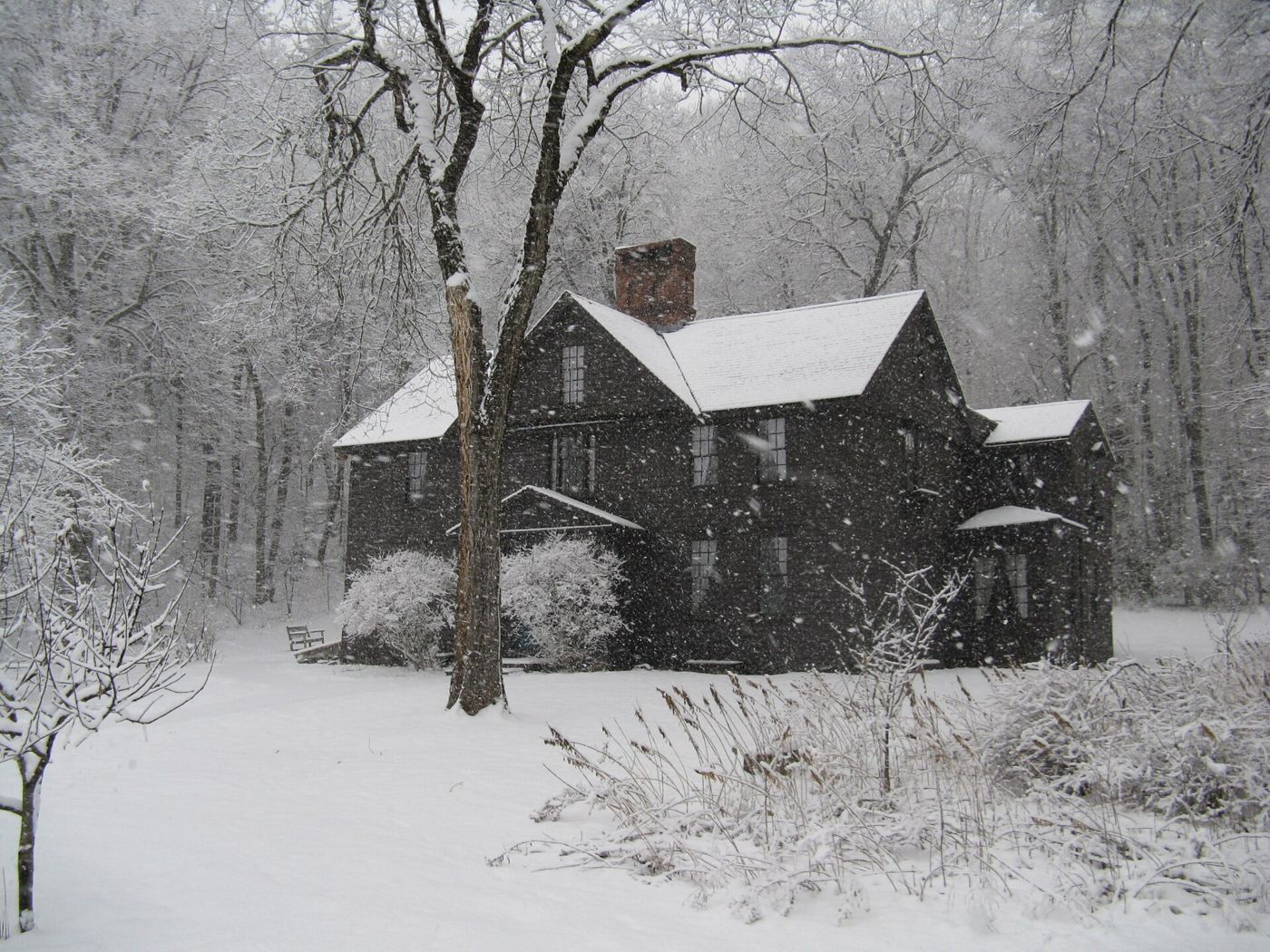
- Concord, Massachusetts: the March house, inspired by Orchard House
- New York: Jo’s boarding house and the publisher’s office
- Paris: Amy’s tour of Europe with Aunt March
- Filmed in Massachusetts: Concord, Harvard, Boston, Ipswich
Historical landmarks
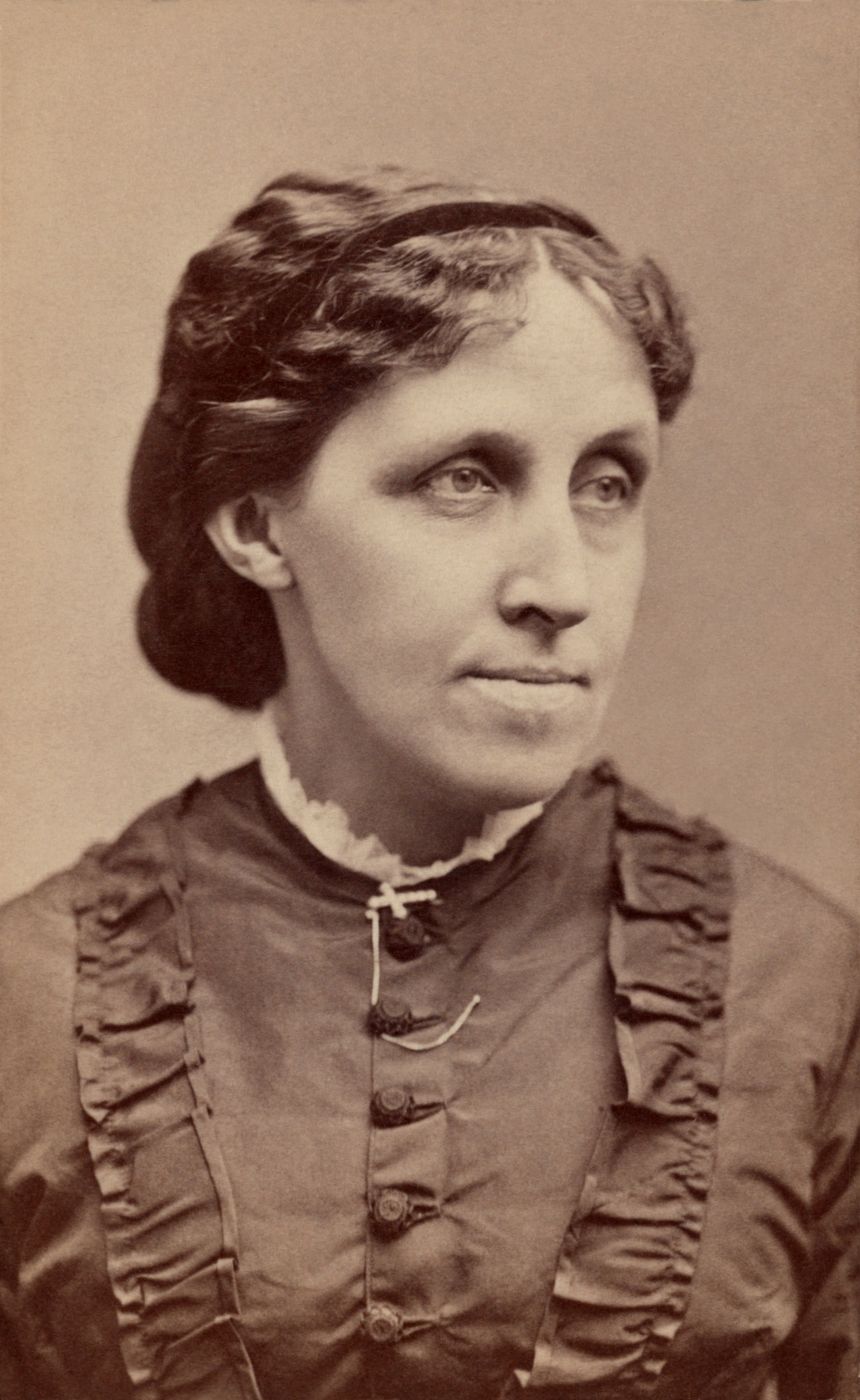
- 1832 Louisa May Alcott is born on 29 November in Germantown, Pennsylvania.
- 1858 The Alcott family moves into Orchard House, Concord.
- 1861 The Civil War begins, and so does the film’s “past”.
- 1862 to 1863 Alcott works for six weeks as a nurse in the Union Hotel Hospital, Georgetown, near Washington.
- 1863 She publishes Hospital Sketches.
- 1865 The Civil War ends.
- 1868 May: her publisher Thomas Niles asks her for “a girl’s book”. 30 September: Little Women (volume 1) is published. The film’s “present” is 1868.
- 1869 April: volume 2 is published.
- 1879 Alcott is the first woman to register to vote in Concord, for a school board election.
- 1888 She dies in Boston on 6 March.
- 2019 Greta Gerwig’s film premieres in New York (7 December).
- 2020 6 Oscar nominations; it wins Best Costume Design.
Sources: Sony Pictures, Little Women · Louisa May Alcott’s Orchard House · Oscars, 92nd Academy Awards · The novel on Project Gutenberg
Sentence starters for your sheet
- The over-the-shoulder shot in the publisher’s office suggests…
- The golden colours of the past make me think of…
- In 1868, a young woman who wanted to write…
Gerwig pair
Compare Jo March with Lady Bird (Film study 10): her dream, her obstacle, her ending.
Sentence starters
- Both heroines want to…
- Unlike Lady Bird, Jo…
To close: a place, then exchange
Where is each character’s place at the start and at the end? Then: political · emotional · general interest · human rights, then go deeper: what passes between the characters, and who do they become?
From the place they find or lose, the deepest exchange in this film is…