
Film studies · Trame
Film study 5 of 11

Promised Land

Gus Van Sant · 2012 · a gas company salesman arrives in a struggling farm town to buy drilling rights, and the town must vote.

Lycée général · 1re → TleCEFR B2Axis: Humans and natureAxis: Scientific innovation & responsibilityAxis: Private space & public spaceJustice & the environmentR (language) · trailer and stills

Background photo: Nicholas A. Tonelli from Pennsylvania, USA · CC BY 2.0

Why this film for you?

What is a community ready to sell, and what should it never sell?

A gas company offers money to a farm town in exchange for the right to drill. The film came out during the American fracking boom, when many rural towns faced exactly this choice.

We always talk about the characters, never about our own private life.

Partie 1 · Pour l'enseignant

Guide de l'enseignant

Un film ne sort pas de nulle part : il questionne. Ce guide suit trois temps, avant, pendant, après le film, puis donne les adaptations par niveau et le corrigé de la fiche élève.

Pourquoi ce film ?

Steve, commercial pour une compagnie gazière, arrive dans une petite ville agricole de Pennsylvanie pour acheter le droit de forer. Le film demande : qu’est-on prêt à vendre, et que ne faut-il jamais vendre ? Il est sorti en plein boom de la fracturation hydraulique (Marcellus Shale).

Culture

La fracturation hydraulique, le boom du gaz de schiste, la démocratie locale (town meeting), la ferme familiale.

Langue

Persuader : comparer le discours du commercial et celui du militant ; anglais rural de Pennsylvanie.

Esprit critique

Promesse de richesse et risque environnemental ; repérer les techniques de persuasion.

Classé R (langage) : bande-annonce et photos uniquement, réservé à la 1re et à la Tle.

Les élèves parlent toujours des personnages, jamais d'eux-mêmes : aucune question ne porte sur leur vécu personnel.

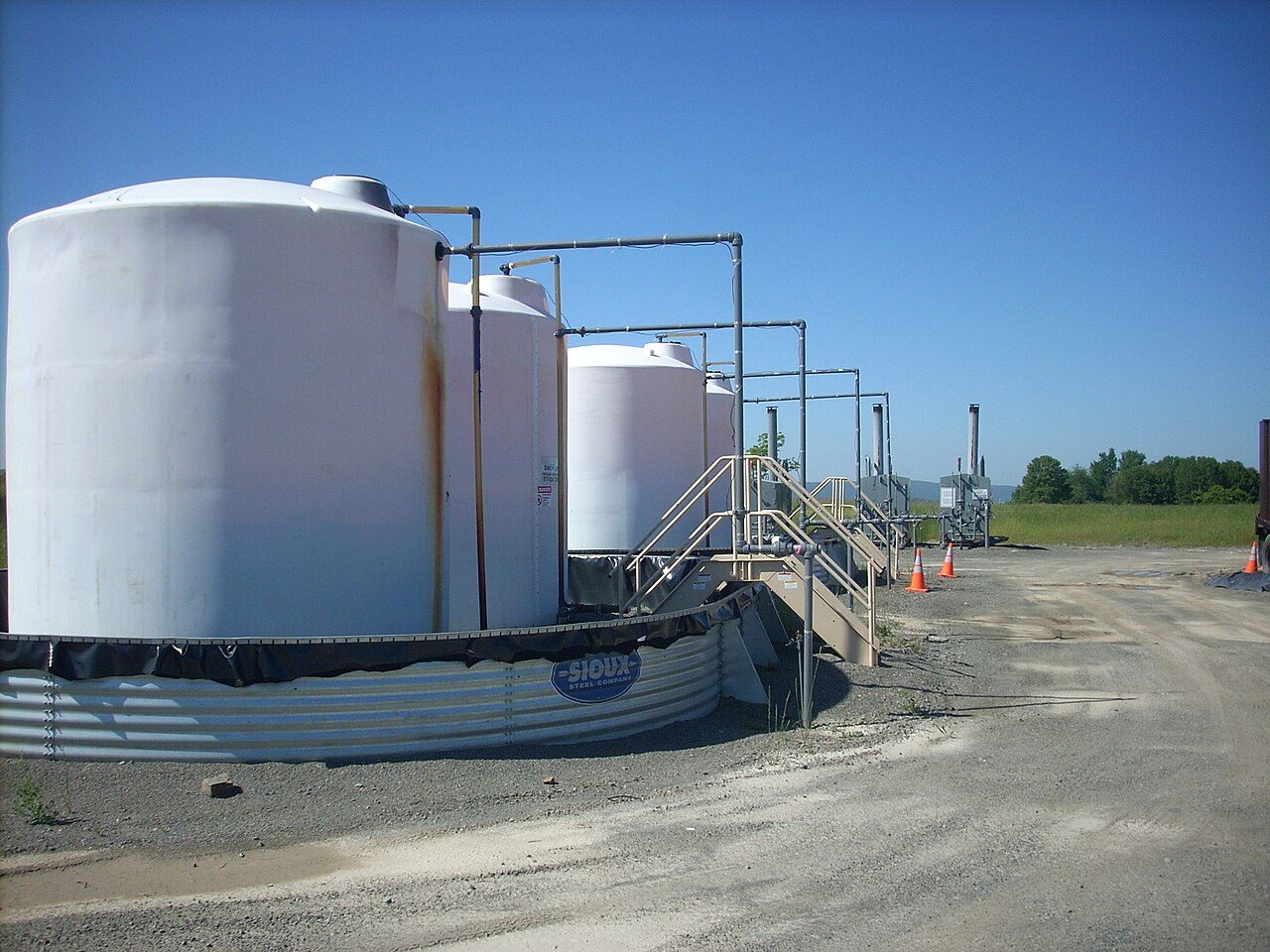
Gas well tanks in north central Pennsylvania, 2011

Temps 1

Avant le film

Gas well tanks in north central Pennsylvania, 2011 Photo: Gerry Dincher · CC BY-SA 2.0 · Wikimedia Commons

a · Contexte historique et culturel

Projetez les repères ; expliquez simplement ce qu’est la fracturation hydraulique.

Project in class · Key dates

  1. 1947

    First experimental hydraulic fracturing of a gas well, in Kansas.

  2. 1949

    First commercial fracturing treatments.

  3. late 1990s

    New techniques (slickwater fracturing, then horizontal drilling) make shale gas profitable in Texas’s Barnett Shale.

  4. 2005

    The Energy Policy Act excludes most fracturing fluids from the Safe Drinking Water Act’s underground injection rules.

  5. 2008

    Drilling boom in Pennsylvania’s Marcellus Shale; New York starts a de facto moratorium.

  6. 2010

    Gasland, a documentary about fracking, is nominated for an Oscar.

  7. 2012

    Promised Land is filmed in Pennsylvania and released on 28 December.

  8. 2014

    17 December: New York State announces a ban on high-volume fracking.

  9. 2016

    The EPA concludes that fracking activities can impact drinking water resources under some circumstances.

Say it with…

  • « In …, … »
  • « One important date is… because… »
  • « This explains why the characters… »
  • « The film is set … years after… »
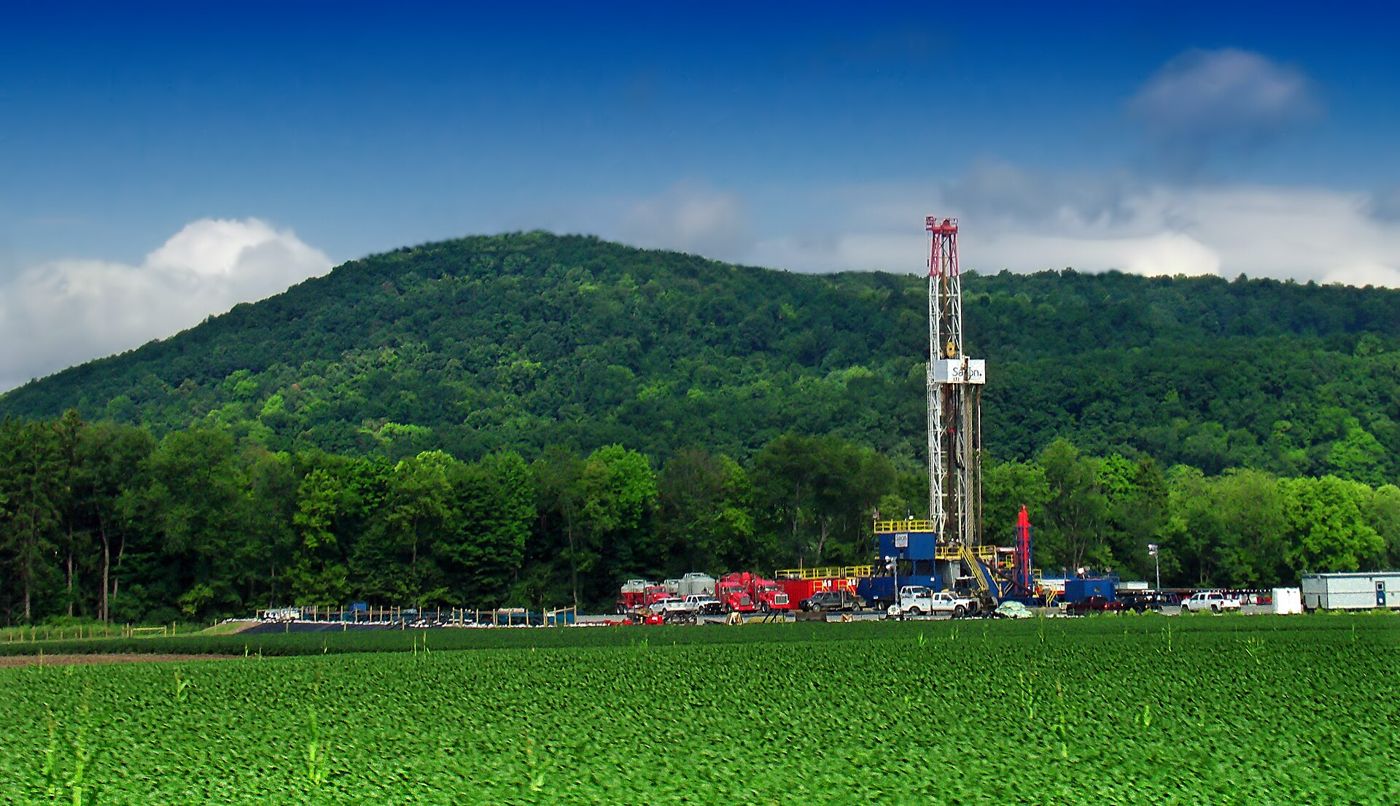
A gas drilling rig in the Pennsylvania countryside, 2012
A gas drilling rig in the Pennsylvania countryside, 2012 · Photo: Nicholas A. Tonelli from Pennsylvania, USA · CC BY 2.0
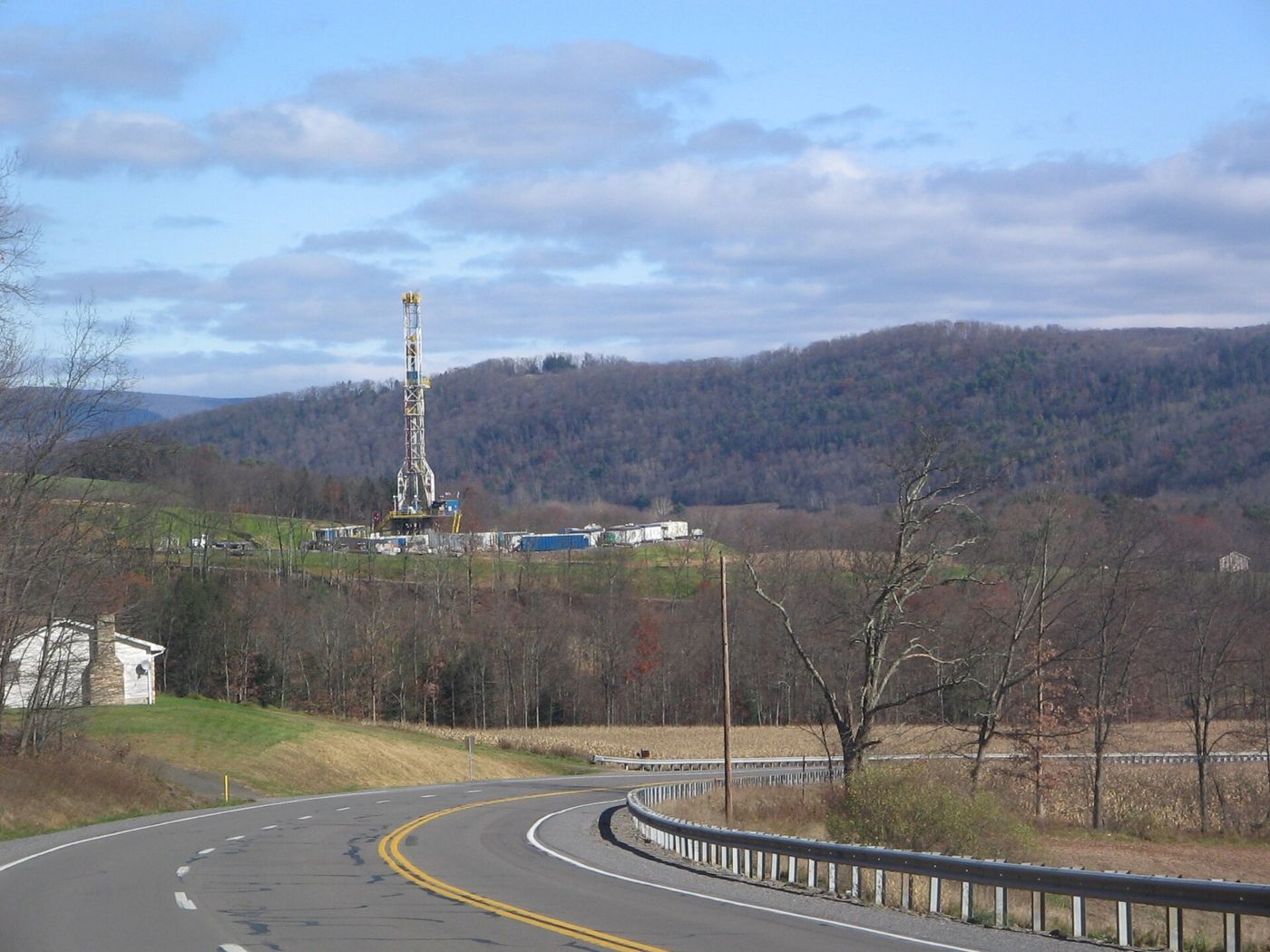
A Marcellus Shale gas drilling tower, Pennsylvania
A Marcellus Shale gas drilling tower, Pennsylvania · Photo: Ruhrfisch (talk) · CC BY-SA 4.0
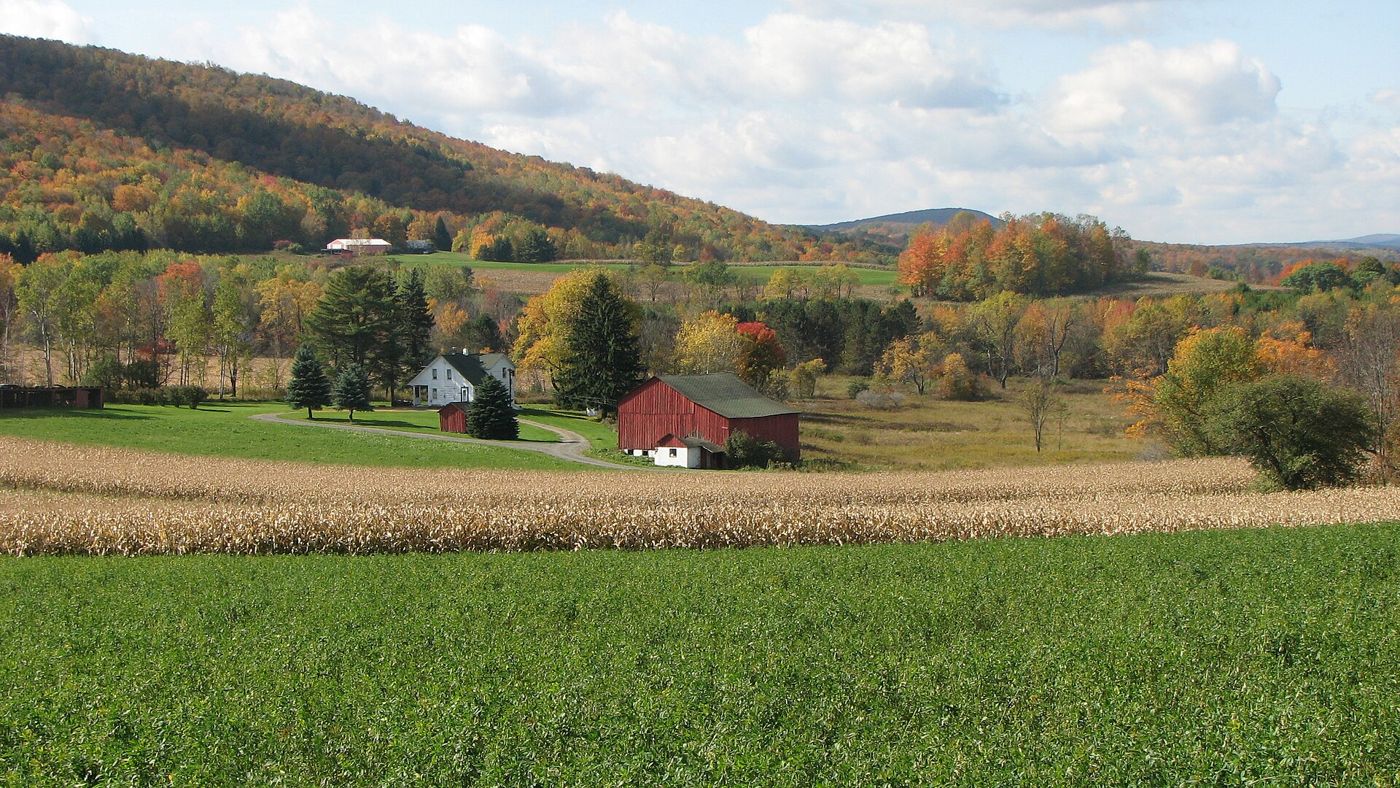
Farmland in north-central Pennsylvania
Farmland in north-central Pennsylvania · Photo: fishhawk · CC BY 2.0
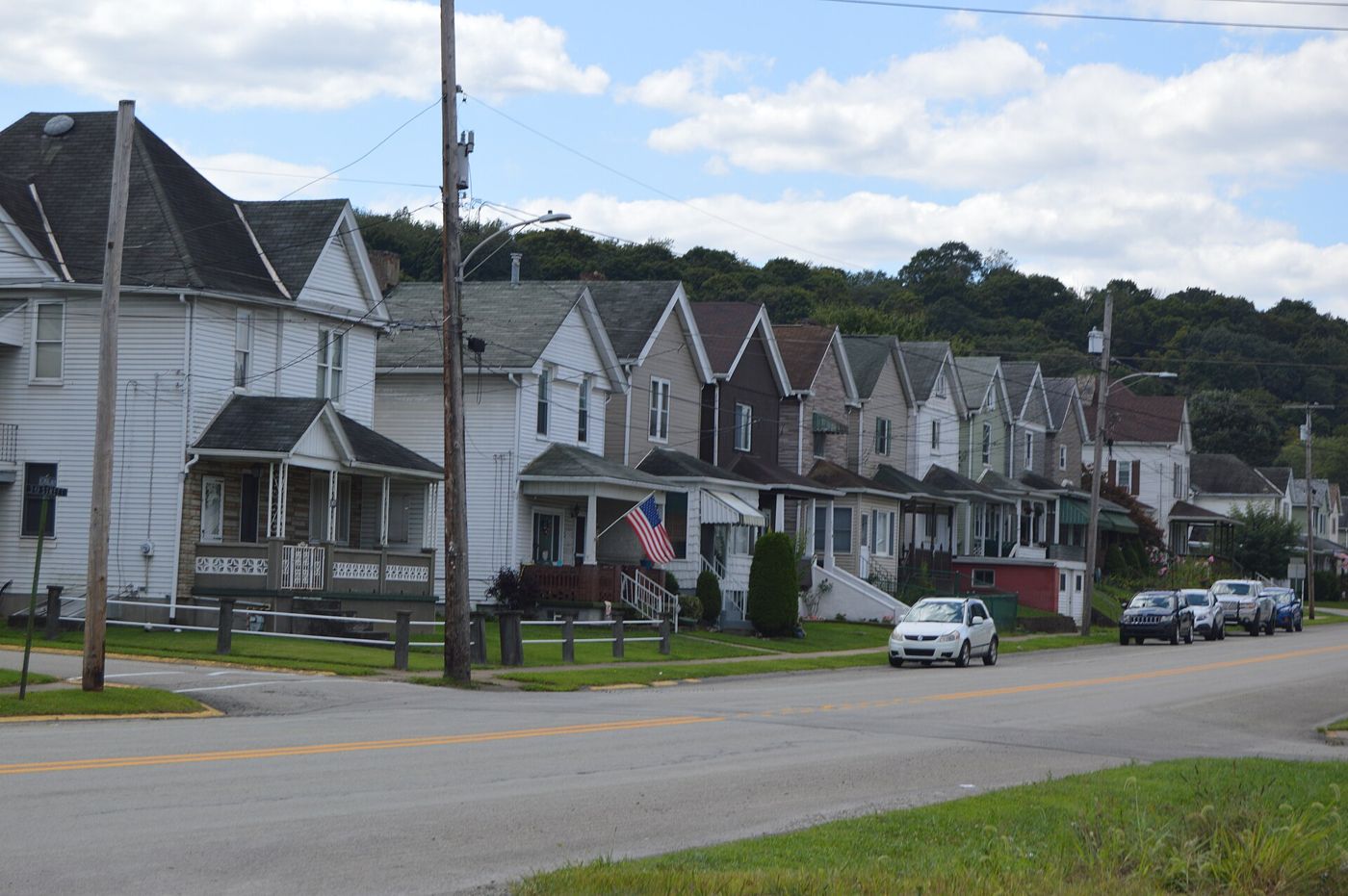
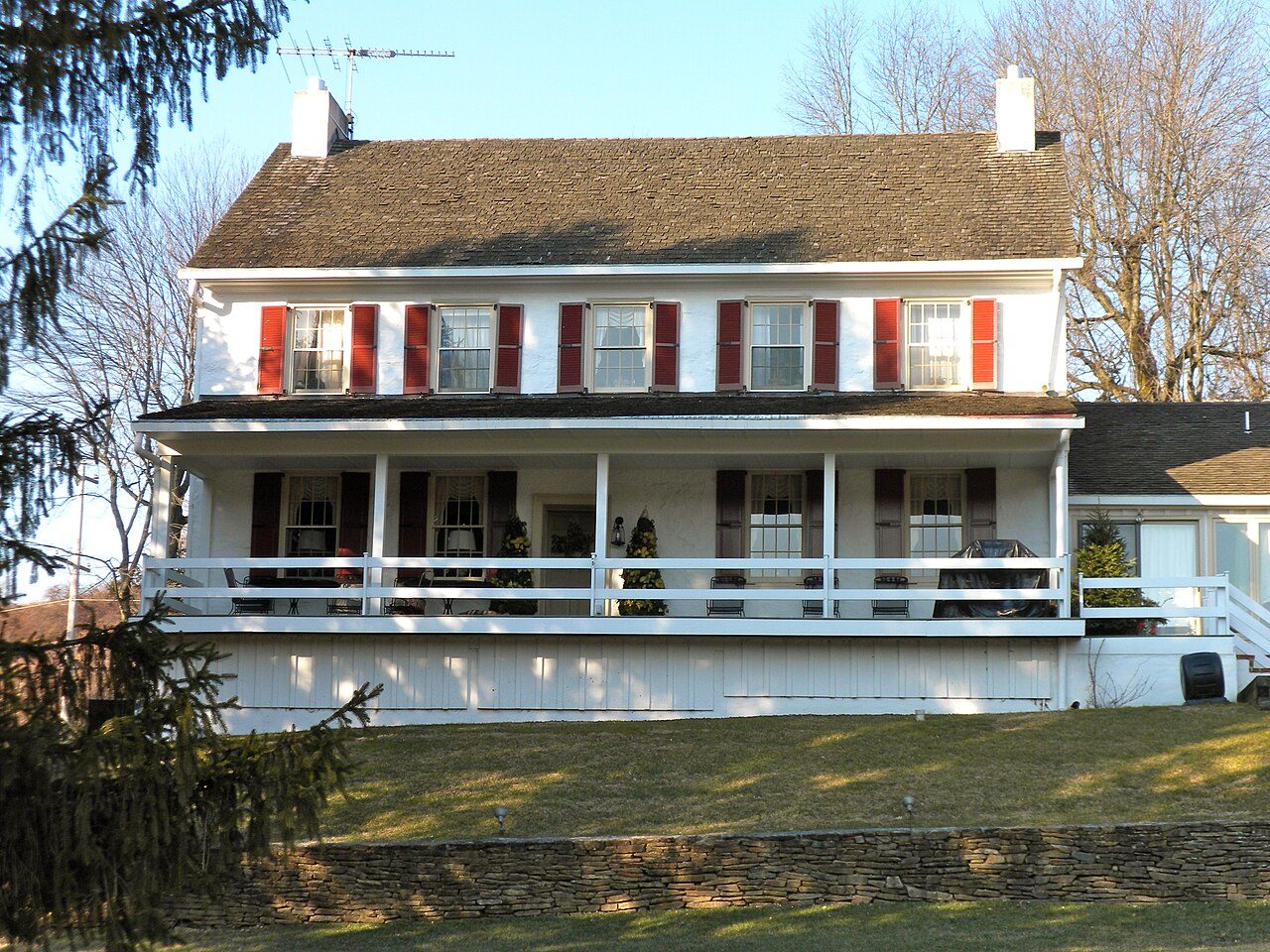
Avonmore, Pennsylvania, the main filming location for the town of McKinley
Avonmore, Pennsylvania, the main filming location for the town of McKinley · Photo: Nyttend · Public domain

b · Échauffement lexical

Projetez la banque de mots ; faites répéter les répliques de la bande-annonce en imitant les voix. Les minutages renvoient à la bande-annonce officielle et sont approximatifs (± 2 s).

Project in class · Word bank

Heard in the trailer
  • « I am happy to announce we will be bringing natural gas to McKinley. » (trailer)
  • « You sign this lease, it gives us the right to drill on your land. » (trailer)
  • « We’re not fighting for land, Steve. We’re fighting for people. » (trailer)
  • « We’re a nine billion dollar company. » (trailer)
Idioms and expressions
  • to close a deal · to finish an agreement successfully
  • to sell out · to give up your values for money
  • to stand up · to speak in public, to resist
  • to be at stake · to be at risk
  • a promised land · a place of hope and wealth
The accents
  • Rural Pennsylvania: relaxed, friendly small-town English.
  • Steve’s sales talk: fast, positive, full of numbers.
Fracking
  • fracking · breaking rock with water and chemicals to free gas
  • a lease · a contract to use land
  • to drill · to make a deep hole
  • a vote · a decision by the citizens

Use the words with…

  • « Steve closes a deal by… »
  • « The lease gives the company… »
  • « The activist says that… »
  • « What is at stake is… »

c · Guide d'anticipation

  1. Les élèves se positionnent (agree / disagree) sur quatre affirmations, avant de voir quoi que ce soit.
  2. Montrez l'affiche officielle (en ligne, sur le site du distributeur, elle n'est pas reproduite ici), puis le titre seul.
  3. Premier visionnage de la bande-annonce sans le son : hypothèses sur le thème. Second visionnage avec le son : on vérifie.

Project in class · Agree or disagree?

StatementBeforeAfter
Money can solve a town’s problems.☐ A ☐ D☐ A ☐ D
A beautiful landscape is worth protecting even if it costs jobs.☐ A ☐ D☐ A ☐ D
A salesman always believes what he sells.☐ A ☐ D☐ A ☐ D
The citizens of a town should vote on big decisions.☐ A ☐ D☐ A ☐ D

Make hypotheses with…

  • « On the poster, I can see… »
  • « The title makes me think of… »
  • « Without the sound, I think the film is about… »
  • « I agree / disagree because… »
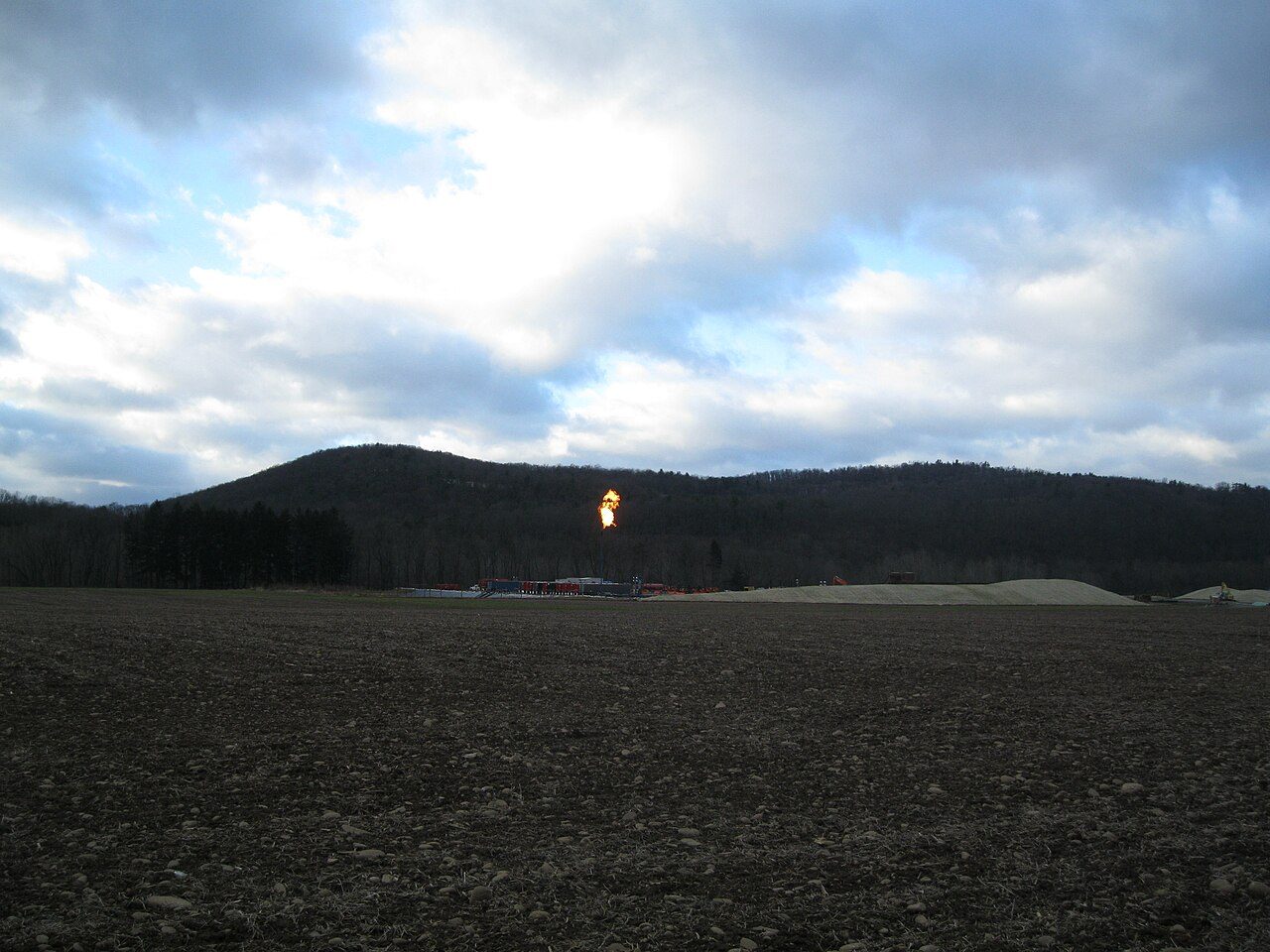
Flaring gas from the Marcellus Shale, Lycoming County, Pennsylvania, 2012

Temps 2

Pendant le film

Flaring gas from the Marcellus Shale, Lycoming County, Pennsylvania, 2012 Photo: Ruhrfisch · CC BY-SA 4.0 · Wikimedia Commons

Classé R : bande-annonce, photos et synopsis uniquement. On visionne la bande-annonce officielle en entier, en trois passages : on fait une pause après chacun. Les questions détaillées et leurs corrigés sont dans l’onglet Watch de la boîte à outils, en bas de page.

ÉtapeMinutageCe qu'on travaille
1 · Global understandingbande-annonce entière · 30 s sans le son, puis avecQui, où, quand, quel problème ? Questions « First viewing » (onglet Watch).
2 · Exact wordsbande-annonce entièreRépliques à compléter (« Second viewing »), puis répétition à voix haute.
3 · Film languagebande-annonce entièreLes moments de la partie 4 de la fiche élève : plans, angles, lumière, musique.

Consignes ciblées : trois groupes, une fiche par groupe (à projeter ou imprimer), puis mise en commun.

Project in class · Focus groups

Group A · Music

Listen to the gentle acoustic music (Danny Elfman). When does it become tense?

Note it with…

  • « At first, the music… »
  • « It becomes tense when… »
Group B · Relationships

Watch Steve with the farmers, with his colleague Sue and with the activist.

Note it with…

  • « The farmers trust Steve because… »
  • « The activist… »
Group C · Historical accuracy

Compare the trailer with the dates: the fracking boom, the Marcellus Shale.

Note it with…

  • « The film is set during… »
  • « The promise of money reflects… »
A family farm near Coatesville, Pennsylvania

Temps 3

Après le film

A family farm near Coatesville, Pennsylvania Photo: Smallbones · Public domain · Wikimedia Commons

Débat : chaque binôme reçoit un dilemme, prépare deux arguments, puis débat avec un autre binôme. Fin du film : Steve découvre que le militant travaillait en réalité pour sa propre compagnie ; il révèle la manipulation lors de la réunion et perd son emploi.

Project in class · Moral dilemmas

  • A farmer can save his farm by signing the lease. Should he sign?
  • Steve grew up in a farm town that lost everything. Is he helping or exploiting?
  • Should a town decide by a vote, or should experts decide?
  • Steve and the activist both try to persuade. Who is more honest?

Debate with…

  • « In my opinion, … should have… because… »
  • « I see your point, but… »
  • « On the one hand…, on the other hand… »
  • « That’s why I think… »

Prolongement créatif : au choix, selon le niveau (voir le tableau des adaptations).

Project in class · Creative extension (choose one)

An alternative ending

Imagine the town votes yes. Write the evening after the vote.

Start with…

  • « The next morning, … »
  • « Steve thinks about… »
Frank’s speech

Write the speech of Frank, the science teacher, at the town meeting.

Start with…

  • « Before you sign,… »
  • « I want to ask one question:… »
A film review

Write a review for a local newspaper.

Start with…

  • « Promised Land is a film about… »
  • « It made me think about… »

Adaptations par niveau

La fiche élève (partie 2) change selon le niveau choisi : mêmes questions, débuts de phrases et longueur d'écrit adaptés. Choisissez le niveau avec les boutons de la partie 2.

NiveauLangueAvant / pendantAprès · production
1reB1 → B2Repères complets ; techniques de persuasion ; groupes A, B, C.Critique de 120 à 150 mots ; discours de Frank ; débat avec contre-arguments.
TleB2Analyse argumentative : chiffres, émotions, récits ; rapport de l’EPA (2016).Discours argumenté de 180 à 200 mots ; réunion municipale simulée.

Corrigé de la fiche élève

Réponses modèles en anglais (niveau intermédiaire ; simplifiez ou développez selon le niveau).

Answer key · open

1 2012 · USA · Drama. 2.1 McKinley, a small farm town in Pennsylvania, during the fracking boom. 2.2 Introduction: Steve and Sue, salespeople for a gas company, try to buy drilling rights. Climax: a science teacher and an environmental activist turn the town against the deal; a vote is organised. Resolution: Steve discovers his own company’s manipulation, tells the truth and loses his job.

3.1 Steve: ambitious, sincere at first; flaw: he believes money always helps. 3.2 The gas company, and the town’s poverty. 3.3 Rural America, the family farm, the town meeting, the American promise of wealth.

4 ≈0:27 high angle from the sky: the land looks like a map to buy; ≈0:45 close-up on a farmer’s smile: the human side. Gentle acoustic music. 5.1 Some things, land, health, trust, should not be sold. 5.2 Open answer.

Questions de compréhension, langage du cinéma, oral, écrit et examen avec leurs corrigés : onglets de la boîte à outils ci-dessous. · Fiche film imprimable : fiche-promised-land.

Part 2 · For students

Student’s worksheet

Choose your level: the questions and the sentence starters change for you.

1 · Your level

Name:

Date:

Film title:

Director:

Talk and write about the characters and the film, never about your own private life.

1 General identification

1.1 Year of release:

Start with…

  • « The film was released in…, and it is set in… »

Start with…

  • « Released in…, the film looks back at… »

1.2 Country of origin:

☐ USA   ☐ United Kingdom   ☐ Other: ________

Start with…

  • « It is a … film, made by a … director. »

Start with…

  • « This … production, directed by…, … »

1.3 Genre (tick one or two):

☐ Drama   ☐ Comedy   ☐ Sci-Fi   ☐ Historical   ☐ Thriller   ☐ Social Realism   ☐ Other: ________

Start with…

  • « It belongs to … : it shows… »

Start with…

  • « It mixes … and …, which allows the director to… »
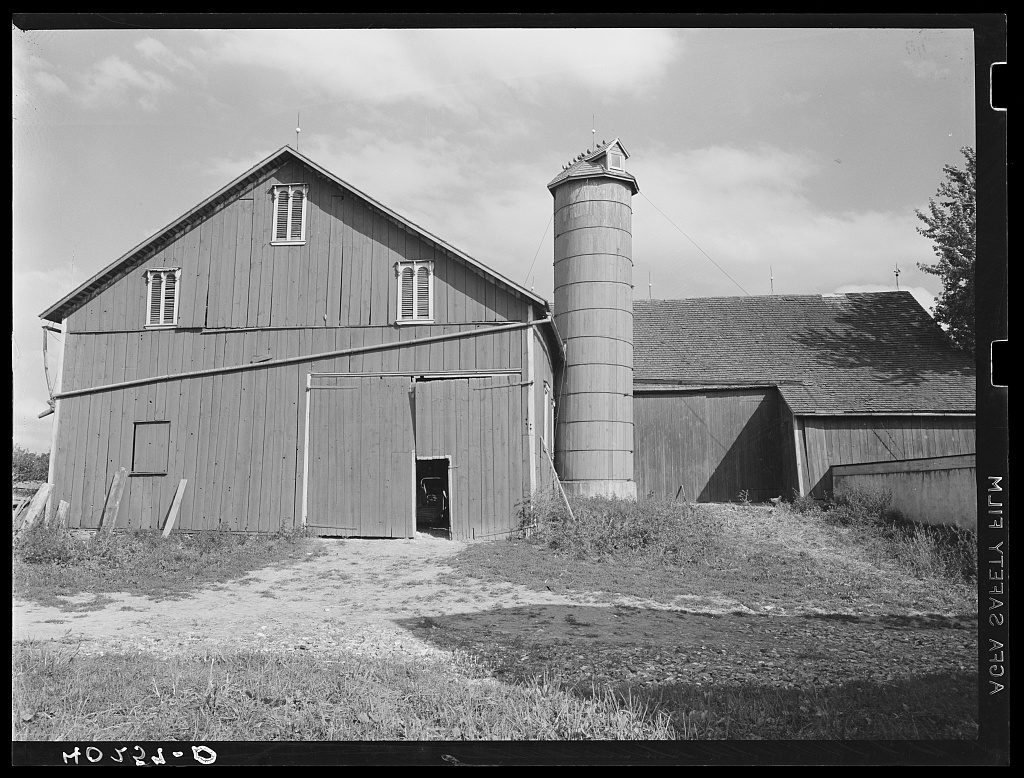
A barn in Lancaster County, Pennsylvania, 1938
A barn in Lancaster County, Pennsylvania, 1938 Photo: Sheldon Dick · Public domain · Wikimedia Commons
A gas drilling rig in the Pennsylvania countryside, 2012
A gas drilling rig in the Pennsylvania countryside, 2012 · Photo: Nicholas A. Tonelli from Pennsylvania, USA · CC BY 2.0

2 Plot & setting

2.1 Where and when does the story take place? Describe the place and the time.

Start with…

  • « The story is set in…, at a time when… »
  • « The setting looks… because… »

Start with…

  • « Set in…, the film shows a place where… »
  • « The setting reflects… »

2.2 Sum up the main conflict in 3 sentences.

• Introduction

Start with…

  • « The film opens on Steve, who… »

Start with…

  • « The opening introduces Steve, a character who… »

• Climax (turning point)

Start with…

  • « The turning point is when…, so… »

Start with…

  • « The turning point comes when…, which forces Steve to… »

• Resolution

Start with…

  • « Finally, Steve realises that…, so… »

Start with…

  • « The ending suggests that… »
A Marcellus Shale gas drilling tower, Pennsylvania
A Marcellus Shale gas drilling tower, Pennsylvania · Photo: Ruhrfisch (talk) · CC BY-SA 4.0
Farmland in north-central Pennsylvania
Farmland in north-central Pennsylvania · Photo: fishhawk · CC BY 2.0

3 Character analysis

3.1 The protagonist (main hero): name, motivations and main flaws.

Start with…

  • « Steve is motivated by… »
  • « However, the main weakness is…, which is why… »

Start with…

  • « The driving force behind Steve is… »
  • « This flaw makes the character…, yet… »

3.2 The antagonist (the opposing force): who or what stops the protagonist?

Start with…

  • « the gas company stands in the way because… »
  • « But the real obstacle may also be… »

Start with…

  • « Beyond the gas company, the film points to… »
  • « The real antagonist could be…, since… »

3.3 Cultural identity: how does the film show rural America (the family farm, the town meeting, the promise of wealth)?

Start with…

  • « The family farm is important in America because… »
  • « The town meeting shows that… »

Start with…

  • « The film plays with the myth of the “promised land”: … »
  • « Rural America is shown as… »
Avonmore, Pennsylvania, the main filming location for the town of McKinley
Avonmore, Pennsylvania, the main filming location for the town of McKinley · Photo: Nyttend · Public domain
Gas well tanks in north central Pennsylvania, 2011
Gas well tanks in north central Pennsylvania, 2011 Photo: Gerry Dincher · CC BY-SA 2.0 · Wikimedia Commons

4 Cinematic techniques

Use the official trailer: choose one moment from the list below.

  • ≈0:15 · green hills and farms
  • ≈0:27 · a road between fields, from the sky
  • ≈0:45 · a farmer’s smile
  • ≈1:21 · the meeting in the school gym

4.1 Camera angles & shots: describe one memorable moment. Is it a close-up (focus on emotion) or a wide shot (focus on the place)?

Start with…

  • « The director uses a … shot to… »
  • « This angle makes … look… »

Start with…

  • « The … at … invites the audience to… »
  • « By framing … this way, the director suggests that… »

4.2 Soundtrack & lighting: how do the music or the colours make you feel in that moment?

Start with…

  • « The music creates a … atmosphere. »
  • « The lighting makes … look… »

Start with…

  • « The contrast between … and … suggests… »
  • « The colour palette reflects… »
Flaring gas from the Marcellus Shale, Lycoming County, Pennsylvania, 2012
Flaring gas from the Marcellus Shale, Lycoming County, Pennsylvania, 2012 Photo: Ruhrfisch · CC BY-SA 4.0 · Wikimedia Commons
A family farm near Coatesville, Pennsylvania
A family farm near Coatesville, Pennsylvania Photo: Smallbones · Public domain · Wikimedia Commons

5 Critical thinking & personal opinion

5.1 Thematic core: what message is the director trying to send to the audience?

Start with…

  • « Gus Van Sant shows that… »
  • « The film warns us that… »

Start with…

  • « The film suggests that…, because… »
  • « Ultimately, it questions… »

5.2 The question of the film: « What is a community ready to sell, and what should it never sell? » Answer it now, after the study.

Start with…

  • « In my opinion,… For example, in the trailer… »
  • « The film made me think again about… »

Start with…

  • « I would argue that…, as shown by… »
  • « However, one could object that… »

5.3 Your review · Star rating: ☆ ☆ ☆ ☆ ☆

Write a review (120 to 150 words) with two arguments and an example.

Write a review (180 to 200 words): two arguments, a concession and a conclusion.

Start with…

  • « I would (not) recommend this film because… »
  • « The best moment of the trailer is… because… »
  • « On the other hand,… »

Start with…

  • « Promised Land is a … film which… »
  • « What makes it relevant today is… »
  • « Even though…, I would recommend it to… »

Sources

  • Video: official trailer, Universal Pictures UK (YouTube).
  • US EPA, final report on hydraulic fracturing (December 2016) · New York State Department of Health (2014).
  • Photos: Wikimedia Commons and public-domain archives, credited under each image. No still from the film is reproduced.
  • Activities, sentence starters and model answers: Madame Carole Paoli Pompougnac.

Toolbox · all the activities

Comprehension, film language, context, characters, speaking, writing, exam and project, with answer keys. Use them with the guide and the worksheet above.

Cultural concept

Environmental justice

Who decides what happens to land and water when a struggling community is offered money for its resources?

Key question: Is a promise of wealth worth an environmental risk?

Route A · The film as a starting point

Watch → Film language → Context & history → Characters → Speak → Write → Project → Closing: place & exchange

Route B · The film as the final task

Context & history → Characters → Speak → Write → Watch the trailer → Film language → Final task: Project → Closing: place & exchange

Guiding thread: Finding one’s place in the world · Sub-thread: Giving and receiving, we can only give and receive from a place.
Theme: Justice & the environment

Overview

Hook, finding one’s place

Guiding thread: Finding one’s place in the world · Sub-thread: Giving and receiving, we can only give and receive from a place.

A gas drilling rig in the Pennsylvania countryside, 2012
A gas drilling rig in the Pennsylvania countryside, 2012 · Photo: Nicholas A. Tonelli from Pennsylvania, USA · CC BY 2.0 · Wikimedia Commons

Finding one’s place in the world · Young people today

Steve Butler must choose where he stands: with the gas company or with the farm town. Today, how do young people take a stand when the future of their land is at stake?

Sentence starters

  • Steve has to choose between… and…
  • Young people take a stand when…
  • To decide about the land, a community needs…
  • Taking a stand can give young people…

Visionary filmmakers. Back in 2012, Gus Van Sant was already putting fracking and a small town’s vote on the big screen, while the debate was still new to most audiences.

Talk about the characters and about young people in general, not about yourself.

Then, a second question:

If a company offered a struggling town a fortune for what lies under its land, should the town say yes?

Sentence starters

  • The town should accept because…
  • The town should refuse because…
  • It depends on…

The film in three lines

Focus Features’ synopsis: corporate salesman Steve Butler (Matt Damon) is sent with his partner Sue (Frances McDormand) to the rural town of McKinley “to offer much-needed relief to the economically hard-hit residents in exchange for drilling rights to their properties”. A respected teacher and an environmental activist complicate the deal, and the town decides to vote. The screenplay is by John Krasinski and Matt Damon, from a story by Dave Eggers.

Start with the trailerFilm study sheetJustice & the environment
A gas drilling rig in the Pennsylvania countryside, 2012
A gas drilling rig in the Pennsylvania countryside, 2012Photo: Nicholas A. Tonelli from Pennsylvania, USA · CC BY 2.0
A Marcellus Shale gas drilling tower, Pennsylvania
A Marcellus Shale gas drilling tower, PennsylvaniaPhoto: Ruhrfisch (talk) · CC BY-SA 4.0
Farmland in north-central Pennsylvania
Farmland in north-central PennsylvaniaPhoto: fishhawk · CC BY 2.0
Avonmore, Pennsylvania, the main filming location for the town of McKinley
Avonmore, Pennsylvania, the main filming location for the town of McKinleyPhoto: Nyttend · Public domain

Film sheet

QR code to the printable film study sheet

Film study sheet · printable, clickable, with QR code.

Open the printable sheet

https://trame-lycee.netlify.app/films/fiche-promised-land.html

Film credits

TitlePromised Land (USA, 2012)
DirectorGus Van Sant
ScreenplayJohn Krasinski and Matt Damon, from a story by Dave Eggers
CastMatt Damon (Steve Butler), John Krasinski (Dustin Noble), Frances McDormand (Sue Thomason), Rosemarie DeWitt (Alice), Hal Holbrook (Frank Yates), Scoot McNairy, Titus Welliver, Lucas Black
CinematographyLinus Sandgren
EditingBilly Rich
MusicDanny Elfman
DistributorFocus Features
Running time106 minutes
Release (USA)28 December 2012 (limited) · 4 January 2013 (wide)
RatingR, language
AwardsSpecial Mention, Berlin International Film Festival 2013; National Board of Review top ten films of 2012

Film language, with examples from the official trailer

Timecodes are approximate (± 2 s). Pause the trailer and check each example yourself.

Shots

WordMeaning
establishing shot / extreme long shotshows the place; people look tiny
long shota whole body in its setting
medium shotfrom the waist up
close-upa face fills the frame: emotion
extreme close-upa detail: eyes, a hand, an object
two-shottwo characters in one frame: a relationship
over-the-shoulder shotwe watch one character through another’s position
  • ≈0:15establishing shot of green hills and farms: the land at stake
  • ≈0:27aerial shot of a road between fields: the outsiders arrive
  • ≈1:21long shot of the school gym: the whole town meets

Angles

WordMeaning
eye levelneutral, we are equal with the character
high anglecamera above: the character looks small or weak
low anglecamera below: the character looks powerful
canted (Dutch) angletilted frame: unease, a world out of balance
bird’s-eye viewstraight down from above
  • ≈0:27high angle from the sky: the land looks like a map to buy
  • ≈0:45eye-level close-up on a farmer’s smile: the human side

Camera movement

WordMeaning
panthe camera turns horizontally
tiltthe camera moves up or down
tracking shotthe camera travels with a character or a car
zoomthe lens brings us closer
handheld camerashaky, urgent, documentary feel
crane / aerial shotthe camera flies above the scene
  • ≈0:33camera inside the moving truck: we travel with Steve

Lighting & colour

WordMeaning
high-key lightingbright, few shadows: optimism
low-key lightingdark, strong shadows: tension, mystery
backlightinglight behind a character: a halo or a silhouette
natural lightsun, windows, candles
colour palettethe dominant colours of the film
  • ≈0:15soft natural greens: a pastoral, idyllic look
  • ≈1:03warm, colourful bar lights at night: the community’s social life

Sound

WordMeaning
diegetic soundthe characters can hear it (a radio, a piano on stage)
non-diegetic soundonly the audience hears it (the score, a narrator)
voice-overa voice we hear over the images
scoremusic composed for the film
silenceno sound: a shock, a pause
sound bridgea sound that continues into the next scene
  • ≈0:00 to 0:24Steve’s voice tells his own story over the images
  • whole trailergentle acoustic music (Danny Elfman) that becomes tense

Editing

WordMeaning
cuta direct change of shot
cross-cuttingalternating between two places or stories
montagea fast series of shots that compresses time
fade to blackthe image disappears: an ending, a pause
intertitletext on screen between images
slow motiontime slows down: importance, emotion
  • ≈1:27a video call with the company: the distant power behind the deal
  • ≈2:09actors’ names on green landscapes

Step into the period

Daily life

  • 2010s rural America after the 2008 financial crisis: farms in debt, closed factories
  • Laptops, video calls, but life centred on the farm, the bar, the school gym and the town meeting

Music

  • Indie folk: The Milk Carton Kids wrote three songs for the film
  • Bar bands and karaoke

Fashion

  • Flannel shirts, work boots, caps, and the salesman’s new flannel shirt to “fit in”

Places

  • The fictional town of McKinley, filmed in Avonmore and Armstrong County, Pennsylvania
  • The Marcellus Shale region

Historical landmarks

  • 1947 First experimental hydraulic fracturing of a gas well, in Kansas.
  • 1949 First commercial fracturing treatments.
  • late 1990s New techniques (slickwater fracturing, then horizontal drilling) make shale gas profitable in Texas’s Barnett Shale.
  • 2005 The Energy Policy Act excludes most fracturing fluids from the Safe Drinking Water Act’s underground injection rules.
  • 2008 Drilling boom in Pennsylvania’s Marcellus Shale; New York starts a de facto moratorium.
  • 2010 Gasland, a documentary about fracking, is nominated for an Oscar.
  • 2012 Promised Land is filmed in Pennsylvania and released on 28 December.
  • 2014 17 December: New York State announces a ban on high-volume fracking.
  • 2016 The EPA concludes that fracking activities can impact drinking water resources under some circumstances.

Sources: Focus Features, Promised Land · US EPA, final report, December 2016 · New York State Department of Health, 17 December 2014

Watch

Official trailer (Universal Pictures UK)

Official channel: Universal Pictures UK (Focus Features is part of Universal) · https://www.youtube.com/watch?v=D0-kcuTYaeY

First viewing

  1. What is Steve’s job? Why is he so successful?
  2. What happened to his own hometown?
  3. What does the company want from the farmers?
  4. What does it offer the town?
  5. Who stands up at the meeting, and what does he say happened to his farm?
  6. What will the town do in three weeks?
Answer key
  1. He is a salesman for a gas company; he closes deals fast (“more towns… by triple digits”).
  2. The Caterpillar plant closed; “that whole farming town fantasy was just shattered.”
  3. The right to drill on their land (a lease).
  4. Money, “You could be a millionaire”, and a state-of-the-art high school.
  5. An activist: “my farm is gone. The land just turned brown and died.”
  6. Vote on the deal.

Second viewing, exact words

  1. “I am happy to announce we will be bringing natural ___ to McKinley.”
  2. “You sign this ___, it gives us the right to ___ on your land.”
  3. “If it’s happened to one of us, it can happen to ___ of us.”
  4. “We’re not fighting for land, Steve. We’re fighting for ___.”
  5. “We’re a nine ___ dollar company.”
Answer key
  1. gas
  2. lease · drill
  3. all
  4. people
  5. billion

Film language

Selling the land

The trailer alternates beautiful landscapes and close-ups of faces. Analyse how the film makes us care about both the land and the people.

Sentence starters

  • The aerial shot suggests…
  • The close-ups invite us to…
  • The landscape is filmed like… while the company is shown…

Persuasion on screen

Steve and the activist both try to persuade the town. Compare their techniques (stories, numbers, emotions, humour).

Sentence starters

  • Steve uses… whereas the activist…
  • The most persuasive technique is…

Context & history

What is fracking?

Hydraulic fracturing (“fracking”) pumps water, sand and chemicals at high pressure into deep rock (shale) to crack it and release natural gas or oil. Combined with horizontal drilling, it created a shale gas boom in the 2000s, especially in Texas and Pennsylvania.

Read the official documents

“EPA’s report concludes that hydraulic fracturing activities can impact drinking water resources under some circumstances…”

US EPA, final report, December 2016

On 17 December 2014, New York State announced it would ban high-volume fracking after a public health review (NYS Department of Health). Neighbouring Pennsylvania continued to drill.

  1. Does the EPA say that fracking always pollutes water? Find the key words.
  2. Why might two neighbouring states make opposite choices?
Answer key
  1. No: “can impact… under some circumstances”, a careful, conditional statement.
  2. Different economies, politics, risk assessments; jobs and tax revenue vs health and water.

Critical thinking, a film under attack

Before its release, the gas industry criticised the film; Focus Features’ CEO, James Schamus, answered that fracking was a strong premise for drama because Americans were deeply conflicted about it (Bloomberg Businessweek, January 2013). Is a fiction film a fair way to inform the public about a technology?

Sentence starters

  • A fiction film can… but it cannot…
  • To form an opinion, viewers should also…

Characters

Character (actor)WhoKey word
Steve Butler (Matt Damon)top salesman for Global Crosspower Solutions; grew up in a farm townconviction → doubt
Sue Thomason (Frances McDormand)his pragmatic sales partnerbusiness
Dustin Noble (John Krasinski)an environmental activist who arrives in towncampaign
Frank Yates (Hal Holbrook)respected science teacher who asks questionswisdom
Alice (Rosemarie DeWitt)a local teachercommunity

Sentence starters

  • Steve believes he is helping because…
  • Frank Yates represents…

Speak

1 · Town meeting (whole class)

Roles: the company, farmers in debt, the science teacher, a café owner, a parent, the mayor (chair). Each speaker has 1 minute. Then the town votes.

Each speaker1:00

Sentence starters

  • As a farmer, I…
  • This deal would bring…
  • What guarantees do we have that…?
  • I move that we…

2 · Interaction, on the porch

Pairs: Steve visits a farmer to sign a lease. The farmer asks hard questions.

3 minutes3:00

Sentence starters

  • What exactly will you do on my land?
  • Here is what we can offer…
  • And if something goes wrong?

3 · Continuous speech, 2 minutes: “Energy or water?”

Your time2:00

Sentence starters

  • On the one hand,…
  • On the other hand,…
  • In my view, the priority should be…

Write

Write

B2 · 220 to 250 words: A letter to the McKinley local newspaper before the vote.

B2+ · 280 words: “Economic survival should come before environmental risk.” Discuss.

Sentence starters

  • To the Editor,
  • As a resident of McKinley,…
  • Admittedly,… However,…

For the exam

For the exam. In the baccalauréat général, English (LVA / LVB) is assessed through continuous assessment: your annual average in 1re and in Tle counts (coefficient 3 each year). At the end of Tle, your teachers also certify your CEFR level in each skill, listening, reading, writing, speaking (continuous) and speaking (interaction), on your official language certificate. Every task below is built on those five skills, with authentic documents linked to a programme axis, exactly like your class assessments.

  • Listening: trailer · Reading: EPA and New York documents · Speaking: town meeting, porch negotiation · Writing: letter / essay.

Project

Project, “Vote day” news bulletin

In groups, produce a 3-minute TV news bulletin on the day of McKinley’s vote: anchor, reporter in the field, interviews, an expert explaining fracking with a diagram, and the result.

Sentence starters

  • Good evening, tonight in McKinley…
  • I’m standing in front of…

Closing: place & exchange

Step 1 · A place found or lost

Everything is exchange, and we can only give and receive from a place. First find each character’s place; then look at four kinds of exchange; then go deeper: what passes between the characters inside · trust, love, respect, meaning? Who do they become, not only what do they own?

Steve says he comes from a farm town. Where does he stand: with the company or with the town?

Sentence starters

  • At the start, …’s place is…
  • At the end, … has found / lost his/her place because…
Answer key
  1. Steve stands with the company, then takes his stand with the town and with the truth.

Step 2 · Four kinds of exchange

Kind of exchangeIn the film
PoliticalThe town vote on drilling.
EmotionalSteve Butler and Alice.
General interestThe land, the water and the future of the farms.
Human rightsThe right of citizens to clear, honest information before they decide.

Sentence starters

  • The political exchange in the film is between… and…
  • …gives… to…, and in return…
  • This exchange serves the general interest because…
  • …defends the right to…

Step 3 · Beyond what they have: who they are

Now go deeper, from the place each character has found or lost. Talk about the characters only.

  1. Steve sells a deal: money for land rights. What does Frank Yates offer the town instead?
  2. Why does Steve speak about his grandfather’s farm at the final meeting?
  3. At the end, Steve loses his job. What does he keep, or find?

Sentence starters

  • What really passes between… and… is…
  • …does not only give…; he/she gives…
  • Thanks to…, …understands who he/she is.
  • At the end, what matters for… is not what he/she has but…
  • This exchange changes… because…
  • From his/her new place, … can at last give / receive…

Closing sentence (write it): From the place they find or lose, the deepest exchange in this film is…

Answer key
  1. Questions, information and time to think, an exchange of ideas, not of money.
  2. He stops selling and tells the truth about where he comes from: he speaks as himself.
  3. His integrity and a place in a community: he chooses who he is over what he earns.
  4. Model closing sentence: Steve stops selling and starts telling the truth: he chooses who he is.

Teacher

Teacher notes

Rated R (language). The trailer contains mild language (“What the hell”) and a joke line at ≈1:04. Trailer and stills only.
  • Axes: 1re « L’être humain et la nature », « Innovations scientifiques et responsabilité » · Tle « Espace privé et espace public ».
  • Trailer: Universal Pictures UK channel, checked by oEmbed.
  • Balance: present the EPA’s cautious wording; the film was criticised by the industry.

Full teacher page (FR) →

QR code to this film study

Share this film study

https://trame-lycee.netlify.app/films/promised-land.html

Created by Madame Carole Paoli Pompougnac.