


Cultural concept
Segregation & civil rights
The Jim Crow South: separate spaces, “sundown towns”, and the strategies Black Americans used to travel safely and with dignity.
Key question: Who gets to tell the story of the civil rights era?
Watch → Film language → Context & history → Characters → Speak → Write → Project → Closing: place & exchange
Context & history → Characters → Speak → Write → Watch the trailer → Film language → Final task: Project → Closing: place & exchange
Guiding thread: Finding one’s place in the world · Sub-thread: Giving and receiving, we can only give and receive from a place.
Theme: Civil rights & diversity
Overview
Hook, finding one’s place
Guiding thread: Finding one’s place in the world · Sub-thread: Giving and receiving, we can only give and receive from a place.
Finding one’s place in the world · Young people today
Don Shirley is applauded on stage but refused a seat at the dinner table. Today, how do young people act when someone is left out because of who they are?
Sentence starters
- Don Shirley is welcome… but refused…
- When someone is left out, young people can…
- Some young people get involved in… to…
- A real place at the table means…
Visionary filmmakers. In 2018, Peter Farrelly brought the story of a 1962 concert tour through the segregated South to a very wide audience: the film won the Oscar for Best Picture.
Talk about the characters and about young people in general, not about yourself.
Then, a second question:
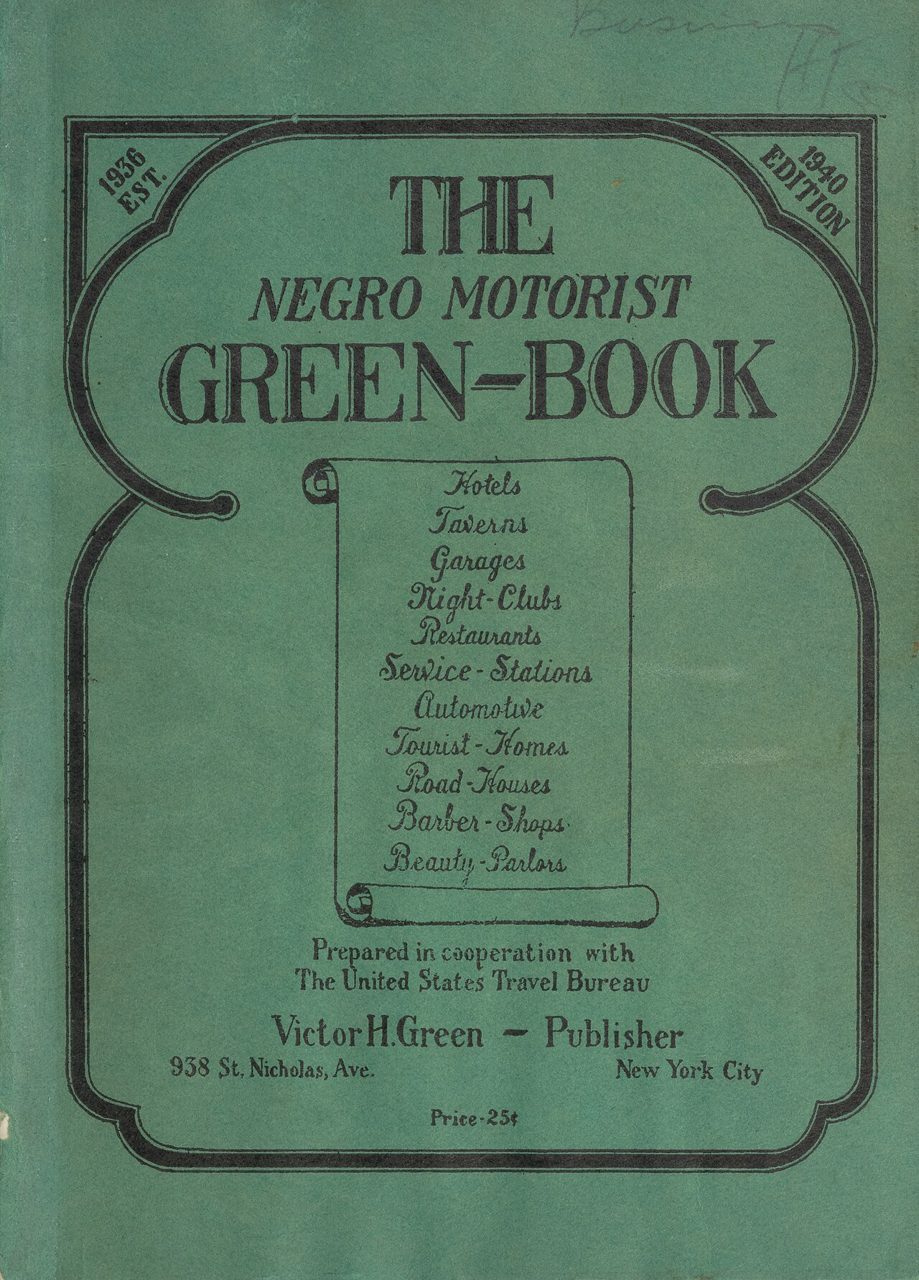
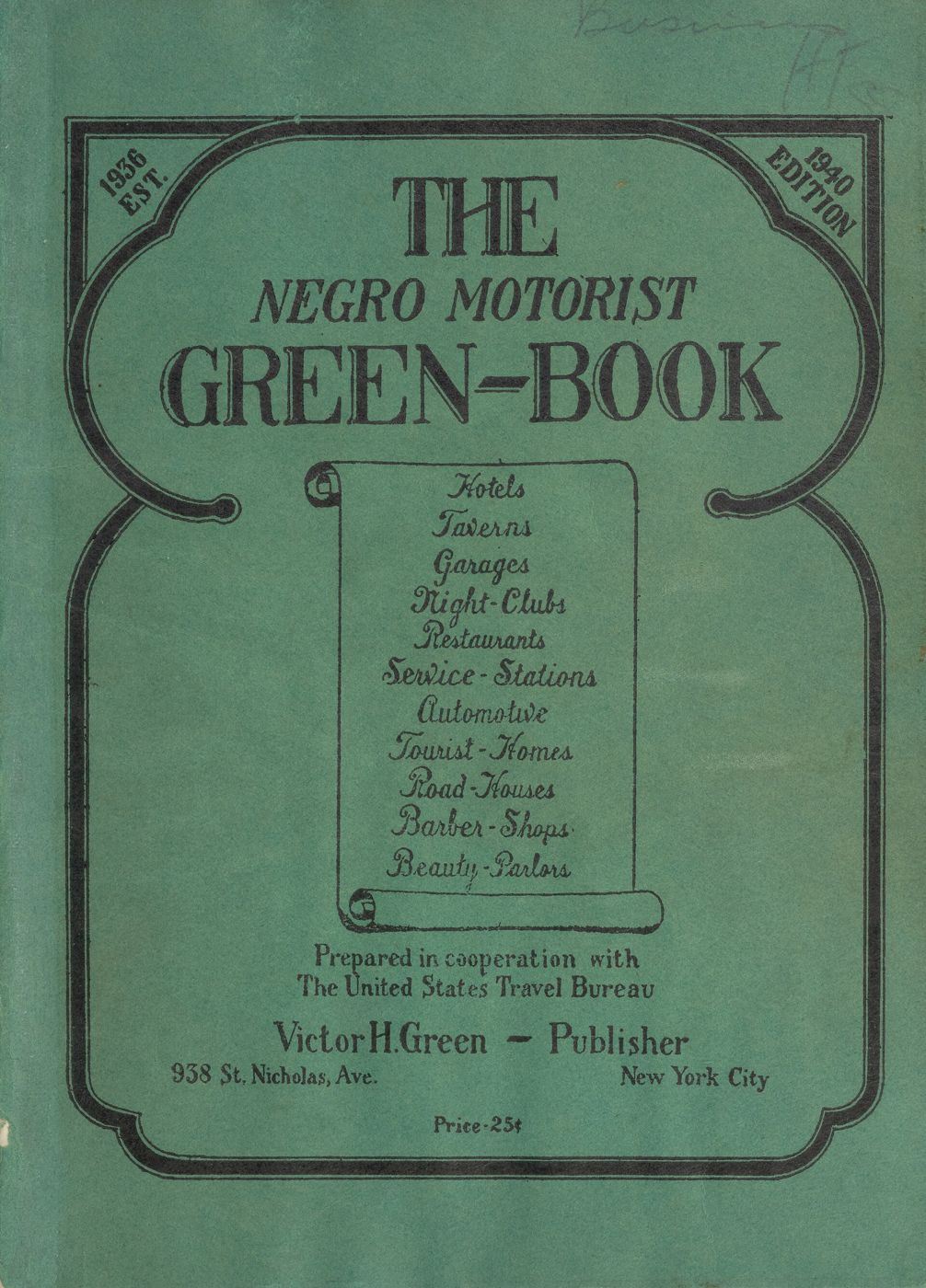
Why would a traveller need a special guidebook just to find a hotel? Look at the cover of the 1940 Negro Motorist Green Book in the gallery.
Sentence starters
- A guide like this was necessary because…
- Travelling in 1962 could be dangerous for…
- The title tells us that…
The film in three lines
1962. Tony Lip, a bouncer from the Bronx, is hired to drive Dr. Don Shirley, a world-class Black pianist, on a concert tour from Manhattan to the Deep South. They rely on “The Green Book” to find safe places to stay. A film about music, segregation and an unlikely friendship, and a film whose story is debated.

Film sheet

Film study sheet · printable, clickable, with QR code.
Open the printable sheethttps://trame-lycee.netlify.app/films/fiche-green-book.html
Film credits
| Title | Green Book (USA, 2018) |
|---|---|
| Director | Peter Farrelly |
| Screenplay | Nick Vallelonga, Brian Hayes Currie, Peter Farrelly |
| Cast | Viggo Mortensen (Tony “Lip” Vallelonga), Mahershala Ali (Dr. Don Shirley), Linda Cardellini (Dolores Vallelonga), Dimiter D. Marinov (Oleg), Mike Hatton (George) |
| Cinematography | Sean Porter |
| Editing | Patrick J. Don Vito |
| Music | Kris Bowers |
| Distributor | Universal Pictures |
| Running time | 130 minutes |
| Release | Toronto, 11 September 2018 · USA, 16 November 2018 |
| Rating | PG-13, thematic content, language including racial epithets, smoking, some violence and suggestive material |
| Awards | 91st Academy Awards (2019): 5 nominations, 3 Oscars, Best Picture, Supporting Actor (Mahershala Ali), Original Screenplay |
Film language, with examples from the official trailer
Timecodes are approximate (± 2 s). Pause the trailer and check each example yourself.
Shots
| Word | Meaning |
|---|---|
| establishing shot / extreme long shot | shows the place; people look tiny |
| long shot | a whole body in its setting |
| medium shot | from the waist up |
| close-up | a face fills the frame: emotion |
| extreme close-up | a detail: eyes, a hand, an object |
| two-shot | two characters in one frame: a relationship |
| over-the-shoulder shot | we watch one character through another’s position |
- ≈0:02establishing shot of a 1960s street: we enter the period
- ≈0:34profile shot of Don Shirley in the back seat: distance between the two men
- ≈2:14spotlit piano on stage: the artist alone
Angles
| Word | Meaning |
|---|---|
| eye level | neutral, we are equal with the character |
| high angle | camera above: the character looks small or weak |
| low angle | camera below: the character looks powerful |
| canted (Dutch) angle | tilted frame: unease, a world out of balance |
| bird’s-eye view | straight down from above |
- ≈0:14Shirley on a throne-like chair, slightly from below: dignity and status
Camera movement
| Word | Meaning |
|---|---|
| pan | the camera turns horizontally |
| tilt | the camera moves up or down |
| tracking shot | the camera travels with a character or a car |
| zoom | the lens brings us closer |
| handheld camera | shaky, urgent, documentary feel |
| crane / aerial shot | the camera flies above the scene |
- ≈2:26the camera follows the car on an empty road: the road movie
Lighting & colour
| Word | Meaning |
|---|---|
| high-key lighting | bright, few shadows: optimism |
| low-key lighting | dark, strong shadows: tension, mystery |
| backlighting | light behind a character: a halo or a silhouette |
| natural light | sun, windows, candles |
| colour palette | the dominant colours of the film |
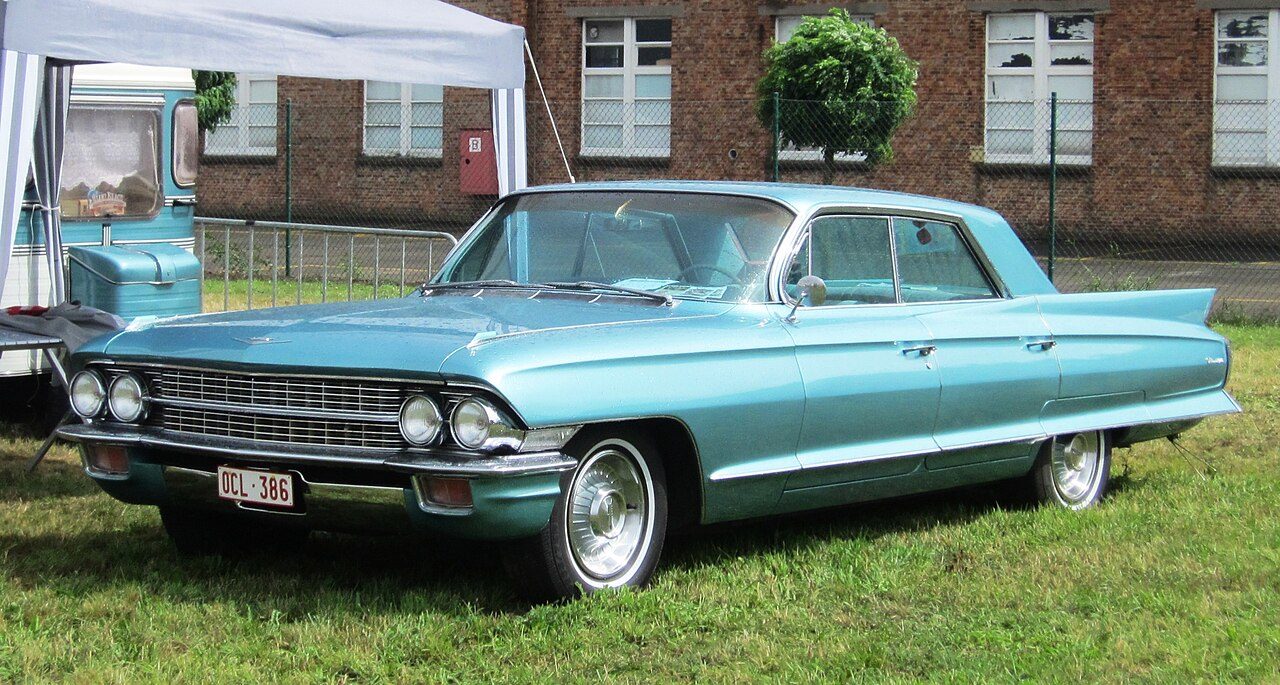
- whole trailerturquoise car, green fields, warm skin tones: a nostalgic, colourful look
- ≈2:14a single spotlight on the piano
Sound
| Word | Meaning |
|---|---|
| diegetic sound | the characters can hear it (a radio, a piano on stage) |
| non-diegetic sound | only the audience hears it (the score, a narrator) |
| voice-over | a voice we hear over the images |
| score | music composed for the film |
| silence | no sound: a shock, a pause |
| sound bridge | a sound that continues into the next scene |
- whole trailerpiano music by Kris Bowers, diegetic in concert scenes, non-diegetic elsewhere
- ≈1:10“You never win with violence.”, a key line in Shirley’s calm voice
Editing
| Word | Meaning |
|---|---|
| cut | a direct change of shot |
| cross-cutting | alternating between two places or stories |
| montage | a fast series of shots that compresses time |
| fade to black | the image disappears: an ending, a pause |
| intertitle | text on screen between images |
| slow motion | time slows down: importance, emotion |
- whole traileralternation between comedy (the car) and tension (the South)
- ≈2:30end card “Inspired by a true friendship”
Step into the period
Daily life
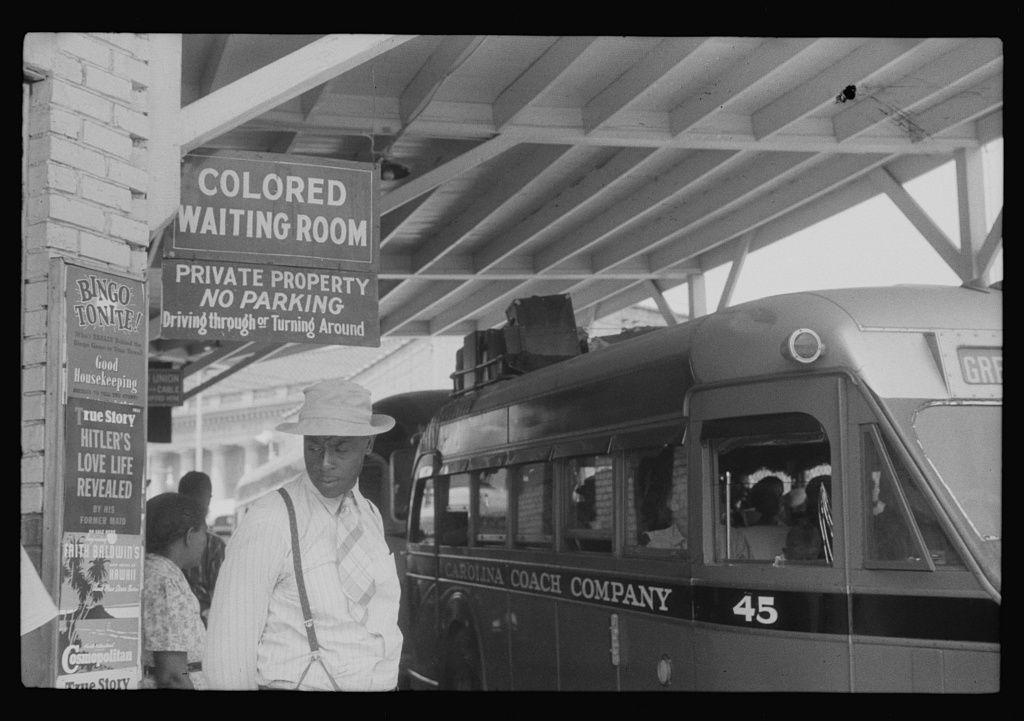
- Jim Crow laws in the South: separate restaurants, hotels, toilets, entrances
- “Sundown towns” where Black people were not allowed after dark
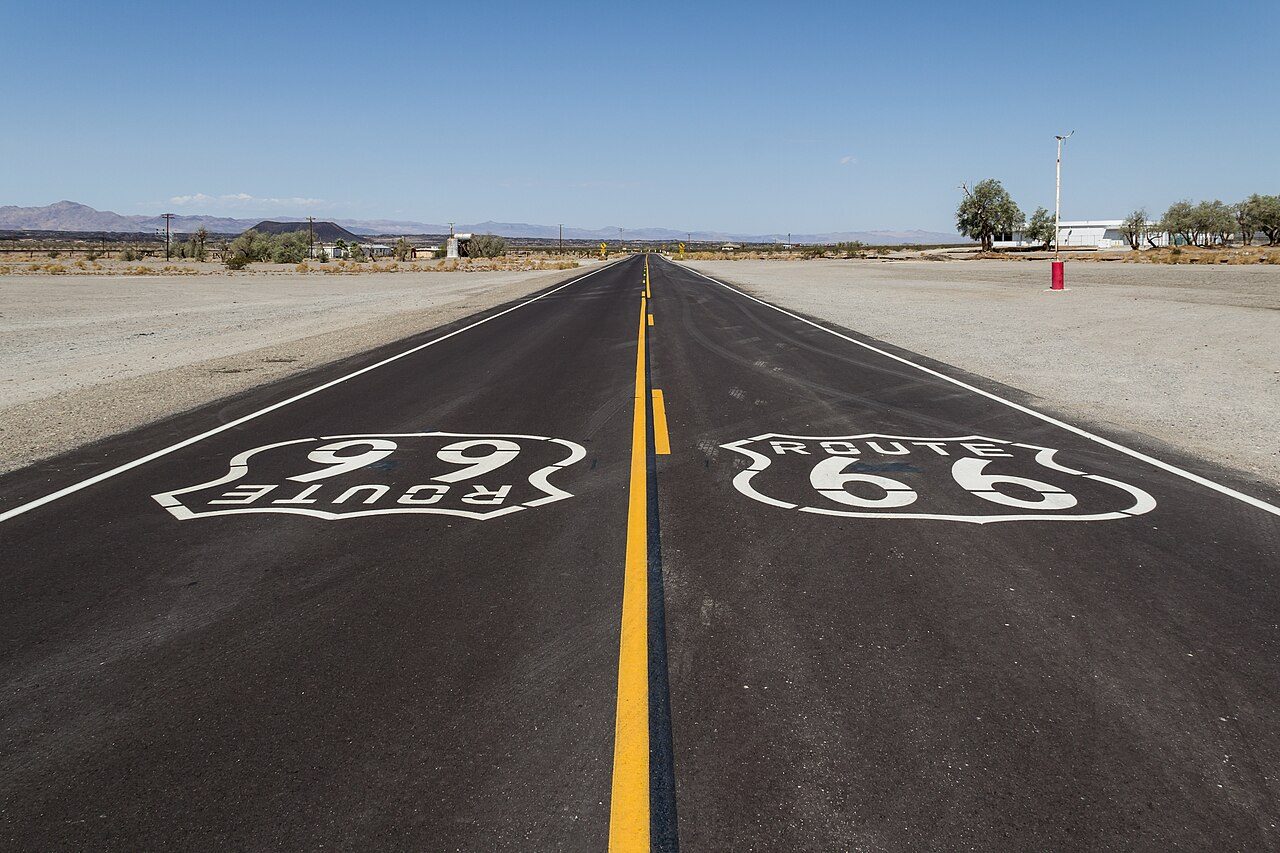
- Long drives on two-lane highways before the Interstate network was finished
Music
- Classical piano, jazz and pop; Shirley’s trio (piano, cello, bass)
- Rock ’n’ roll and soul on the car radio (Little Richard, Aretha Franklin)
Fashion
- Tailored suits and ties; Shirley’s elegant clothes vs Tony’s casual shirts
Places
- The Bronx and Carnegie Hall, New York
- The Midwest, then the Deep South: Kentucky, North Carolina, Alabama…
Historical landmarks
- 1896 Plessy v. Ferguson accepts “separate but equal”.
- 1936 Victor H. Green publishes the first Green Book, for New York.
- 1937 The guide becomes national.
- 1954 Brown v. Board of Education.
- 1955 Rosa Parks and the Montgomery bus boycott.
- 1956 Nat King Cole is attacked on stage in Birmingham, Alabama.
- 1961 Freedom Riders challenge segregated interstate buses.
- 1962 Don Shirley’s tour of the South, the film’s story.
- 1964 Civil Rights Act: segregation in public places becomes illegal.
- 1965 Voting Rights Act.
- c.1966 to 67 Last editions of the Green Book.
- 2018 Green Book is released; Shirley’s family criticises it.
- 2019 The film wins Best Picture.
Sources: NYPL, The Green Book (digital collection) · PolitiFact, How true is Green Book?
Watch
Official trailer (Universal Pictures)
Official channel: Universal Pictures · https://www.youtube.com/watch?v=QkZxoko_HC0
First viewing
- Who are the two main characters? What are their jobs?
- Where is the tour going?
- What happens in the restaurant scene?
- What is Shirley’s philosophy about violence?
- What does the end card say?
Answer key
- Don Shirley, a pianist (“I am not a medical doctor. I’m a musician.”); Tony, his driver.
- To the Deep South.
- Shirley is told he is not permitted to dine there.
- “You never win with violence. You only win when you maintain your dignity.”
- “Inspired by a true friendship.”
Second viewing, exact words
- “I’m about to embark on a concert ___ in the Deep South.”
- “Do you foresee any ___ in working for a black man?”
- “You have a very narrow ___ of me, Tony.”
- “Because it takes ___ to change people’s hearts.”
- “So if I’m not black enough, and if I’m not white ___…”
Answer key
- tour
- issues
- assessment
- courage
- enough
Film language
Two men, one car
Who sits in front, who sits in the back? In a road movie, the car organises power. Analyse the profile shot at ≈0:34 and the spotlit piano at ≈2:14.
Sentence starters
- The back seat places Shirley…
- The spotlight isolates…
- The contrast between… and… shows…
Context & history
The Negro Motorist Green Book
Victor H. Green, a postal worker from Harlem, published the first guide in 1936. It listed hotels, restaurants and gas stations that welcomed Black travellers. The New York Public Library has digitised the guides.
“There will be a day sometime in the near future when this guide will not have to be published. That is when we as a race will have equal opportunities and privileges in the United States. It will be a great day for us to suspend this publication for then we can go wherever we please, and without embarrassment.”
The Negro Motorist Green Book, 1949 edition, introduction · NYPL Digital Collections- What hope does the guide express?
- What does “without embarrassment” reveal about daily life?
Answer key
- That one day it will be useless, because equality will exist.
- Black travellers were regularly humiliated or refused.
Critical thinking, who tells the story?
The film was co-written by Nick Vallelonga, Tony’s son. Don Shirley’s family said they had not been consulted: his brother Maurice Shirley called the film “a symphony of lies” (interview reported by IndieWire; see also PolitiFact’s fact-check). Mahershala Ali apologised to the family. Others defend the film as a story of friendship.
- Whose point of view does the film adopt?
- Why does it matter who tells a true story?
- Is the label “Inspired by a true friendship” honest?
Sentence starters
- The story is told from the point of view of…
- A family can feel betrayed when…
- A film “inspired by” a true story should…
Characters
| Character (actor) | Who | Key word |
|---|---|---|
| Dr. Don Shirley (Mahershala Ali) | virtuoso pianist, refined, isolated | dignity |
| Tony Lip (Viggo Mortensen) | Italian-American bouncer from the Bronx, his driver | change |
| Dolores (Linda Cardellini) | Tony’s wife, receives his letters | warmth |
| Oleg & George (Dimiter D. Marinov, Mike Hatton) | the cellist and the bassist of the trio | witnesses |
Sentence starters
- At the beginning, Tony…, but by the end…
- Shirley feels he belongs nowhere because…
Speak
1 · Continuous speech, 2 min 30
Sentence starters
- Green Book is a road movie set in…
- The Green Book itself was…
- The film is debated because…
2 · Interaction, the job interview
Pairs: Shirley interviews Tony for the job. Use lines from the trailer, then improvise.
Sentence starters
- Do you foresee any issues…?
- I need someone who…
- What can you offer me?
3 · Debate, “Best Picture or a symphony of lies?”
Sentence starters
- The Academy rewarded…
- The family’s criticism shows…
- A film can be moving and still…
Write
Write
B2 · 220 to 250 words: Write one of Tony’s letters to Dolores from the South, then a short reply by Shirley giving his own point of view on the same day.
B2+ · 280 words: “Who has the right to tell a true story?”
Sentence starters
- Dear Dolores, today we…
- What Tony did not see was…
- I would argue that…
For the exam
For the exam. In the baccalauréat général, English (LVA / LVB) is assessed through continuous assessment: your annual average in 1re and in Tle counts (coefficient 3 each year). At the end of Tle, your teachers also certify your CEFR level in each skill, listening, reading, writing, speaking (continuous) and speaking (interaction), on your official language certificate. Every task below is built on those five skills, with authentic documents linked to a programme axis, exactly like your class assessments.
- Listening: trailer · Reading: the 1949 Green Book · Speaking: interview, debate · Writing: letters / essay.
Project
Project, “A safe route, 1962”
Using the NYPL digital Green Book, plan a route between two cities. List three addresses from the guide, explain why they mattered, and present the journey on a map in 2 minutes.
Sentence starters
- Our journey starts in…
- The guide recommends…
Closing: place & exchange
Step 1 · A place found or lost
Everything is exchange, and we can only give and receive from a place. First find each character’s place; then look at four kinds of exchange; then go deeper: what passes between the characters inside · trust, love, respect, meaning? Who do they become, not only what do they own?
Where is Don Shirley welcome, and where is he refused?
Sentence starters
- At the start, …’s place is…
- At the end, … has found / lost his/her place because…
Answer key
- Don is welcome on stage but refused at the table; he finds a place at Tony’s family table.
Step 2 · Four kinds of exchange
| Kind of exchange | In the film |
|---|---|
| Political | After their arrest, Don Shirley calls Robert Kennedy to get them released. |
| Emotional | Don helps Tony write his letters to Dolores. |
| General interest | Don chooses to tour the Deep South in 1962 to change minds through music. |
| Human rights | Don may play for white audiences but is refused a seat in the restaurant. |
Sentence starters
- The political exchange in the film is between… and…
- …gives… to…, and in return…
- This exchange serves the general interest because…
- …defends the right to…
Step 3 · Beyond what they have: who they are
Now go deeper, from the place each character has found or lost. Talk about the characters only.
- At the start, the exchange is a contract: a salary for a driver. What changes during the journey?
- What does Don give Tony through the letters, and what does Tony give Don?
- Why is the final scene at Tony’s home about who Don is, not what he has?
Sentence starters
- What really passes between… and… is…
- …does not only give…; he/she gives…
- Thanks to…, …understands who he/she is.
- At the end, what matters for… is not what he/she has but…
- This exchange changes… because…
- From his/her new place, … can at last give / receive…
Closing sentence (write it): From the place they find or lose, the deepest exchange in this film is…
Answer key
- The contract becomes a friendship: each man starts to listen to the other.
- Don gives Tony words for his feelings; Tony gives Don warmth, humour and protection.
- Don is rich and famous but lonely. At the end he is welcomed as a person and a friend, he finds a place to belong.
- Model closing sentence: Money paid for the job; only friendship answers Don’s loneliness.
Teacher
Teacher notes
- PG-13 (racial epithets in the film). Work with the trailer and documents.
- Axes: 1re « Diversité et inclusion », « Art et pouvoir » · Tle « Territoire et mémoire », « Fictions et réalités ».
- Critical point: the Shirley family’s criticism (“a symphony of lies”, Maurice Shirley); Ali’s apology.

Share this film study
https://trame-lycee.netlify.app/films/green-book.html
Created by Madame Carole Paoli Pompougnac.